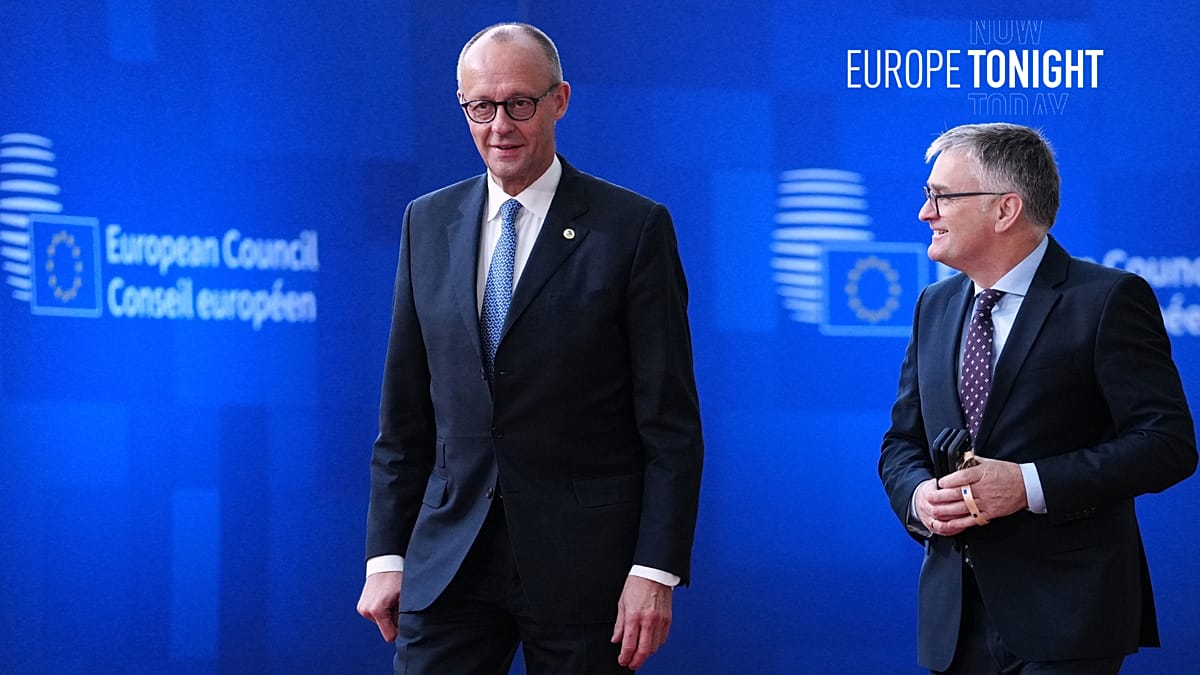
Brussels — European Union leaders gathered at the European Council on Thursday for what was expected to be a decisive round of negotiations over the bloc's next long-term budget. Instead, the summit has laid bare deep divisions among member states over how to allocate a record-high spending package, with defense, agricultural subsidies, and continued support for Ukraine all competing for limited funds.
Italian Prime Minister Giorgia Meloni, speaking before the talks, underscored the scale of the deadlock, warning that leaders remain "light-years away from a solution." Her comments reflect a broader frustration among capitals that the budget talks have become a zero-sum game, where gains for one priority inevitably come at the expense of another.
Germany's veto threat
The most contentious issue is Ukraine. German Chancellor Friedrich Merz has insisted that future financial support for Kyiv be tied directly to the EU's multi-annual budget, and he has threatened to veto the entire package unless every member state signs on. This hardline stance has put Berlin at odds with several other governments, which argue that linking Ukraine aid to the broader budget could delay or dilute it.
Merz's position is seen as an attempt to force a unified commitment from all 27 member states, avoiding the kind of ad-hoc arrangements that have characterized previous funding rounds. But critics warn that a veto threat could unravel the entire budget, which also covers everything from regional development to research and border security.
The stakes are high. The proposed budget, which some estimates put at over €2 trillion, would be the largest in EU history. Yet the divisions over its composition are as wide as the sums involved. The clash over the budget and Ukraine aid has become the defining test of the bloc's ability to act collectively in times of crisis.
Spain's Sánchez delegates to Macron
The negotiations are also unfolding without Spanish Prime Minister Pedro Sánchez. Facing critical national elections on Sunday that could cost him his parliamentary majority, Sánchez has opted to stay in Spain, delegating his voting powers to French President Emmanuel Macron. This unusual arrangement has raised eyebrows, as it effectively gives Macron an extra vote in the Council, a move that some see as a breach of the spirit of the institution.
Macron, for his part, has not commented publicly on the arrangement, but his office confirmed that he would exercise Sánchez's proxy. The move is likely to be a source of friction, particularly among leaders who are already wary of Franco-German dominance in EU affairs.
Farm subsidies and defense spending
Beyond Ukraine, the budget talks have also exposed tensions over the Common Agricultural Policy (CAP). Farmers across the bloc have been protesting in Brussels, fearing that the new budget could slash subsidies. The protests outside the Council building have added a visible layer of pressure on leaders, who are acutely aware of the political fallout from any perceived betrayal of the agricultural sector.
Defense spending is another flashpoint. Several member states, particularly those on the eastern flank, are pushing for a significant increase in defense funding, citing the ongoing war in Ukraine and the broader security threat from Russia. However, others, including some net contributors, are reluctant to commit to large new expenditures, especially given the economic strain caused by high energy prices and inflation.
The European Commission has proposed a mix of new revenue streams, including a carbon border adjustment mechanism and a digital levy, to help finance the budget. But these proposals have met with resistance from some member states, who argue that they would impose new burdens on businesses and consumers. An MEP has warned that the EU faces a budget crunch, and that without new revenue, ambitions will have to be scaled back.
Meanwhile, the situation in Ukraine remains dire. Russian missile and drone strikes killed three people in Ukraine overnight, underscoring the urgency of continued support. The EU has already pledged a €45 billion loan to Ukraine, but the mechanism for disbursing it has been a point of contention. Bulgaria, which had previously resisted the loan, has now dropped its opposition, albeit with caveats. Bulgaria's conditional approval has cleared a major hurdle, but the broader budget remains unresolved.
As the summit continues, the mood in Brussels is tense. Leaders are aware that failure to reach an agreement would send a damaging signal to both Kyiv and Moscow, and would undermine the EU's credibility as a global actor. Yet the path to consensus is narrow, and the risk of a breakdown is real.
For now, the focus is on finding a compromise that can satisfy both the hawks and the doves, the net contributors and the net beneficiaries, the agricultural heartlands and the defense-minded eastern states. Whether such a compromise exists remains an open question, but the pressure to deliver is immense.



