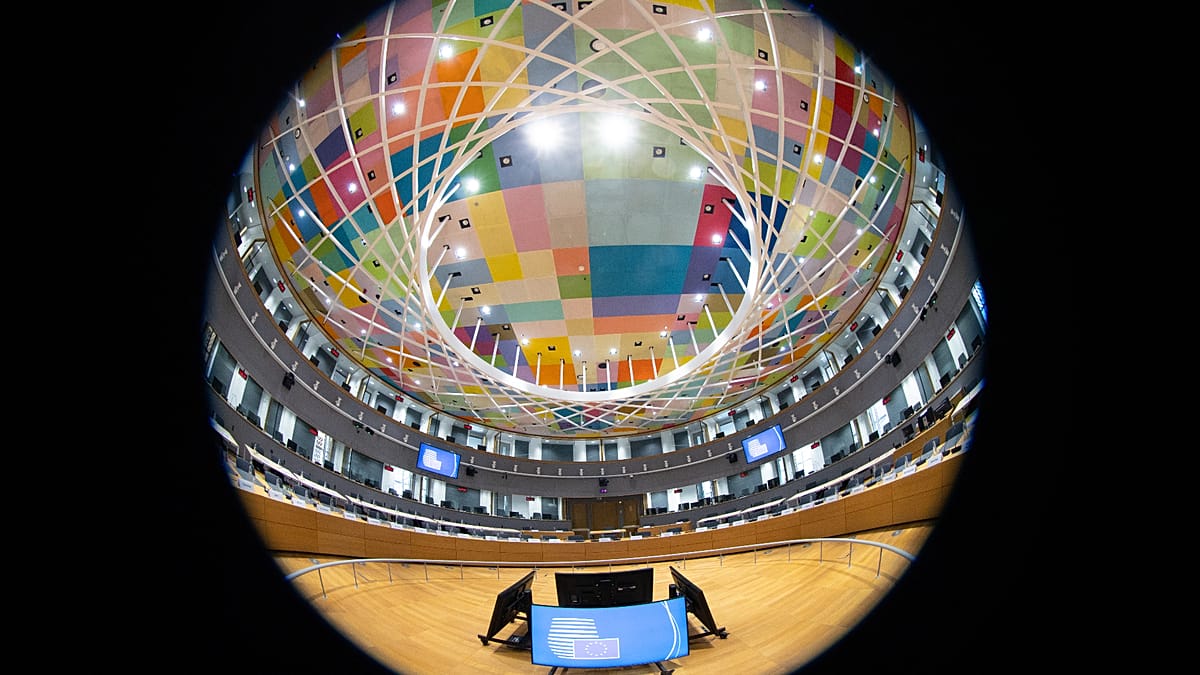
European Union leaders gathered in Brussels on Thursday for what is shaping up to be one of the most contentious summits in recent memory. The agenda is dominated by two intertwined disputes: the bloc's next seven-year budget and the financing of Ukraine's war effort. With little goodwill in the room and no obvious mediator, expectations of a breakthrough are minimal. The meeting may stretch into Friday, but another night of negotiations is unlikely to bridge the gaps.
At the heart of the clash is the proposed Multiannual Financial Framework (MFF) for 2028-2034. European Council President António Costa has trimmed €204 billion from the European Commission's original €2 trillion proposal, a move that has drawn criticism from nearly every corner of the Union. The so-called frugal nations, led by Germany and now preferring the label "modernisers," are pushing for deeper cuts to agricultural subsidies and regional development funds, arguing that defence, technology, and competitiveness should take priority. In contrast, the 17-member "Friends of Cohesion" group, mostly southern and eastern states, insists the cuts have already gone too far.
France, despite winning concessions on farm subsidies and a proposed digital tax, remains deeply dissatisfied. Paris wants to preserve spending without increasing its national contribution—a difficult balancing act given the fragile state of French public finances. The far-right leader Marine Le Pen, though absent from the summit, looms large. Her threat to slash France's EU contribution if she wins next spring's presidential election adds an extra layer of uncertainty. President Emmanuel Macron has insisted that negotiations cannot drag beyond December, but setting a deadline is easier than meeting it.
Ukraine's funding gap
The budget dispute is inseparable from the question of Ukraine. Russia's relentless attacks have left Kyiv facing a €70 billion budget shortfall next year. The Commission has proposed a new €45 billion loan, financed through joint borrowing, but Hungary, Slovakia, Bulgaria, and the Czech Republic are reluctant to participate. German Chancellor Friedrich Merz has threatened to veto the entire EU budget unless all 27 member states back Ukraine, a stance Slovak Prime Minister Robert Fico has branded "a textbook case of blackmail."
The Commission has floated a compromise: countries could contribute to the €20 billion earmarked for Ukraine's civilian needs without taking part in the €25 billion military component. Whether this will satisfy the holdouts remains unclear.
Guns versus butter
Amid the grand rhetoric about European sovereignty and military readiness, defence spending is also under threat. EU Defence Commissioner Andrius Kubilius has warned that the proposed €39 billion cut to defence and space funding—a reduction of 30%—would jeopardise crucial pan-European programmes. Former Commission President José Manuel Barroso echoed these concerns, pointing to the contradiction between leaders' declarations on defence and their willingness to pay for it. With Russia still waging war in Ukraine and the United States under Donald Trump proving an increasingly unreliable ally, the timing could hardly be worse.
Leaders will also discuss the succession to Christine Lagarde at the European Central Bank, with Spain's Pablo Hernández de Cos emerging as the frontrunner. But the real test of the summit's success will be whether a budget deal in December looks remotely achievable. The danger is that everyone leaves Brussels even angrier than when they arrived.
Meanwhile, the European Parliament is up in arms over Costa's proposed 10% cut to the MFF, threatening to reject any deal struck by the leaders. The Parliament's Socialists and Liberals have also suspended coalition talks with the centre-right EPP after it again teamed up with the far right to water down environmental safeguards. They are demanding written guarantees that Manfred Weber's group will stop flirting with parties further to its right. Among the potential casualties of this spat is Roberta Metsola's re-election as Parliament president.
For a deeper dive into the budget's winners and losers, see our analysis of the EU's next budget. And for the latest on the summit, follow our live blog.



