The legal text of the new UK-EU food and drink agreement, published on Thursday, reveals that either party would face significant costs if they withdrew within the first ten years. The termination clause obliges the side that exits early to cover the "reasonable and proportionate costs" of reinstating the border infrastructure that the deal removes. Disputes over the bill would be settled by an international tribunal, according to UK officials.
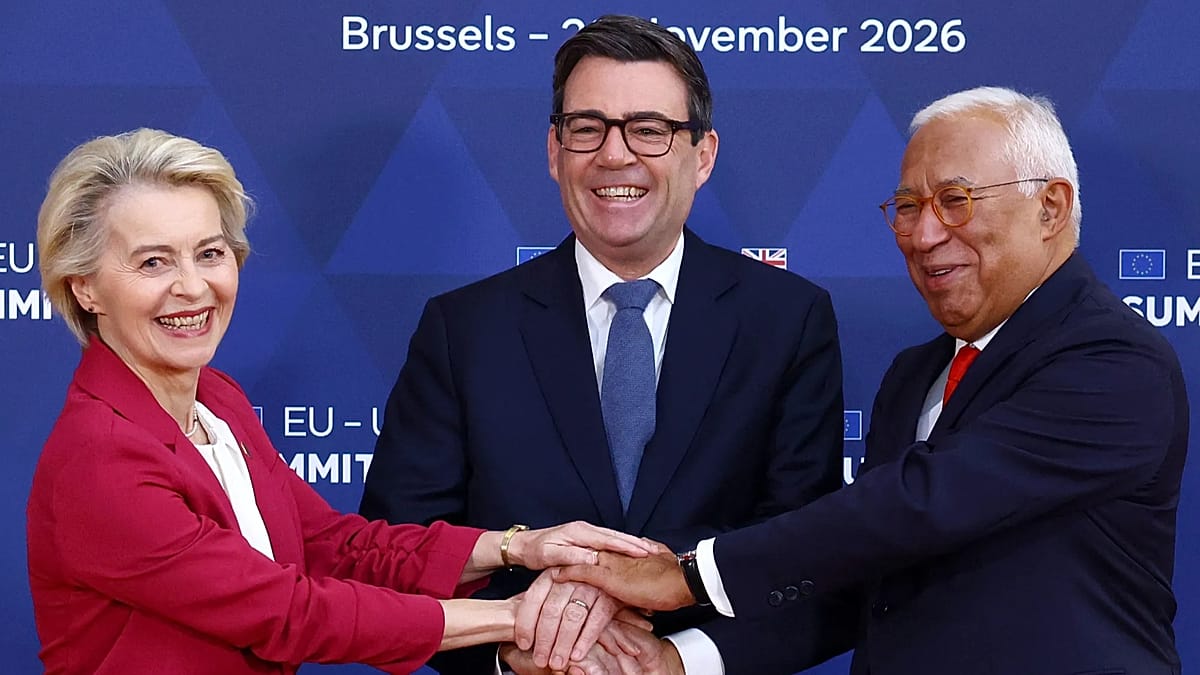
Prime Minister Andy Burnham's deputy spokesperson defended the clause, saying it is "standard practice in international treaties" and applies equally to both sides, including the EU. The agreement, known as a sanitary and phytosanitary (SPS) deal, was one of three signed with EU leaders in Brussels on 20 November. The others link carbon markets and facilitate cross-border study and work for young people.
The UK government estimates the SPS deal, due to take effect in 2028, could boost the British economy by £5.1 billion by reducing red tape on food and drink exports. However, the publication of the termination clause comes amid renewed political pressure on the reset from opposition parties. Reform UK leader Nigel Farage has vowed to "repeal" the agreement, while Conservative leader Kemi Badenoch said on Thursday she "does not support" it.
An insurance policy for the EU?
Charles Grant, director of the Centre for European Reform think tank, described the provision as "an insurance policy" for the EU, given the ongoing debate in Britain over its relationship with the bloc. The clause is designed to deter a future UK government from walking away without bearing the financial consequences, which could be substantial.
Legislation to implement the deals was introduced in parliament on Thursday, with a debate scheduled for 7 December. The legislation would align the UK with EU rules in the covered sectors. British experts would be consulted on new laws but would have no vote, a point critics seize on to argue that Britain is becoming a "rule taker" rather than a rule maker.
Burnham, who replaced Keir Starmer in July, has said the agreements are likely the most that can be achieved in this parliament. He plans a year of informal brainstorming with EU leaders before setting out options for the long-term relationship. These range from maintaining the status quo to rejoining the bloc, which he has said would be "unthinkable" without a referendum.
The SPS deal is a key component of Burnham's broader strategy to reset relations with the EU, which have been strained since the Brexit referendum. The agreement aims to reduce friction for British food and drink exporters, who have faced increased bureaucracy and costs since the UK left the single market.
However, the termination clause highlights the fragility of the reset. If a future government were to trigger the exit, it would not only have to rebuild border checks but also potentially face a lengthy legal battle over the costs. This could deter any quick reversal, even if a new government were ideologically opposed to the deal.
The political landscape in the UK remains divided on Europe. Reform UK and the Conservatives have both signalled they would consider unpicking the reset if they win power at the next general election in 2029. This uncertainty is precisely why the EU insisted on the termination clause, according to analysts.
For now, the Burnham government is pressing ahead with the implementation. The deals are seen as a pragmatic step to improve trade and cooperation without reopening the divisive question of EU membership. But the legal text shows that any future exit would come at a price, both financially and politically.
The broader context of UK-EU relations remains complex, with other issues such as fiscal disputes and migration policies also shaping the agenda. The SPS deal is just one piece of a larger puzzle, but its termination clause ensures that any future government will think twice before tearing it up.



