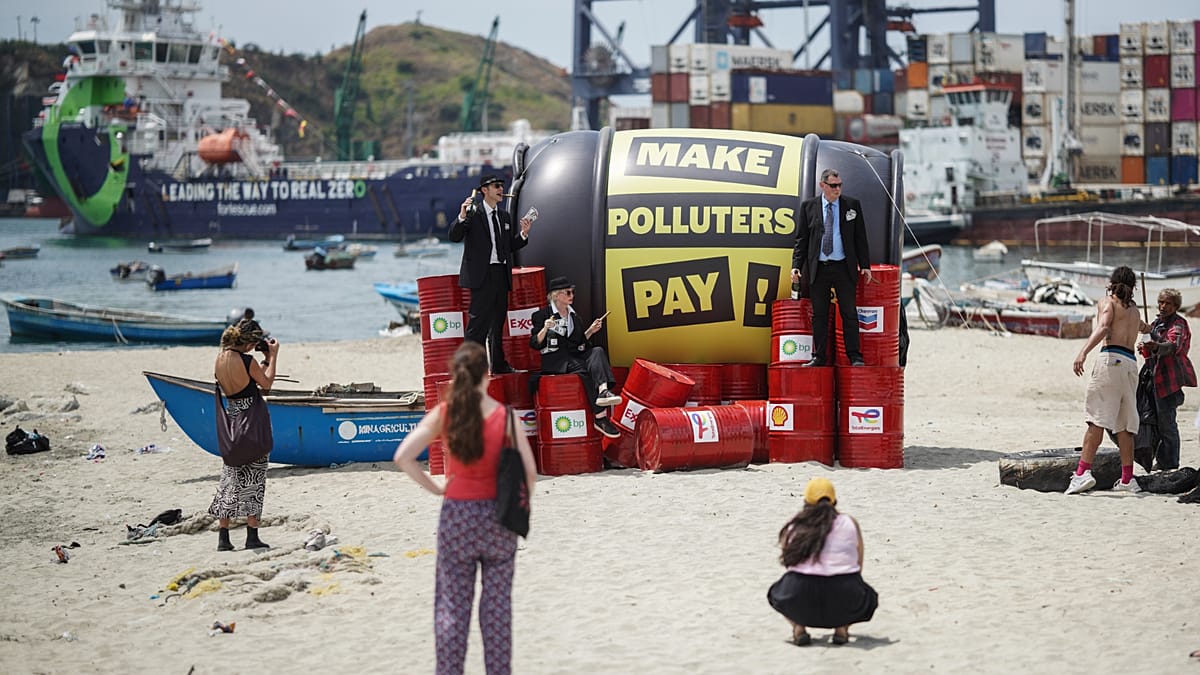
Brussels may have a legal path to impose a windfall tax on oil and gas companies without the unanimous backing of all 27 member states, according to a new legal analysis. The study, commissioned by German environmental groups Germanwatch and Klima-Allianz Deutschland and conducted by the Paris-based law firm Baldon Avocats, argues that a levy designed primarily to advance climate or energy objectives—rather than to fill state coffers—could be adopted under existing EU treaty provisions, sidestepping the unanimity requirement that normally applies to taxation.
The findings come at a politically sensitive moment. EU leaders gather in Brussels on Thursday and Friday to discuss the bloc's multi-annual budget for 2028-2034, and the question of who should bear the cost of Europe's energy crises is never far from the surface. Recent disruptions, including the closure of the Strait of Hormuz and renewed fuel price spikes, have pushed energy company profits to record levels, reviving calls for an EU-wide windfall tax. The European Commission has so far rejected such a measure, citing legal obstacles, and has left the matter to national capitals.
A question of framing
The study identifies several legal routes for Brussels to require member states to introduce, collect, and administer a levy on fossil fuel companies, with revenues potentially flowing to national treasuries or the EU budget. The most striking finding is that the Commission could avoid the unanimity requirement by using treaty provisions related to environmental protection or energy policy. However, the tax must genuinely pursue an environmental or energy goal as its main purpose. If its primary aim is to raise and redistribute money, it would be classified as a fiscal measure, triggering the unanimity requirement.
The lawyers stress that the design of the levy is crucial. “The label given to the instrument (‘excess profits’ or ‘windfall profits tax’, ‘solidarity contribution’) carries limited weight for the characterisation of a measure as primarily fiscal. What matters most are the aim and content of the measure,” the study reads.
A climate-focused mechanism could target profits generated specifically by fossil fuel activities, discourage further investment in polluting operations, and direct revenues towards climate mitigation or adaptation. An energy-focused version could finance energy efficiency, security of supply, and measures to reduce consumer bills. However, framing the measure solely as a climate or energy levy would not be sufficient to bypass national vetoes. Its actual goals, tax base, and allocation of revenues would determine its legal classification.
Another possibility would be to introduce the tax as part of a broader package of environmental or energy measures, with the overall purpose of the law determining its legal basis.
The 2022 precedent
The study also points to a more immediate route, similar to the mechanism the EU used in 2022 following Russia's invasion of Ukraine. That measure required member states to impose a temporary contribution of at least 33% on exceptional profits made by companies in the crude oil, natural gas, coal, and refining sectors. It applied to profits exceeding by more than 20% the average profits recorded over the previous four financial years.
Under EU law, the Council can adopt emergency economic measures by qualified majority, avoiding the need for unanimous agreement. The lawyers argue that a new temporary contribution could follow the same model, provided exceptional circumstances and the need for emergency intervention can be demonstrated. They also see as plausible establishing a permanent EU crisis framework that could be activated temporarily whenever exceptional economic or energy circumstances arise.
However, the legal precedent is not yet settled. Energy companies have challenged the 2022 contribution before EU and national courts, questioning its legal basis and compatibility with fundamental rights. In a boost for the EU, Advocate General Athanasios Rantos of the Court of Justice backed the validity of the contribution under EU law on 22 October. The Court is expected to deliver its final ruling in 2027.
Who gets the money?
Beyond the legal feasibility, the allocation of revenues could become another major political battleground. The study proposes three options: allowing revenues to remain in national budgets while restricting their use through EU legislation; using the revenues to create a new EU budget own resource; or assigning the proceeds to a dedicated European fund.
The first option would broadly replicate the 2022 arrangement, giving national governments control over collection while requiring spending to follow goals established by EU law. The second option would require a unanimous decision to create a new own resource, which would reintroduce the veto problem that supporters of the tax would seek to avoid.
The third option could provide an alternative. The lawyers argue that revenues could be assigned to a dedicated EU fund through secondary legislation without creating a new own resource. Spain's proposal for a European Climate Resilience Levy on fossil fuel profits, with revenues directed towards a dedicated Climate Adaptation Fund, is one example flagged in the study.
The study's findings could reignite debate over EU-level energy taxation, especially as experts warn about the bloc's fossil fuel phase-out lacking clear targets. With the next multi-annual budget on the table, the question of whether Brussels can act without unanimous consent is more than academic—it could shape the EU's ability to respond to future energy crises and fund its climate ambitions.



