The European Union's latest attempt to agree on its next seven-year budget ended in acrimony on Thursday, with leaders entrenched in opposing camps and openly questioning whether a deal is possible by the end of the year. The special summit, convened by European Council President António Costa, was meant to break the deadlock, but instead exposed deep fractures that threaten to derail the bloc's financial planning.
Costa's compromise proposal, worth €1.78 trillion in current prices over 2028-2034, was rejected from all sides. The plan, which represented a 10% cut from the original draft, drew fierce criticism from both the frugal north and the cohesion-focused south and east. Diplomats described the atmosphere as tense, with mutual reproaches and even a boycott of the small-group format by the frugal camp.
Speaking at the closing press conference, Costa acknowledged the difficulty but insisted the process was necessary. "This meeting was a necessary step in the process. This is a negotiation process. It is normal that the different parties are starting to underline and mark their starting points. Everybody knows that we cannot fail Europe, and we need to have a new budget from the 1st of January 2028," he said.
Red lines and political theatre
The summit was doomed from the start. Leaders arrived in Brussels with little appetite for compromise. Italian Prime Minister Giorgia Meloni set the tone, telling reporters that a deal was "light years away" and questioning Costa's goal of concluding by December. "I don't have a time limit. I have specific conditions," she said. "When the agreement is one that I consider valid and fair for Italy, then I'll sign it."
Dutch Prime Minister Rob Jetten, a staunch frugal, echoed the sentiment. "There's no need to hurry," he said. "For me, there's no deadline."
The negotiations began after leaders settled the succession of Christine Lagarde as European Central Bank president, with Spain's Hernández de Cos chosen for the role. But the budget talks quickly descended into what one diplomat called "a lot of political theatre."
Costa attempted to break the impasse by splitting leaders into small groups: first the frugals, then the cohesion friends, then the six largest member states. But the frugals, feeling unfairly targeted, closed ranks and boycotted the format. The cohesion camp, meanwhile, insisted on preserving spending on regional development and agriculture.
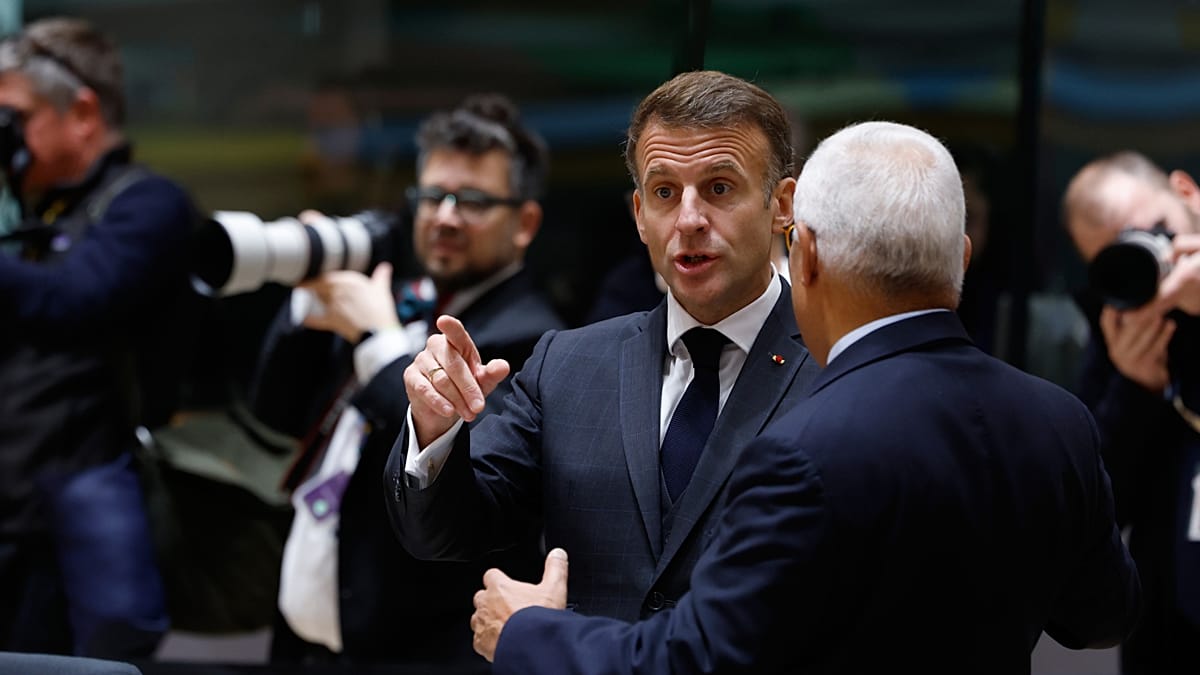
French President Emmanuel Macron raised the stakes with a rare mid-summit press conference, issuing an ultimatum: reach a deal by December or walk away. He warned that prolonged negotiations could become entangled in the French presidential campaign, where far-right leader Marine Le Pen, who has promised to cut France's EU contribution, is leading in the polls. "I intend to make it very clear to our colleagues that, for political and democratic reasons, it will not be possible to reopen or conclude negotiations on the budget after 31st December," Macron said, calling Costa's proposed cuts a "strategic mistake."
Other member states viewed Macron's threat as a tactic to extract concessions, especially since Costa's compromise was widely seen as French-friendly. "That's quite rich," one diplomat quipped.
German Chancellor Friedrich Merz adopted a hardline frugal stance, vowing to push for even deeper cuts. "Are we any further ahead? Yes and no. We are trying to define which direction it is going. I think I may say that," Merz told reporters. He added that the cuts would not stop at the €204 billion proposed by Costa. "It will become less," he said. "How much it will be then is open."
The deep Paris-Berlin divide, the EU's traditional motor, has cast a long shadow over the negotiations. The summit's early conclusion, with Costa announcing that talks would not continue on Friday, dampened expectations further. One diplomat was cautiously optimistic: "You need to have a bad European Council to have a good one. It was a lot of political theatre. We did not have detailed negotiations."
Amid the budget wrangling, Ukraine was largely forgotten. The bloc's financial support for Kyiv, a key element of the next budget, remains unresolved, adding to the sense of urgency. As earlier reports noted, the deadlock over the budget has direct implications for Ukraine's long-term stability.
The next attempt to reach a deal is expected in December, but with red lines firmly entrenched, the path forward remains unclear. Costa's credibility as Council president now hinges on his ability to broker a compromise that satisfies both the frugal and cohesion camps, a task that looks increasingly difficult.