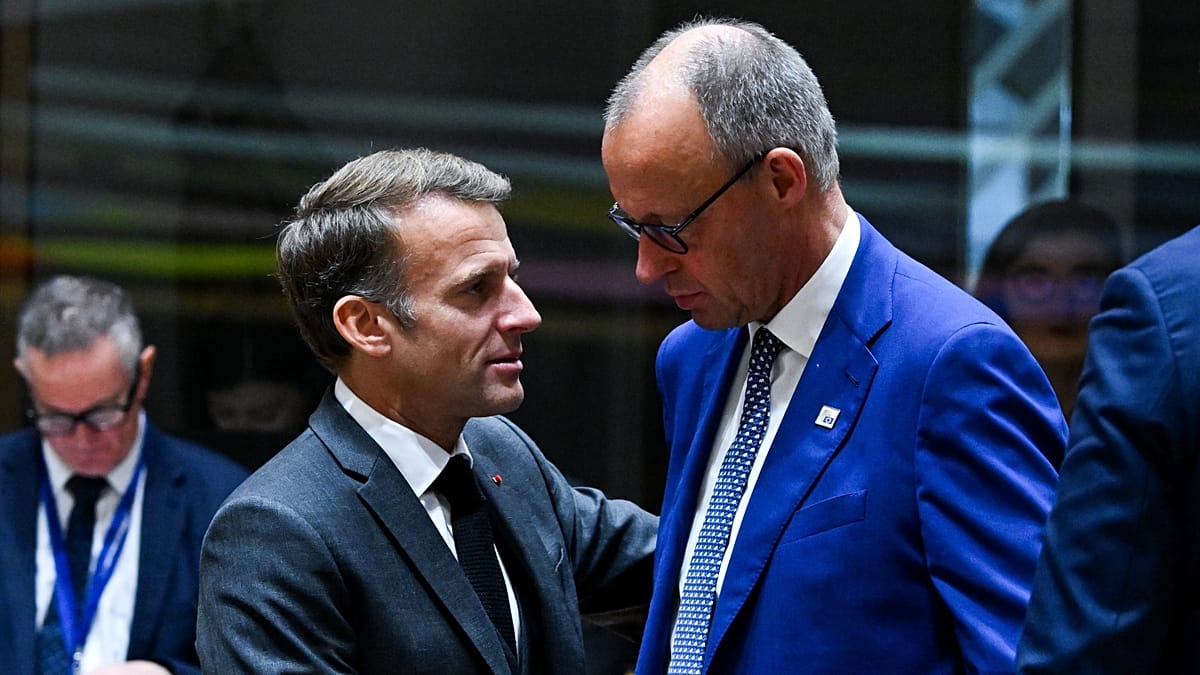
Two of the European Union's most divisive dossiers are set to collide at a summit in Brussels this week, as leaders attempt to broker a deal on the bloc's next long-term budget while keeping financial and military support for Ukraine on track. The talks, which could stretch into Friday, are meant to clear the way for a final agreement at a pivotal meeting in December.
On one side, the 27 heads of state and government will spar over the Multiannual Financial Framework (MFF), which sets spending priorities for the next seven years—covering everything from farm subsidies and infrastructure to border control and green energy. European Council President António Costa has tabled a compromise that trims €204 billion from the original proposal, urging leaders to seize the moment. "The time has come to reach an agreement," Costa told them ahead of the summit.
On the other side, they face the urgent task of plugging Ukraine's soaring budget deficit and ensuring a steady flow of aid as Russia's war grinds on. The European Commission has proposed a €45 billion loan, backed by joint EU debt, to keep the Ukrainian economy afloat and its armed forces in the fight. On paper, the two issues are separate. Politically, they are increasingly intertwined, creating a combustible mix that could easily descend into a bitter dispute. "You can't avoid the discussions being mixed up," one diplomat conceded.
Red lines and a bazaar in Brussels
The battle lines are starkly drawn. The so-called "frugals"—Austria, Belgium, Denmark, Finland, the Netherlands, Sweden, and Germany—are unhappy with Costa's compromise. They demand deeper cuts to traditional spending areas like agriculture and cohesion, arguing that more money should flow into modern priorities such as defence, climate, and technology. They have rebranded themselves as "modernisers" to reflect this shift.
Their stance has met with resistance from the 17-member "Friends of Cohesion" group, which includes Southern and Eastern European countries. This camp wants to preserve high expenditure on both traditional and modern priorities, and criticises Costa's proposal for cutting too deeply across the board. Hungarian Prime Minister Péter Magyar was blunt: "I think it would have been more useful to put forward a relatively good proposal rather than playing out a bazaar scene reminiscent of Cairo, Tunis, or Marrakesh."
France has adopted a hardline position, calling the compromise "highly disappointing" despite the inclusion of a digital services tax that Paris has long championed. Mired in its own fiscal troubles at home, France is keen to boost EU-wide taxes to maintain spending without increasing its national contribution. The chasm between the competing sides has proven irreconcilable, leaving member states stuck on their red lines. Diplomats admit that months of talks have gone round in circles, with little meaningful progress.
The impasse puts Costa, the moderator-in-chief, in the hot seat to deliver a unanimous deal by year's end. He intends to use the two-day summit for intensive bilateral and multilateral meetings, coaxing leaders face-to-face. The budget is widely seen as a defining test of his presidency, with the outcome potentially weighing on whether he secures a second 2.5-year term. If negotiations spill into 2027, they risk becoming entangled with the French presidential election, where Marine Le Pen—the frontrunner—has vowed to cap France's contribution at €5 billion per year and upend any deal.
Paris has upped the ante to avoid such a scenario. "Several other member states will also be holding elections, beyond the French presidential election, throughout the first and even the second half of 2027," the Élysée said. "Therefore, our position has been, and remains, very clear: the negotiations cannot go beyond December."
A divisive ultimatum over Ukraine
Ukraine further muddles the equation. Russia's relentless attacks, deliberately aimed at devastating the Ukrainian economy, have drilled a €70 billion hole in Kyiv's 2027 budget. The Commission's €45 billion loan is meant to cover two-thirds of that gap, with other allies—such as the UK, Norway, Canada, and Japan—expected to cover the rest. But four member states—Slovakia, the Czech Republic, Hungary, and Bulgaria—have already said they do not want to participate in this new loan, which would come on top of the existing €90 billion credit line and add to annual interest payments.
Their refusal has enraged German Chancellor Friedrich Merz, who has threatened to veto the budget unless support for Ukraine is agreed by all 27 member states. Slovak Prime Minister Robert Fico has denounced this as a "textbook case of blackmail." Brussels is split on whether Merz's ultimatum will succeed or backfire. Some believe his forceful attempt to link the two files is well-founded, because Russia's aggression poses a threat to the bloc as a whole. "Security is a public good. Security is, by definition, indivisible," said another senior diplomat. "It's very difficult to understand that four countries that are getting so much cohesion funding from the EU are being so egoistic not to support the common good of security. That doesn't make sense (and) is unacceptable."
Others, however, see it as a risky manoeuvre that could alienate leaders and exacerbate mistrust. The "Friends of Cohesion" worry that a deal which cuts funding for poorer regions while boosting it for Ukraine would send a politically damaging message. The Commission has offered a way out, but the path remains narrow. As the summit gets under way, the fate of both the budget and Ukraine aid hangs in the balance. The outcome will not only shape the EU's finances for the next seven years but also signal its resolve in the face of Russian aggression. For more on the broader debate, see this analysis of the Ukraine loan test. And for a look at how the war is affecting the ground, Russian drone strikes continue to take a toll.



