The European Commission's proposal for a new €45 billion loan to Ukraine has reignited a familiar debate in Brussels: how does the Union balance its strategic commitments with the finite resources of its common budget? As the war grinds on, the financial package is meant to signal enduring solidarity with Kyiv, but it also forces a reckoning over who pays and at what cost to other EU priorities.
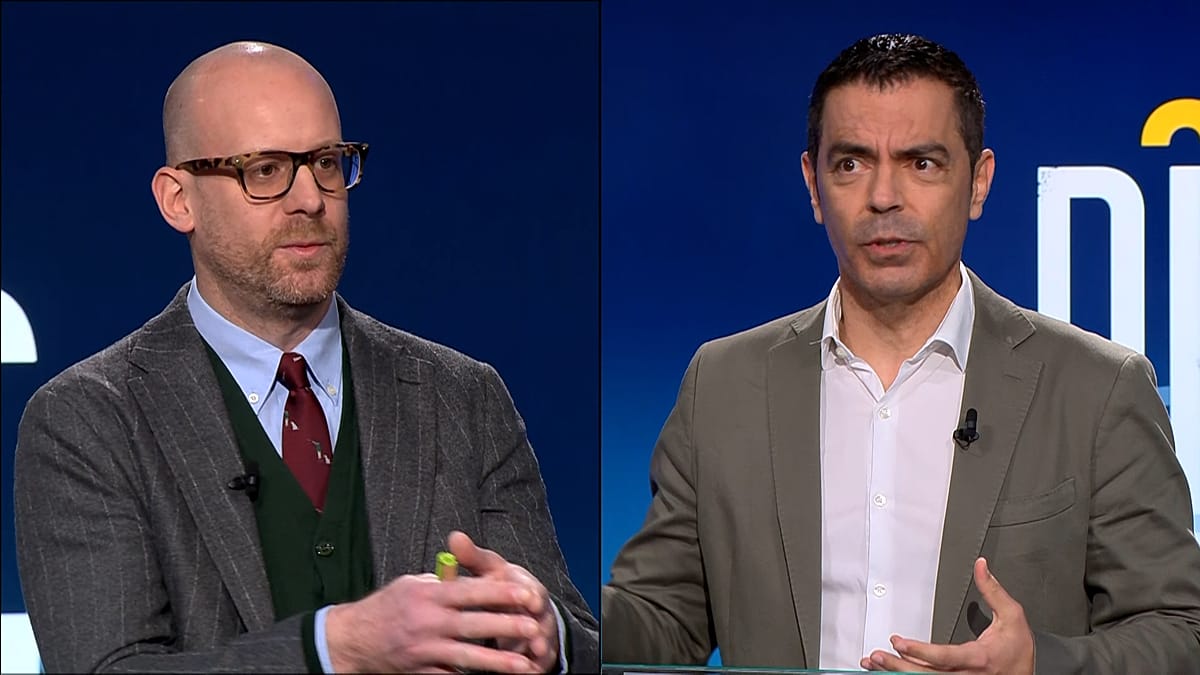
In Strasbourg, the issue took centre stage during a session of the European Parliament, where lawmakers from rival political families squared off. Marcos Ros, a Spanish MEP from the Socialists & Democrats (S&D), and Ondřej Kolář, a Czech member of the European People's Party (EPP), offered contrasting visions of how the EU should manage its purse strings in a time of multiple crises.
A loan with strings attached
The proposed loan, which would be channelled through the EU budget, is designed to help Ukraine cover its immediate financing needs as it defends itself against Russian aggression. But the mechanism raises thorny questions about liability and repayment. Unlike grants, loans must eventually be repaid, and the question of who guarantees them—and under what conditions—has become a point of friction among member states.
German Chancellor Friedrich Merz has linked his government's support for the loan to broader budgetary negotiations, a move that some see as a bargaining chip in the larger fight over the EU's next long-term spending framework. Berlin's stance underscores how Ukraine aid has become entangled with the bloc's internal power dynamics, particularly as national capitals jostle over the size and shape of the post-2027 budget.
For Ros, the loan is a test of European unity. "We cannot let Ukraine down, but we also cannot pretend that this money comes from nowhere," he argued during the debate. "The question is whether we are willing to make the political choices that match our rhetoric."
Kolář, however, warned against overstretching the budget. "Every euro we send to Kyiv is a euro we cannot spend on cohesion policy, on farmers, or on our own competitiveness," he said. "We need a clear strategy, not ad hoc decisions that leave everyone guessing."
The tension between external solidarity and internal cohesion is not new, but it has become sharper as the EU faces simultaneous challenges: the war in Ukraine, the green transition, digital transformation, and the need to bolster its defence industry. The EU's next budget will have to square these competing demands, and the debate in Strasbourg reflects the difficulty of doing so.
Cohesion under pressure
Cohesion policy—the EU's main tool for reducing regional disparities—is particularly vulnerable. Countries like Spain and Czechia, which have benefited from structural funds, are wary of seeing those pots shrink to accommodate new priorities. Ros, who hails from a region that has relied on EU support, defended the policy as essential for the bloc's social and economic convergence.
"Cohesion is not a luxury; it is the glue that holds the Union together," he said. "If we cut it to fund other things, we risk creating a two-speed Europe where some regions are left behind."
Kolář countered that the EU must adapt to a changing world. "We cannot keep doing things the same way forever. The threats we face today are different from those of 2004 or 2014. Our budget must reflect that."
The debate comes amid broader budget talks that have hit rough waters, with disagreements over farm spending and the overall size of the next multiannual financial framework. Some member states, particularly in the Visegrád group, have pushed back against what they see as excessive conditionality attached to EU funds. The Visegrád leaders' pushback has added another layer of complexity to the negotiations.
Meanwhile, the European Parliament has signalled that it will not accept a budget that fails to match the bloc's ambitions. In a recent resolution, MEPs warned that there would be no budget deal without bigger EU spending, a stance that puts them at odds with net contributor countries like Germany and the Netherlands.
The Ukraine loan, then, is not just a financial instrument; it is a mirror of the EU's internal contradictions. On one hand, the bloc wants to project strength and unity in the face of Russian aggression. On the other, it struggles to find the resources to back that posture without alienating domestic constituencies.
As the negotiations move forward, the question of whether the EU can have it all—support for Ukraine, cohesion, competitiveness, and the green transition—remains open. The answer will depend on the political will of leaders in Berlin, Paris, and other capitals, as well as on the ability of institutions like the European Parliament to broker compromises.
For now, the debate in Strasbourg has made one thing clear: the EU's budget is not just a spreadsheet. It is a statement of priorities, and the choices made in the coming months will shape the continent for decades.