The European Parliament has pushed back against a proposal to shrink the EU's next long-term budget, warning that it will not give its consent to any deal that fails to meet its demands. The dispute adds another layer of tension to negotiations already complicated by disagreements over Ukraine funding and new taxes.
At a summit in Brussels on Thursday, EU leaders are set to discuss a framework for the 2028-2034 Multiannual Financial Framework (MFF) put forward by European Council President António Costa. His plan, aimed at breaking a deadlock ahead of key elections in France, Italy, and Poland in 2027, would cut €49 billion from the Council's earlier position, reducing the budget to €1.78 trillion—a 10% reduction compared to the European Commission's original proposal of nearly €2 trillion.
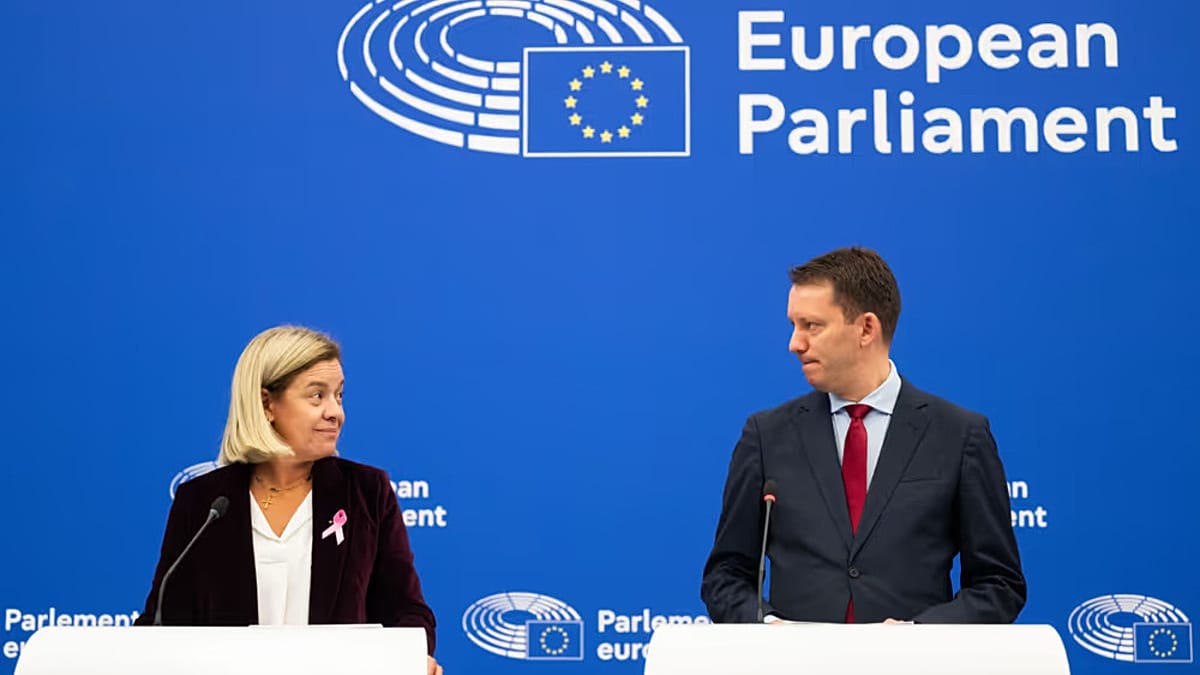
MEPs, however, have made clear they will not simply rubber-stamp an agreement. "Prime ministers shall not dictate to the European Parliament what we should do," said Siegfried Mureșan, a Romanian MEP from the European People's Party and Parliament's co-negotiator on the budget, during a press conference on Wednesday.
The Parliament plays a crucial role in adopting the EU's long-term budget. Any final deal requires unanimous approval from the Council and the consent of an absolute majority of MEPs, giving the Parliament significant leverage. Mureșan accused EU leaders of inconsistency, noting that while they often declare security and competitiveness as top priorities, their proposed cuts would undermine those very areas. "'Cut the budget, but protect me' is the motto of many prime ministers," he said, adding that member states are "proposing the same recipe, which weakened our European economy in the last twenty-five years."
Parliament's stance and the gap with the Council
In April, the Parliament adopted its position, setting €2.01 trillion as the minimum needed to address the challenges of the next seven years. The gap between the two institutions on the budget's size complicates an already difficult negotiation. Among the contentious points is German Chancellor Friedrich Merz's demand to link any deal to financial support for Ukraine, a move that has drawn backlash from several member states.
The proposed cuts are particularly concerning for those who argue that the EU needs to invest heavily in defense, innovation, and climate action to compete globally. As the EU's next budget faces comparisons with Beijing and Washington, the stakes are high for Europe's strategic autonomy.
Support for new own resources
Despite the clash over the budget's size, the Parliament has backed Costa's proposal on "own resources"—EU-wide taxes designed to finance the budget directly, bypassing national treasuries. Costa has suggested introducing a digital services tax, a measure long advocated by MEPs and likely to gain broad support among member states, with Ireland expected to be the main exception due to its hosting of many major US tech companies.
Czech MEP Danuše Nerudová, co-rapporteur for own resources, said the levy would "finally create a level playing field in digital business" in Europe, where some companies have paid less tax than others. The Parliament estimates that its version of the levy, with a 5% call rate and a wider range of online services, could raise up to €25 billion a year, whereas Costa's version is expected to bring in around €5 billion.
The digital levy is intended to replace a controversial tax on large companies (CORE), originally proposed by the European Commission, which faced strong opposition from member states. Overall, the five own resources in Costa's proposal should generate about €60 billion annually. According to Nerudová, these revenues are crucial for financing the budget and repaying the joint debt from the EU's post-pandemic recovery fund.
The negotiations remain fluid, with leaders clashing over size, Ukraine, and new taxes. The Parliament's threat to withhold consent adds pressure on EU leaders to find a compromise that can pass both the Council and the Parliament. As talks hit rough waters over Ukraine funding and farm spending, the coming weeks will be critical in shaping the EU's financial future.