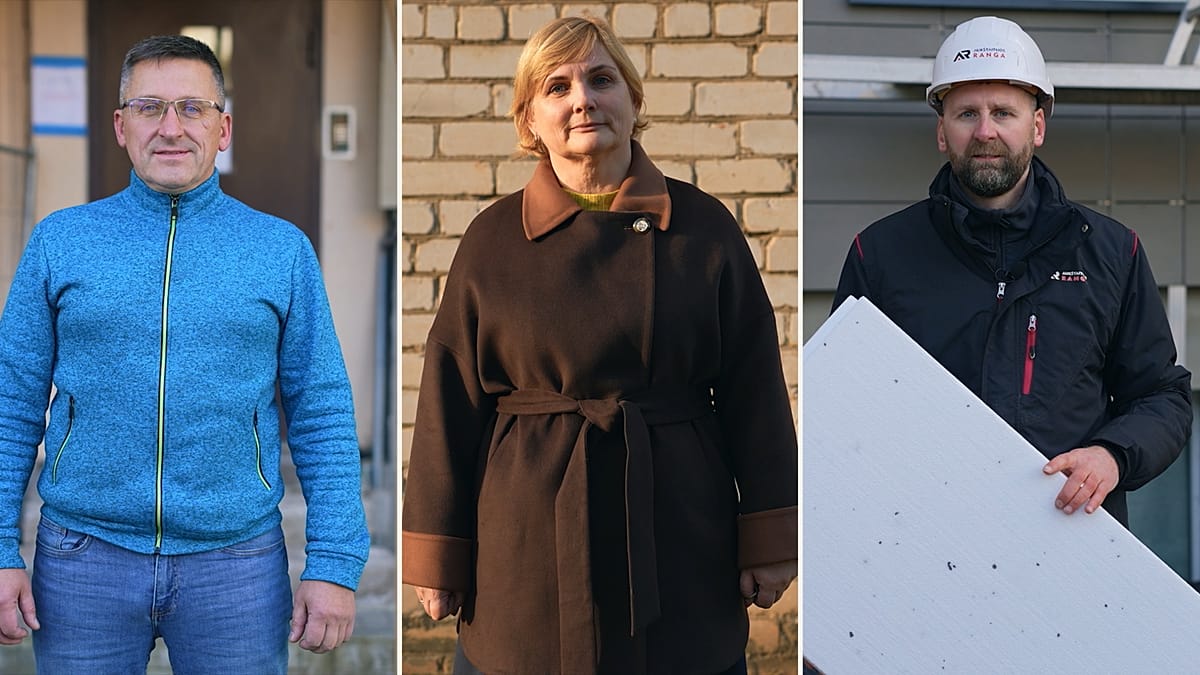
In the Lithuanian town of Ukmergė, Dalia Uselienė knows the bite of winter all too well. Chairwoman of a local homeowners' association, she lives in a late-1960s apartment block where the most exposed wall can frost over from the inside when temperatures plummet. "Renovation is essential for us, because when the cold weather sets in, in winter, it gets extremely cold," she says.
Her building is one of many across the Baltic state that could soon benefit from a major EU-backed renovation push. Lithuania's Social Climate Plan, funded through the EU's Social Climate Fund, aims to renovate more than 40,000 homes—including over 7,000 apartment blocks—by 2032. The scheme is designed to help low-income households and those still reliant on fossil fuels for heating, a pressing issue in a country where energy prices have soared.
A costly problem
Lithuania has one of the highest rates of energy poverty in the EU. Around 17% of residents say they cannot keep their homes adequately warm, and a staggering 67% of residential buildings are rated energy performance class D or below. That means many homes leak heat, driving up bills and carbon emissions alike.
The country's Social Climate Plan is worth €884.2 million, with €662.9 million coming from the EU's Social Climate Fund, which is financed by revenues from the Emissions Trading System. The fund is part of a broader EU effort to cushion the social impact of the green transition, particularly for vulnerable groups.
Vakaris Atkočiūnas, Senior Adviser on Climate Finance at the Lithuanian Ministry of Environment, explains that the support will cover between 50% and 85% of renovation costs for eligible residents. "Renovation costs for vulnerable households will be close to zero," he says.
The scheme is expected to accelerate Lithuania's existing renovation programmes, which have struggled to keep pace with demand. For many residents, the financial barrier has been the main obstacle. Even with subsidies, upfront costs often deter homeowners from undertaking deep energy retrofits—a challenge seen across Europe, where heat pumps promise winter savings but remain out of reach for many.
Beyond individual households, the renovation drive is part of Lithuania's broader strategy to cut fossil fuel use and meet EU climate targets. The country has historically relied heavily on imported gas and oil, and the war in Ukraine has underscored the urgency of reducing that dependence. By improving building efficiency, Lithuania aims to lower energy demand and shield its citizens from volatile energy markets.
The Social Climate Fund is a key pillar of the EU's Just Transition mechanism, designed to ensure that the move to a greener economy does not leave vulnerable people behind. Similar schemes are being rolled out across the bloc, but Lithuania's is among the most ambitious in scope.
For Uselienė and her neighbours, the renovation cannot come soon enough. "When the cold weather sets in, it gets extremely cold," she repeats, her voice carrying the weight of many winters spent in a draughty flat. With EU support, that may soon change.



