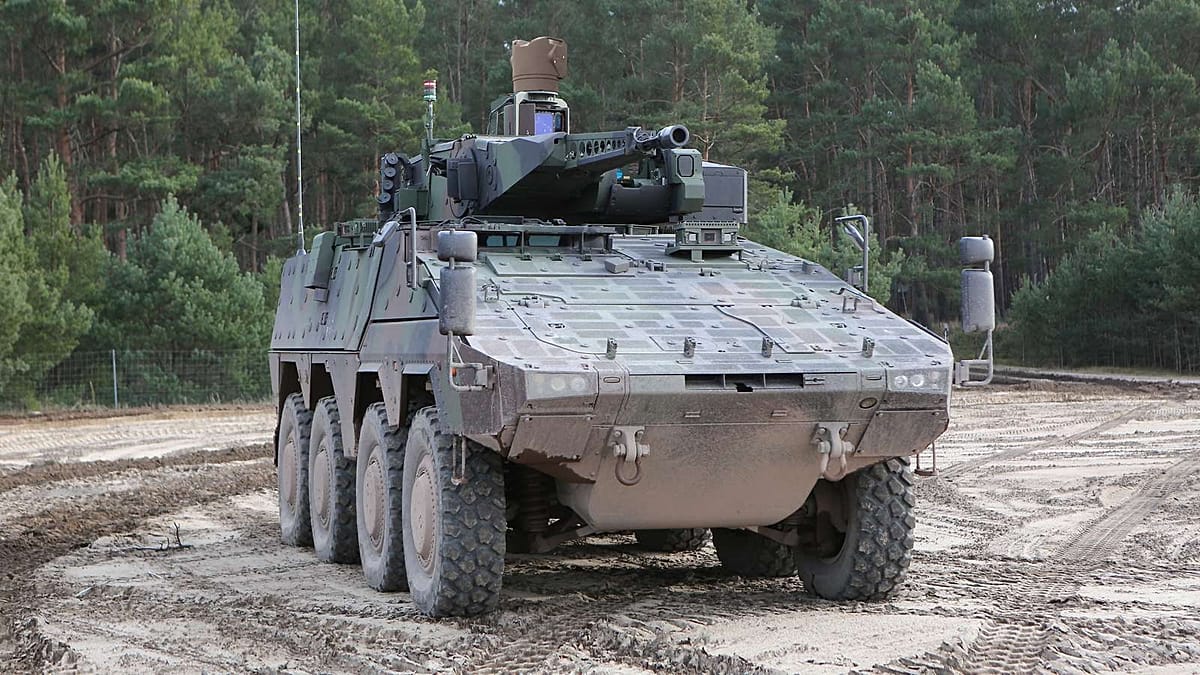
The German armed forces are expanding their fleet of Schakal infantry fighting vehicles, a cornerstone of the Bundeswehr's new Medium Forces concept. An additional 35 vehicles have been ordered, bringing the total to 185. The contract also includes logistics, training, and operational support services.
Medium Forces: bridging the gap
The Schakal is central to the Bundeswehr's plan to create units that are both rapidly deployable and capable of significant firepower. This is especially relevant for NATO's eastern flank, where Germany plays a key role in reinforcement and defense.
According to the Bundeswehr, the Medium Forces are designed to fill the gap between light, highly mobile units and heavy armored divisions. The Schakal, described as the "backbone" of these forces, offers a balance of protection, firepower, and mobility.
Why not just use heavy tanks?
The answer lies in mobility. The Schakal is built on the eight-wheeled GTK Boxer chassis, allowing it to cover long distances on roads quickly, unlike tracked vehicles such as the Puma infantry fighting vehicle. This makes it ideal for rapid redeployment across Europe.
On the other end of the spectrum, lighter vehicles like the Dingo offer mobility but lack the firepower of an infantry fighting vehicle. The Schakal sits between these two, providing the combat capability needed for modern threats.
Capabilities and armament
The Schakal features an unmanned RCT-30 turret derived from the Puma, armed with a 30-millimetre automatic cannon. It can engage lightly and moderately armored targets, and has capabilities against drones and aircraft. It also integrates the MELLS guided missile system for engaging heavily armored targets.
The expansion of the Schakal fleet is part of a broader procurement push by the Bundeswehr, which is also acquiring new main battle tanks, artillery systems, and air defense systems. These efforts aim to close capability gaps that have persisted for decades.
The timing is notable, as NATO's eastern flank faces heightened tensions. Germany's commitment to the region is underscored by initiatives like Germany's Lithuania Brigade, which is preparing for a new era of collective defense.
However, ordering the vehicles is only the first step. Soldiers must be trained, spare parts and ammunition provided, and logistics structures established. The first Schakals are scheduled for delivery from the end of 2027, but the full fleet and supporting structures will take longer to become operational.
As Europe's security landscape evolves, the Bundeswehr's investment in rapid, mobile forces reflects a strategic shift. The Schakal is not just a vehicle; it is a symbol of Germany's commitment to NATO's eastern flank and the continent's collective defense.