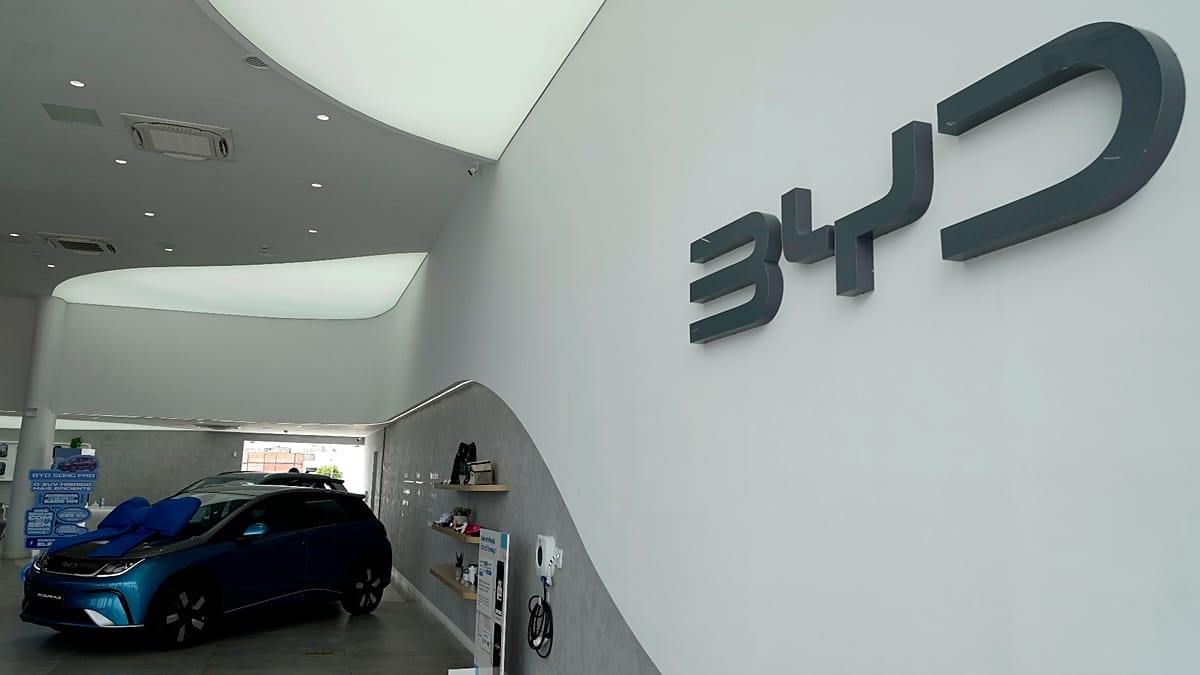
Chinese electric vehicle giant BYD has taken a significant step toward establishing a manufacturing presence in Western Europe. The company announced that it has entered exclusive negotiations with Ineos Automotive to purchase its production facility in Hambach, a town in the Moselle department near the German border. The site, which originally opened in the late 1990s to build small Smart cars, has been owned by the British industrial group Ineos since 2020 and currently assembles the Grenadier 4x4.
The deal remains subject to consultation with employee representatives, but if completed, it would mark BYD's first car factory in the European Union. The company, which overtook Tesla in 2025 as the world's largest manufacturer of electric vehicles, sold 4.6 million vehicles last year across all powertrains. BYD is now accelerating its expansion beyond China, with a clear strategy: produce as close to its European customers as possible.
A strategic hedge against trade barriers
An industrial foothold in France would help BYD mitigate the impact of European customs duties on electric vehicles imported from China. The EU has imposed tariffs on Chinese-made EVs to protect domestic manufacturers, and a local plant would allow BYD to avoid those levies on vehicles sold in the bloc. It would also make it easier to comply with future "Made in Europe" rules, which favor vehicles with a high proportion of locally sourced components.
BYD's executive vice-president, Stella Li, said the company wants to offer European drivers models built in France. She emphasized that BYD intends to secure Hambach's long-term future, protect local jobs, and create new opportunities for staff and suppliers in the region. The announcement was welcomed by French President Emmanuel Macron, who sees it as a validation of France's policy to attract foreign investment and its efforts at the EU level to encourage carmakers to manufacture on the continent.
Industry Minister Sébastien Martin said the project could provide clarity for workers at the site and help develop France's automotive sector. The plant currently employs around 1,000 people, and BYD has pledged to maintain employment levels, though specific numbers have not been confirmed.
However, BYD's arrival is a double-edged sword for France. On one hand, it brings jobs and industrial activity to a region that has seen its share of automotive restructuring. On the other, it introduces a formidable competitor that could undercut French brands on price and technology. BYD's vehicles are often significantly cheaper than comparable models from Peugeot, Citroën, or Renault, and the company has invested heavily in battery technology and software.
French automakers are already feeling the pressure. Renault and Stellantis, which owns Peugeot and Citroën, are fighting to defend their market share in Europe as Chinese brands gain traction. The EU's trade measures have slowed the influx of Chinese EVs, but a local BYD plant would allow the company to bypass those barriers and compete on a more level playing field.
The move also has broader implications for Europe's industrial policy. The EU has been pushing for more local manufacturing of electric vehicles and batteries, partly to reduce dependence on China and partly to secure jobs. BYD's investment in France could be seen as a win for that strategy, but it also raises questions about the long-term competitiveness of European carmakers.
For now, the deal is still in its early stages. Ineos Automotive, which acquired the Hambach plant from Daimler in 2020, has been struggling to scale up production of its Grenadier model. Selling the site would allow Ineos to focus on its core business, while BYD gains a ready-made factory in the heart of Europe.
If the acquisition goes through, BYD would join a growing list of Chinese automakers setting up production in Europe. The company has also been exploring other locations, including Hungary, where it plans to build a plant. But France offers a strategic advantage: proximity to major markets in Germany, Benelux, and France itself.
The French government has been courting foreign investment in the automotive sector, and Macron has made "reindustrialisation" a key theme of his presidency. The BYD deal, if completed, would be a tangible result of that policy. Yet it also underscores the challenges facing European carmakers as they transition to electric mobility and face intense competition from China.
For European consumers, the prospect of BYD cars built in France could mean more choice and lower prices. For the industry, it is a reminder that the race to dominate the electric vehicle market is far from over.