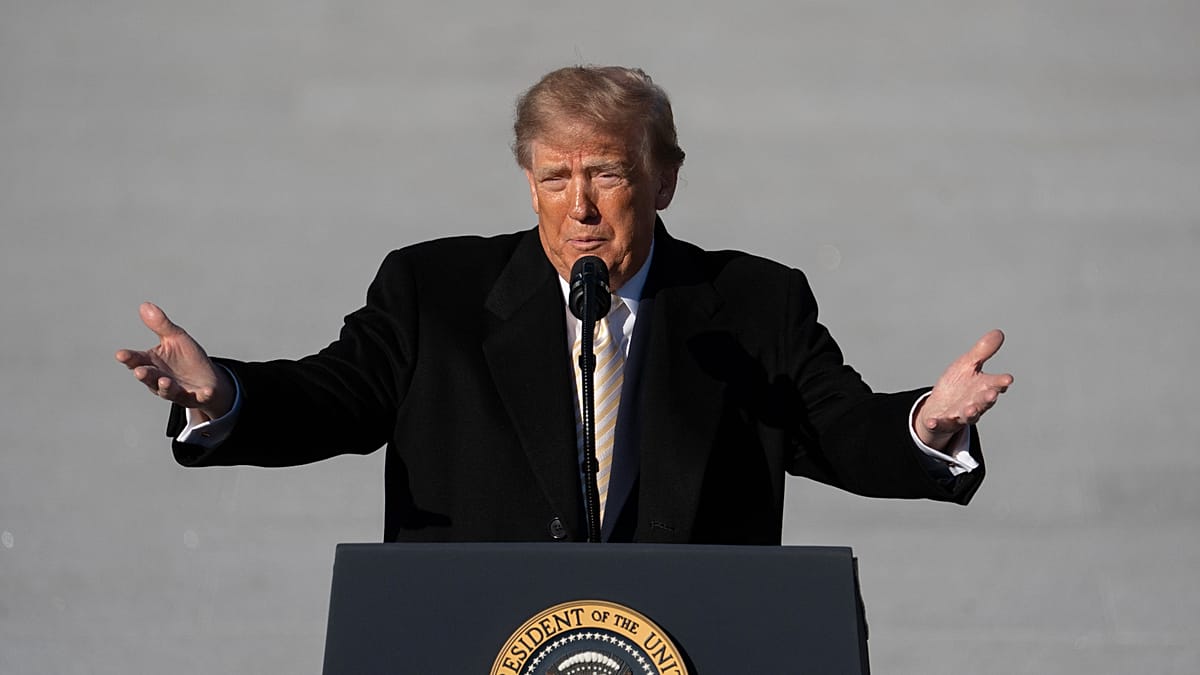
The administration of US President Donald Trump has moved to impose new tariffs on goods from 14 major trading partners, including the European Union, in a bid to counter what Washington describes as excess industrial capacity driven by subsidies and trade barriers. The proposal follows an eight-month investigation under Section 301 of the Trade Act of 1974, which allows the US to retaliate against foreign practices deemed unfair or discriminatory.
The Office of the US Trade Representative (USTR) concluded that practices in 14 economies were unreasonable and had harmed or restricted American commerce. The list covers China, Bangladesh, Cambodia, the EU, India, Indonesia, Japan, South Korea, Malaysia, Singapore, Switzerland, Taiwan, Thailand and Vietnam. Mexico and Norway were also investigated, but no findings have been issued yet, and they are excluded from the proposal for now.
The proposed duties would apply to a range of goods, with rates varying by country and product. For the EU, the White House has announced plans to impose a 15% tariff on top of existing most-favoured-nation (MFN) duties, with exemptions for some products. The draft notice also includes an option of up to 20% if ongoing talks and existing commitments are deemed unsatisfactory. Certain EU goods already subject to US tariffs under Section 232—such as cars and car parts, steel, aluminium, patented medicines and semiconductors—would be exempt from the new duties.
Brussels pushes back
The European Commission has responded cautiously but firmly. Deputy chief spokesperson Olof Gill said on Wednesday that the EU “takes note” of the preliminary finding, but added: “We strongly reject the premise that Europe is a source of structural overcapacity. To the contrary, Europe is among those most exposed to overcapacity.” The EU has long argued that its industrial policies are transparent and compliant with global trade rules, and that the bloc is a victim of overcapacity from other regions, particularly in sectors like steel and solar panels.
The proposed tariffs are part of a broader US effort to reduce its goods trade deficit, which reached $1.24 trillion (€1.13tn) in 2025. The Trump administration says low-priced imports from these partners undercut American companies and have contributed to the deficit. A US administration official said the proposed duties would be consistent with the trade deals Trump reached last year, including the truce with China.
China faces the highest proposed rates. The USTR proposes tariffs of up to 20% on many Chinese goods, with any existing Section 301 tariffs over forced labour deducted from that rate. For some products, the rate could be up to 10%, while others would be exempt. If talks with Beijing fail to resolve US concerns, the USTR could consider a rate of up to 40% on all Chinese goods. An official told the Associated Press that the tariffs were unlikely to undermine the US-China trade truce, which is due to expire on 10 January.
China’s foreign ministry spokesman Guo Jiakun rejected Washington’s accusations of overcapacity and called for talks on Wednesday. “Tariff wars and trade wars are not in anyone’s interest,” he said. Trump met last week in Shenzhen with Chinese leader Xi Jinping and plans to host him next month at the Group of 20 summit in Florida, where the truce, rare earth minerals and China’s purchases of American agricultural products could be discussed again.
The US has also proposed new duties in a separate Section 301 action against Brazil, after talks failed to make meaningful progress. The USTR is proposing higher import taxes on certain out-of-quota raw and refined sugar and a new 10% tariff on finished Brazilian aircraft, a move that would hit Embraer, Brazil’s largest aircraft maker. The broader increase in out-of-quota sugar duties would also apply to imports from other countries.
The wider US proposal also covers Bangladesh, Cambodia, India, Indonesia, Malaysia, Singapore, Switzerland, Thailand and Vietnam. The USTR has yet to issue findings on Mexico and Norway, and both are excluded from the proposal for now.
Public comments on the proposed tariffs are due by 5 January 2027, with hearings set to begin on 25 January. The USTR has not given a date for the duties to take effect. The move comes as the US Supreme Court ruled in February that the emergency powers law Trump had invoked did not authorise his earlier tariffs, prompting the administration to seek new legal justification under Section 301.
The European response will be closely watched. The EU has previously threatened retaliation against US tariffs, including on American goods such as bourbon, motorcycles and jeans. The bloc is also pursuing its own trade agenda, including a security partnership with the UK that could have industrial implications. The proposed tariffs add another layer of uncertainty to transatlantic trade relations, which have already been strained by disputes over steel, aircraft subsidies and digital taxes.
For European businesses, the new tariffs could raise costs and disrupt supply chains, particularly in sectors like machinery, chemicals and pharmaceuticals. The EU has argued that its exports are not the cause of US trade deficits and that tariffs would ultimately harm consumers and workers on both sides of the Atlantic. As the comment period opens, European stakeholders are expected to voice strong opposition, and the EU may consider legal challenges at the World Trade Organization.