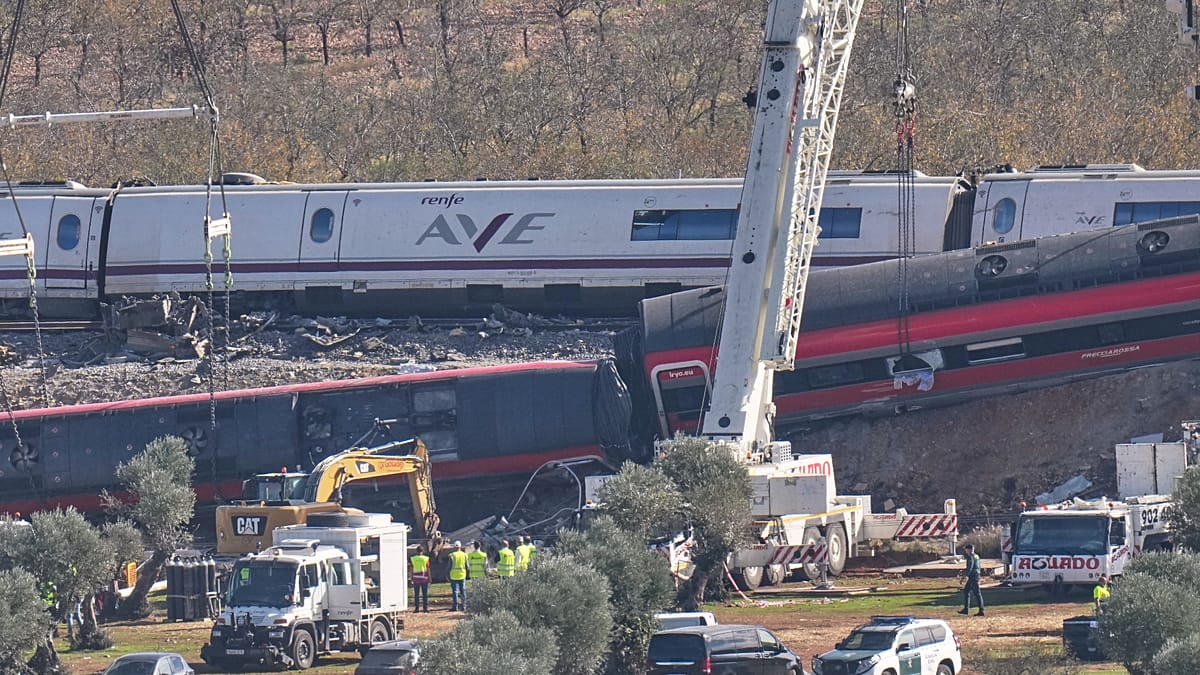
A University of Cambridge researcher has been identified among the victims of the deadly train collision in central Spain on Wednesday. Marta Shahbazi, a group leader at the Medical Research Council Laboratory of Molecular Biology (LMB), was traveling to collect a prestigious scientific award when the high-speed Renfe service she was on struck a stationary Iryo train near Urda, in the province of Toledo, south of Madrid.
The crash, which occurred on 28 October, has claimed at least 69 lives, making it one of Spain's worst rail disasters in decades. Shahbazi, who also held an affiliate assistant professor position at the Cambridge Stem Cell Institute, was due to receive the 2026 José Luis Gómez-Skarmeta prize from the Spanish Society of Developmental Biology for her "outstanding contributions to the study of the early stages of human development."
In a statement, the LMB expressed profound sorrow. "Marta was an inspiring, talented and passionate scientist. Her death is a profound shock and a huge loss. Our thoughts are with her family, friends and colleagues at this extremely difficult time," the laboratory said.
The CiMUS research centre in Santiago de Compostela, where Shahbazi's aunt María José Alonso leads a research group, confirmed the news on social media, calling Shahbazi a "brilliant young researcher." The centre extended its deepest sympathies to Alonso and the family.
A promising career cut short
Shahbazi's work focused on the earliest stages of human life. According to the Spanish Society of Developmental Biology, her research explored "understanding how the human embryo organises itself during early development and how cells make decisions that determine their fate." Her laboratory at the LMB concentrated on embryonic implantation, a critical step in pregnancy.
Colleagues remembered her as a dedicated and innovative scientist whose contributions had already earned international recognition. The prize she was traveling to accept, named after the late Spanish developmental biologist José Luis Gómez-Skarmeta, is awarded biennially to researchers who have made significant advances in the field.
The accident has sent shockwaves through Spain's scientific community and beyond. Tributes have poured in from research institutions across Europe, highlighting the loss of a scientist whose work promised to deepen our understanding of human development.
As Spain mourns the disaster, questions are being raised about rail safety protocols. The collision occurred when the Renfe high-speed train, traveling at speed, slammed into an Iryo service that was stationary on the tracks. Investigators are examining the circumstances, including communication between control centers and train operators.
The tragedy has also taken on political significance. With national elections looming, Prime Minister Pedro Sánchez faces mounting pressure over the government's handling of the rail network. The disaster has deepened Sánchez's pre-election woes, as opposition parties call for accountability and immediate safety reviews.
Rescue teams worked through the night following the crash, using cranes to clear the wreckage and search for survivors. The death toll has risen steadily, with authorities confirming at least 69 fatalities and dozens injured. The royal family visited survivors in hospitals, offering condolences to the victims' families.
For the scientific community, the loss of Shahbazi is a reminder of the human cost of such tragedies. Her research had the potential to inform treatments for infertility and developmental disorders, and her absence will be felt deeply in the field.
As Spain begins to grapple with the aftermath, the focus remains on supporting the victims' families and ensuring that such a catastrophe is not repeated. The investigation into the 17 minutes of decisions before the fatal collision is expected to shed light on what went wrong, and whether systemic failures contributed to the disaster.