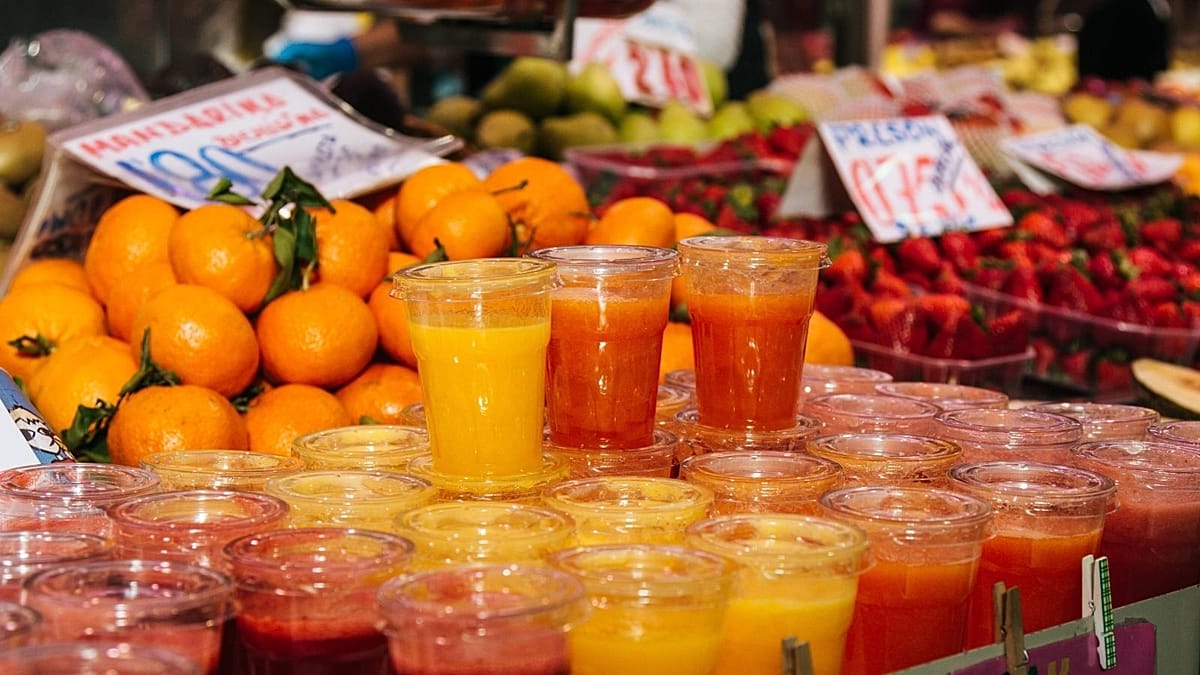
Across Europe, the struggle to consume enough fruit and vegetables persists. In 2023, the average European ate just 351 grams of fruit and vegetables per day—falling short of the World Health Organization’s recommended 400 grams. This shortfall has sparked renewed debate: could a glass of fruit juice or a smoothie legitimately count toward the daily target?
Researchers at Newcastle University in the United Kingdom set out to test this question. Their small trial divided participants into three groups: one consumed five portions of whole fruits and vegetables daily for four weeks; another supplemented their diet with fruit juice; and a third maintained their usual eating habits. Both intervention groups showed significantly higher total fruit and vegetable intake compared with the control group. Notably, the researchers also observed improvements in self-reported depression symptoms among those who increased their fruit consumption, whether through whole produce or juice.
“The finding that fruit juice drinkers had reduced depression scores is promising and worthy of further exploration, particularly in individuals experiencing poor mental wellbeing,” said Dr Oliver Shannon, senior author and lecturer in Nutrition and Ageing at Newcastle University. “Simple dietary changes—like increasing fruit intake, including through a daily glass of juice—could play a role in supporting mental wellbeing.”
The study defined “fruit juice” strictly as juice with no added sugars, preservatives, flavourings, or colourings. Participants also received financial and educational support to overcome common barriers, such as the high cost of fresh produce—a challenge that remains acute across Europe amid persistent inflation. As grocery bills stay high even as inflation slows, cost-effective solutions like juice or smoothies could prove attractive.
National Guidelines Diverge on Juice
Despite the study’s findings, most European health authorities remain cautious. In France, fruit juice does not count toward the recommended intake since the country updated its guidelines in 2017. Germany advises consuming a 150ml–200ml portion of juice only occasionally, no more than twice per week. The UK allows up to 150ml of juice daily, which can contribute to no more than one of the five portions. Denmark considers a small glass of juice as part of its six-a-day recommendation. The consensus across the continent is clear: whole fruits are preferable, and juice should be consumed sparingly.
The main concern is sugar and fibre. Whole fruits provide essential nutrients, fibre, and antioxidants that support digestion, immunity, and chronic disease prevention. Processing fruit into juice strips away much of the fibre and some beneficial compounds. Previous research has linked regular juice consumption to lower energy levels and poorer sleep quality, as the researchers note, because juices offer the least satiety of any fruit form.
“Our trial showed that when people with low fruit and vegetable intake were provided with targeted financial and educational support to address common barriers to eating 5-a-day, they were able to make meaningful changes to their diet,” said Dr Courtney Neal, co-author of the study. “We found that simple, cost-effective solutions, like drinking a small glass of 100% fruit juice or a smoothie daily, could help people reach their 5-a-day, with potential benefits for mental wellbeing.”
The study is exploratory and small, but it opens a door for further research—especially as Europeans continue to grapple with the cost of fresh produce and the inconvenience of rapid spoilage. For now, the advice from most national health bodies remains: eat your fruit, don’t drink it. But for those struggling to meet the target, a modest glass of pure juice might be a pragmatic step forward.