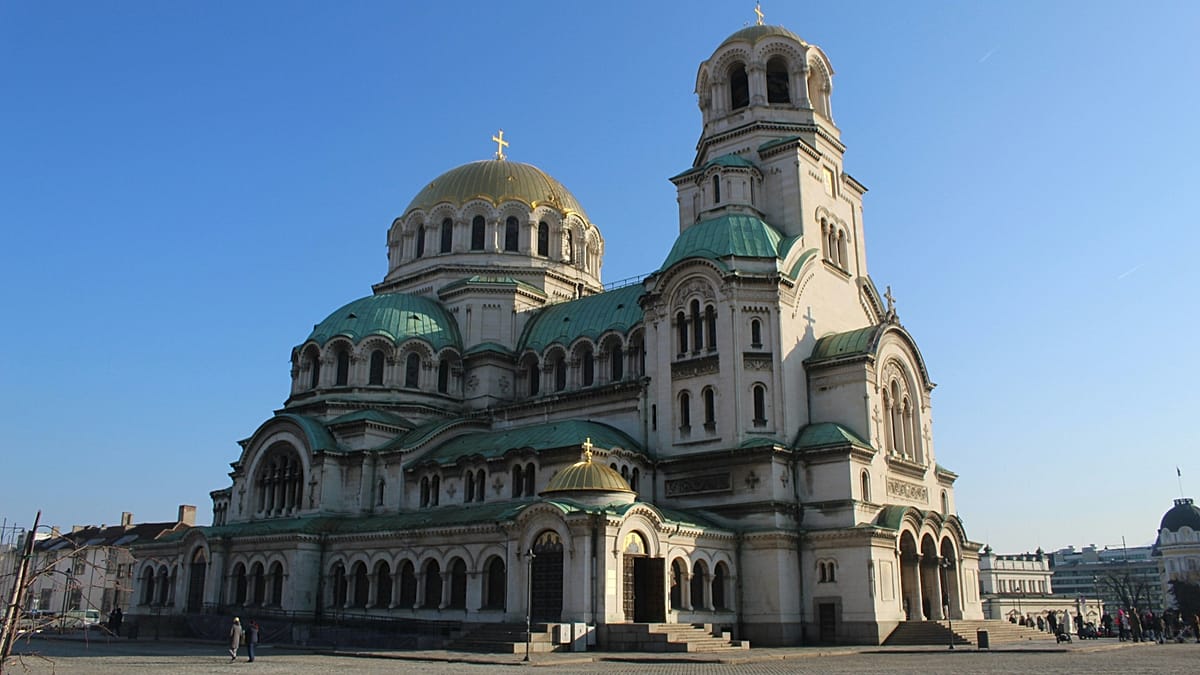
When Charles de Gaulle spoke of a Europe "from the Atlantic to the Urals," he was imagining a continent reunited after the Cold War's division. Today, as global alliances shift, some wonder whether that Atlantic edge might extend all the way to Canada.
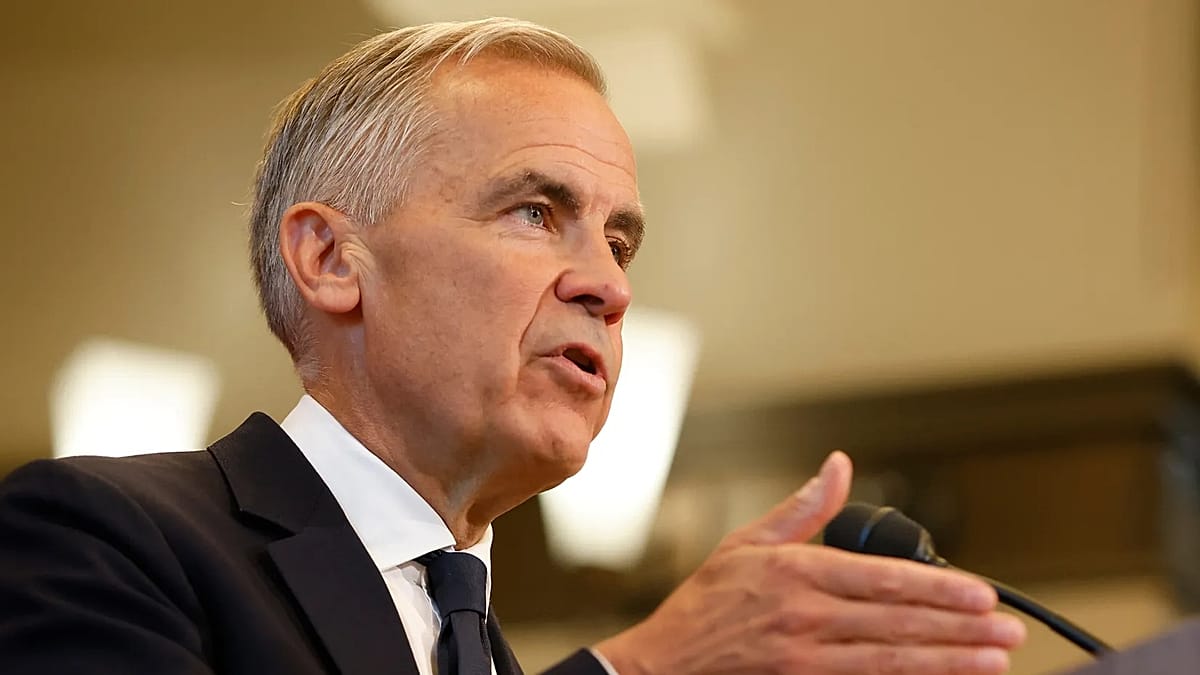
De Gaulle, who fiercely sought independence from the United States, might have sympathized with Ottawa's current predicament. Canada is now locked in a trade war with its longtime ally, and its prime minister, Mark Carney, is looking across the ocean for support.
Carney is scheduled to visit Strasbourg in mid-September to attend the European Commission's State of the Union address and speak to the European Parliament. European Parliament President Roberta Metsola called the visit "an opportunity to deepen EU-Canada ties and strengthen our bond."
But what form could that bond take? And is EU membership even conceivable for a country that sits an ocean away?
Geography versus values
The EU's founding treaties are clear: Article 49 of the Treaty on European Union states that "any European State" that respects the bloc's core values—human dignity, freedom, democracy, equality, the rule of law, and human rights—may apply to join. The term "European State" implies a geographical limit, but that limit is not always precise.
"The notion of a 'European state' is imprecise for countries on the continent's margins," said Sebastien Maillard, special adviser at the Jacques Delors Institute. "But it is clear-cut for countries that are manifestly outside the European geographical space."
In 1987, the European Communities rejected Morocco's application because it was considered an African state. Turkey's application that same year sparked debate, as only about 5% of its territory lies in Europe. The Caucasus region's status is similarly contested.
"But there is no doubt that a Canadian in Vancouver feels far away from Europe," Maillard added. "The EU is regional, it is not intended to have a global scope."
Yet shared values and a common view of the current geopolitical order—where the US is challenging its traditional alliances—are drawing Canada and the EU closer. In May, Carney attended a meeting of the European Political Community in Armenia, a forum created after Russia's invasion of Ukraine. Canada is also, alongside the US, a non-European member of NATO and a G7 member.
At the World Economic Forum in Davos in January, Carney urged fellow "middle powers" to cooperate. "Middle powers must act together because if we're not at the table, we're on the menu," he said, warning that powerful nations were using economic leverage to get their way.
A 'transatlantic United Kingdom'?
Some experts see a model for Canada-EU relations in the post-Brexit arrangement. "Canada is somewhat like the 'transatlantic United Kingdom' in relation to Europe: a state that is not a member of the European Union, but with which we share a genuine community of interests and values," said Eric Maurice of the European Policy Center.
The EU-UK Trade and Cooperation Agreement, signed after Brexit, is the bloc's most comprehensive deal with a third country, covering goods, services, public procurement, energy, fisheries, and security cooperation, as well as UK participation in programmes like Horizon Europe.
Italian MEP Sandro Gozi, a member of the European Parliament's constitutional affairs committee, believes the EU needs to be more creative. "In this new historical movement we are living through, we need to show creativity and imagination," he said. While full membership for Canada is unlikely in the near term, Gozi argues that "increasingly, if we look at the United Kingdom or Norway—which is part of the single market and cooperates with the EU in defence—and now Canada, there is a need to develop new forms of association and special partnerships."
The EU and Canada already have a trade agreement, the Comprehensive Economic and Trade Agreement (CETA), but there is room to deepen it. Turkey, for instance, shares a customs union with the EU. Access to the single market—where goods, persons, services, and capital move freely—would be a further step.
But that would come with a cost. "Access to the single market would mean that Canada would agree to align with European law without having a say in shaping it," Maillard said. "Because when you are part of the European Economic Area, you adopt EU legislation without having a hand in shaping it. So that can be democratically frustrating."
As the trade war with the US escalates—Canada has imposed sweeping counter-tariffs—Ottawa's pivot toward Europe is likely to accelerate. Whether that leads to a new form of association or simply a deeper version of existing ties remains to be seen. But the question of where Europe's borders end is no longer purely theoretical.