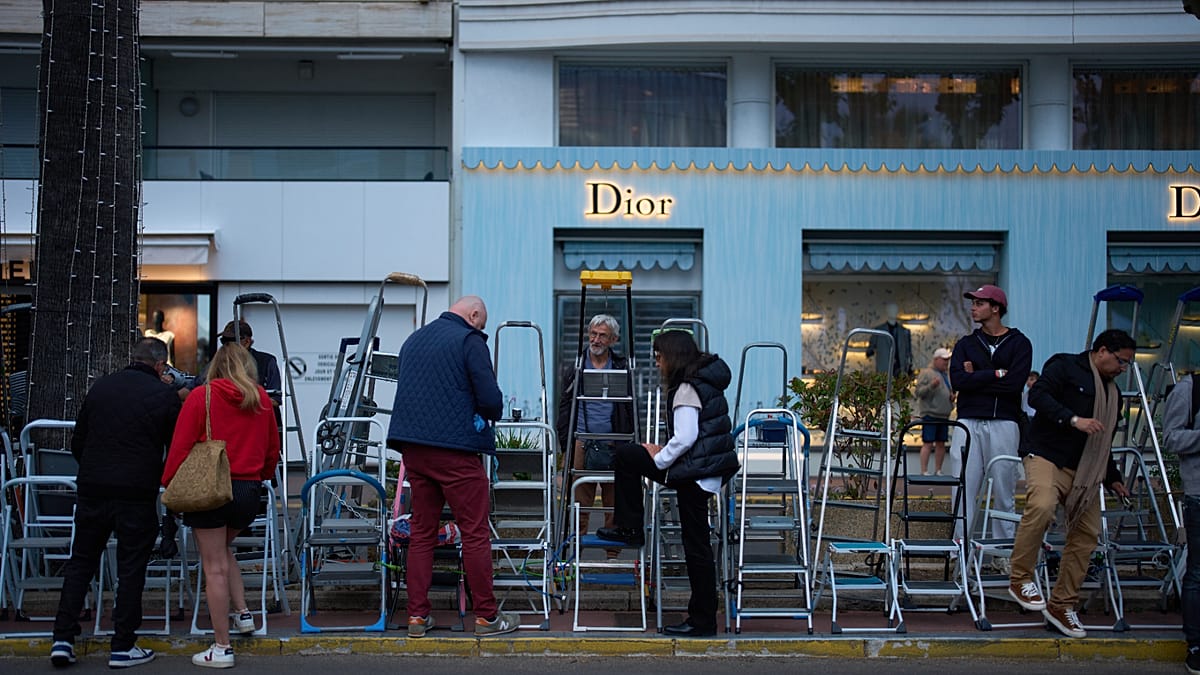
As the 2026 Cannes Film Festival prepares to kick off on the French Riviera, a familiar ritual has unfolded along the Boulevard de la Croisette: dedicated fans have camped overnight, armed with stepladders and chains, to secure prime positions on the red carpet. The scene, captured in video footage, shows a line of makeshift barriers and sleeping bags, a testament to the festival's enduring magnetism for cinephiles eager to glimpse Hollywood and European stars.
The opening ceremony, set for Tuesday evening, will see the Palme d'Or contenders begin their march up the iconic steps. But for many, the real spectacle is the crowd itself—a mix of locals from Cannes and visitors from across Europe, including groups from Paris, Milan, and Barcelona, who have turned the pavement into a temporary campsite. Chains are used to mark territory, while stepladders offer a vantage point above the throngs.
Industry Tensions Beneath the Glamour
This year's festival, however, is not without its undercurrents. Earlier in the day, 600 industry figures protested outside the Palais des Festivals, voicing concerns over the media influence of French billionaire Vincent Bolloré. The demonstration, organized by filmmakers and critics, highlights a growing rift between the festival's commercial machinery and calls for greater cultural independence. The red carpet campers, oblivious to the political currents, represent the other face of Cannes: the raw, unfiltered passion for cinema that draws thousands to the Côte d'Azur each May.
The festival's parallel section, the Directors' Fortnight, also opens this week with a provocative lineup. Among the highlights is Alexandra Matthaiou's 'Free Eliza,' a Greek-French co-production that challenges toxic positivity, a theme that resonates with the protest's critique of media narratives. Meanwhile, the main competition includes films from directors hailing from Germany, Italy, and Spain, underscoring the festival's role as a showcase for European cinema.
For the fans on the red carpet, the wait is a rite of passage. Many have brought snacks, water, and portable chargers, turning the vigil into a social event. "It's a tradition," said one woman from Lyon, who declined to give her name. "You meet people from all over Europe. Last year, I talked to a couple from Stockholm. This year, I'm here with a group from Budapest." The chains, she explained, are a practical necessity: "Without them, people would push in. It's not aggressive—it's just how we keep order."
The festival's opening night is expected to draw a star-studded lineup, including actors from the UK, France, and Italy, as well as international names. The red carpet, a 60-meter stretch of crimson, will be the stage for a carefully choreographed parade of designers, photographers, and celebrities. But for the campers, the real prize is a spot at the front, where they can see the stars up close—a moment that, for many, justifies the sleepless night.
As Cannes enters its 79th edition, the juxtaposition of glamour and grit remains its defining feature. The red carpet campers, with their ladders and chains, are a reminder that the festival is not just an industry event but a popular spectacle, one that continues to capture the imagination of Europeans and global audiences alike. Whether the protests will overshadow the opening remains to be seen, but for now, the focus is on the stars—and the fans who wait for them.