Alexandra Matthaiou is bringing her latest short film, Free Eliza (Notes on an Anatomical Imperfection), to the Cannes Film Festival's Directors' Fortnight, a section renowned for championing independent and daring cinema. The film, a co-production between Cyprus, Greece, and France, is one of nine shorts selected for this year's programme.
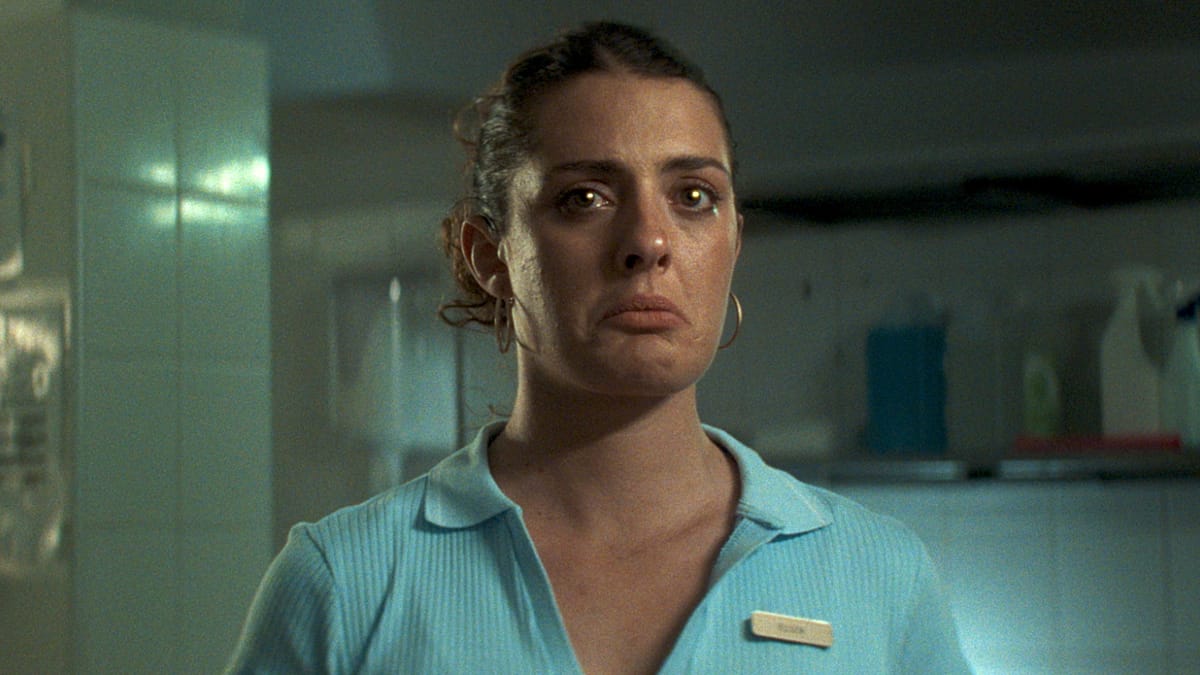
The story follows Elisa, a hotel employee who suffers from an anatomical anomaly that prevents her from smiling. In an environment where positivity is not just encouraged but demanded, her condition becomes a serious liability. She must either defend her difference or conform to the expectations of others.
Matthaiou shot the film over four days at the very hotel that inspired it. Speaking before her departure for Cannes, she recalled the moment of conception: "It was a funny start. I was in the same hotel as a jury at the Cyprus Short Film Festival. One day, I saw at breakfast a girl who worked there, who had the saddest look I've ever seen. I just remember writing a note, because it made a terrible impression on me. Why? It was in complete contrast to the palm trees, the pools, the happy tourists. I'm very concerned about the issue of toxic positivity, because I see it everywhere, and especially in an environment like a hotel where being an employee almost doesn't allow you to be anything but happy."
A Heroine Who Defies Expectations
Matthaiou describes Elisa as a heroine who subverts audience preconceptions. "When you see this disability of hers, it's very easy to get confused and think that she's a person who's not happy or who lives in a depression, because everything is her fault. Gradually the heroine dismantles all of that through the film, because we discover that her own inner world, the way she sees everything around her and the way she has developed to dream, even if she doesn't succeed at everything she dreams, we understand that it is so rich that it ultimately makes her unapologetically very powerful."
The director emphasizes that the film operates on two levels. "On a first level it's about smiles and the lack thereof and how that differentiates you from those around you. But on a second level what I was interested in seeing through this heroine is people who tend to deviate from the norm of what is considered socially ok." She credits actress Gregoria Methenitis, who plays Elisa, for bringing depth to the character: "She has given her form. It's not just the script, and it's not just me."
Matthaiou sees Elisa as a reflection of real people navigating oppressive environments. "I think we've seen too many similar stories: people working in environments that oppress them, that don't make them happy. It's not that Elisa is very different in that, but there's a grey landscape in which she enjoys this work to a certain extent. It gives her joy. What makes it very difficult for her though, is the social pressure of those around her to be something other than what she is. Of course, the irony is that she is possibly happier than others around her, who, with these veneers of joy and wearing smiles, think they are more normal."
The director, who describes herself as a naturally smiley person, acknowledges the complexity of her subject. "Growing up I've come to understand that being able to interact with people with a smile is a weapon. You immediately seem less threatening. You can probably even conquer things more easily than other people who lack this social skill. But I do think it's worthwhile to tenderly and caringly engage with people whose temperament may not allow them to bridge a social dialogue with a smile. I don't consider it a disability in any way."
When asked about Elisa's dream job, Matthaiou laughs: "It would clearly be Lady Gaga or a superstar performer. She's a girl who is hungry to be in the spotlight, to turn the spotlight on her."
Matthaiou's previous short, A Summer Place, earned the Drama Queer Award and an Honorable Mention for Female Performance at the Drama Short Film Festival in Greece, along with international recognition at festivals including AFI, Palm Springs, Tampere, and Uppsala. Free Eliza continues her focus on unconventional heroines. The film's world premiere at Cannes adds to a festival edition already marked by industry protests over media influence, as 600 industry figures protested Bolloré's media influence at the opening. Meanwhile, the festival's environmental footprint remains a topic of debate, with private jets burning 2 million litres of fuel during the event.