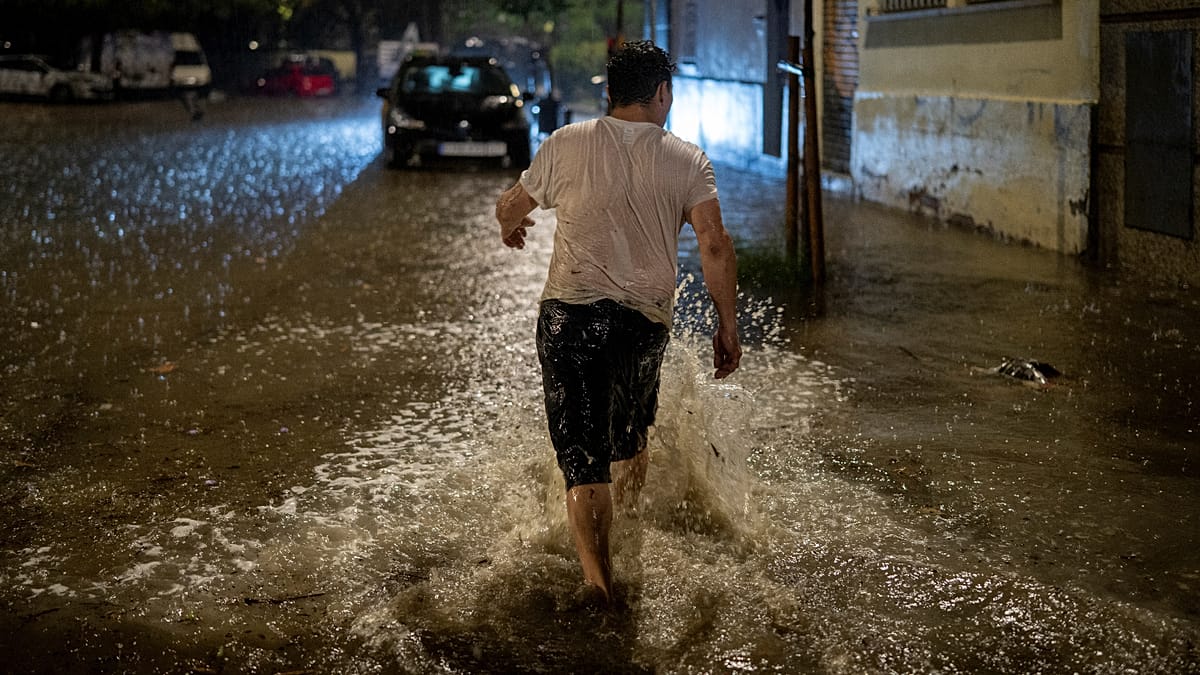
Torrential rain has unleashed devastating floods across Catalonia, leaving at least two people dead and one missing. The storm, which hit the northeastern region of Spain over the weekend, has turned streets into rivers and forced emergency crews to respond to more than 1,500 calls.
The heavy downpour, which meteorologists described as exceptional for this time of year, caused rivers to overflow in several areas, particularly around Barcelona and the surrounding provinces. In the town of Sant Vicenç dels Horts, just west of Barcelona, a man was found dead in a vehicle that had been swept away by floodwaters. In the nearby municipality of Cervelló, a woman died after being trapped in a basement as water surged in.
Rescue operations and infrastructure strain
Firefighters and civil protection units have been working around the clock, conducting dozens of rescues and evacuating residents from flooded homes. The Catalan emergency services reported that many roads, including sections of the AP-2 and C-32 highways, were temporarily closed as water levels made them impassable. Rail services on several commuter lines were also suspended, stranding passengers and disrupting travel across the region.
The storm has also caused significant damage to infrastructure, with reports of collapsed bridges and landslides in the interior. In the city of Tarragona, the Francolí river burst its banks, flooding industrial estates and residential areas. Local authorities have urged people to avoid unnecessary travel and to stay away from riverbanks and coastal areas.
This is not the first time Spain has faced such extreme weather. Earlier this year, storms battered Barcelona and Biscay, causing widespread disruption. The frequency of these events has raised concerns about the impact of climate change on the Mediterranean region, which scientists say is becoming more prone to intense rainfall and flash flooding.
In response to the current crisis, the Catalan government has activated the Inuncat emergency plan, which coordinates the response of all agencies involved. The Spanish central government has also offered military support through the UME (Unidad Militar de Emergencias), a specialised unit for disaster relief.
As the waters begin to recede, the focus is shifting to the recovery effort. Many residents are returning to their homes to find them damaged, and local businesses are assessing the losses. The full extent of the damage is still unclear, but early estimates suggest it could run into millions of euros.
Meanwhile, the search continues for the missing person, a man who was reportedly swept away while trying to move his car in the town of Girona. Emergency teams are using drones and divers to search the affected waterways.
The floods have also had a political dimension, with opposition parties criticising the regional government for what they say is a lack of investment in flood defences. The Catalan president has defended the response, arguing that the intensity of the storm was unprecedented and that all available resources were deployed.
For residents, the immediate priority is to recover and rebuild. "We have lost everything," said Maria Soler, a shopkeeper in Sant Vicenç dels Horts, speaking to local media. "But we are alive, and that is what matters."
As Europe watches, the events in Catalonia serve as a stark reminder of the growing threat posed by extreme weather. The region, like much of the continent, is having to adapt to a new reality where such disasters are no longer rare.