Leaders of Kazakhstan, Uzbekistan, Kyrgyzstan, Turkmenistan, and Tajikistan gathered in Astana last week for the Regional Ecological Summit, a first-of-its-kind dialogue platform aimed at aligning the region's environmental priorities ahead of international negotiations. The summit, proposed by Kazakh President Kassym-Jomart Tokayev at the 78th UN General Assembly in 2023, produced a joint declaration on 'Environmental Solidarity of Central Asia' that commits the five states to develop common positions and solutions on environmental challenges that threaten regional stability.
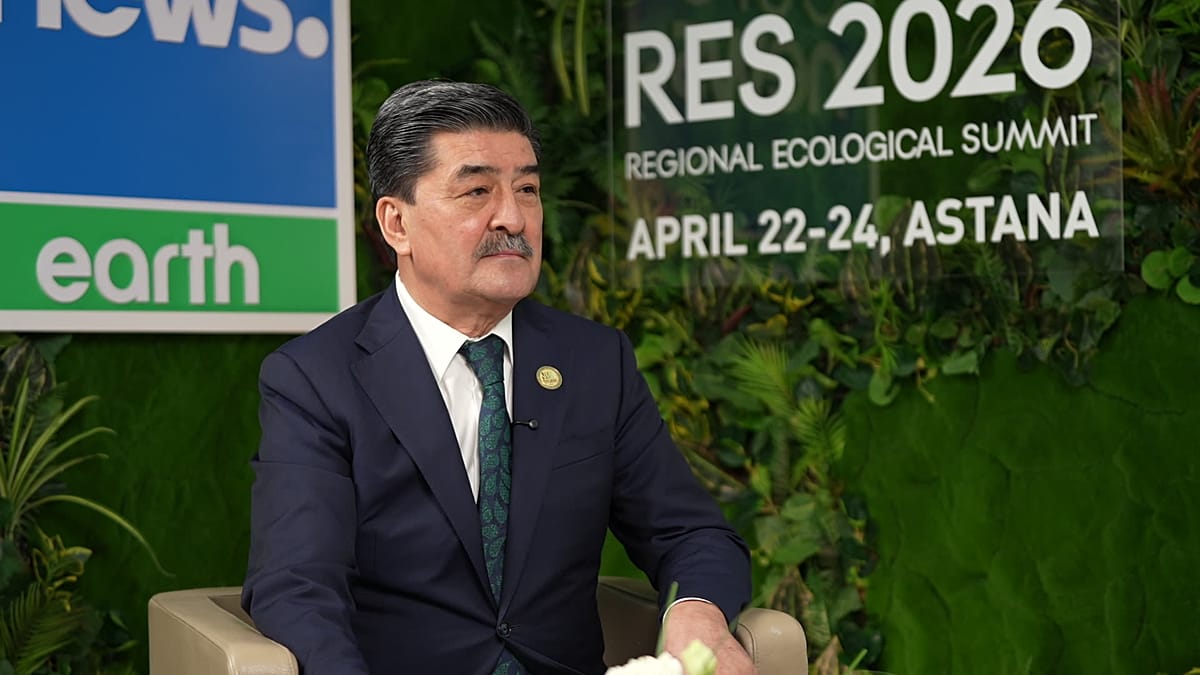
Kazakhstan's Minister of Ecology, Yerlan Nyssanbayev, described the declaration as the summit's main outcome. 'The document commits Central Asian countries to develop joint positions and solutions on environmental issues that could undermine the region's stability,' he said. The declaration was adopted by regional heads of state and signals a new level of coordination among the five nations.
Water, Biodiversity, and the Caspian Sea
One of the summit's key milestones was the endorsement of President Tokayev's proposal to establish an international water organisation under the United Nations. Initial consultations were launched on the sidelines of the event. Regional leaders also backed Tokayev's initiative to create an international biodiversity fund and a proposal to develop an interstate programme to protect the water resources of the Caspian Sea.
The Caspian Sea, the world's largest inland body of water, faces severe environmental pressures from pollution, overfishing, and falling water levels. The new programme aims to coordinate conservation efforts among the five littoral states—Kazakhstan, Turkmenistan, Iran, Azerbaijan, and Russia—though only the Central Asian members were present in Astana.
Nyssanbayev noted that the region continues to grapple with water scarcity, land degradation, desertification, and biodiversity loss. 'The summit demonstrated to the international community that the region is united, that countries are listening to one another and moving forward together,' he said. 'It underscores Central Asian solidarity, with key areas of joint cooperation on environmental issues and climate change clearly defined.'
€2 Billion in Green Financing
Beyond political commitments, the summit delivered concrete financial agreements. The International Exhibition of Green Technologies, held alongside the summit, saw nearly €2 billion in financing agreements signed. The projects cover renewable energy, waste management, industrial decarbonisation, and fertiliser production in Kazakhstan.
The funding is part of cooperation between the European Commission, Kazakhstan, and financial institutions including the European Bank for Reconstruction and Development. One flagship project is the construction of a one-gigawatt wind farm in Kazakhstan's Zhambyl region, which will significantly boost the country's renewable energy capacity.
These investments align with broader European efforts to support the green transition in Central Asia, a region that remains heavily dependent on fossil fuels. The European Union has been a key partner in promoting sustainable development and climate resilience in the region, and the summit reinforced this partnership.
Restoring Key Species
Kazakhstan is also making progress on biodiversity restoration. The country has successfully increased the population of the saiga antelope from just 21,000 in 2003 to around five million today, through sustained state measures. 'The country managed to save and significantly increase the population of the saiga antelope,' Nyssanbayev said.
Other projects include the reintroduction of the Przewalski's horse. Fourteen animals have already been brought from Europe, with a further 40 expected by 2029, forming the basis of a long-term restoration programme. An even more ambitious initiative is the restoration of the Turanian tiger in its historical habitat. Two Amur tigers have already been introduced and are living in a designated reserve. 'With an initial population of six Amur tigers, we are launching a major programme to restore the Turanian tiger. In effect, this is an effort to bring back a species that has disappeared from the region,' Nyssanbayev said. The last tiger in Kazakhstan was recorded in 1948.
Rebuilding After Wildfires
The summit also addressed the aftermath of devastating wildfires in northern Kazakhstan in 2023, which killed 15 people and destroyed around 70,000 hectares of forest. President Tokayev had set a target in 2020 to plant two billion trees. According to Nyssanbayev, around 1.648 billion trees have already been planted within the state forest fund, with the full target expected to be met by the end of 2027. The ministry is also carrying out large-scale post-fire restoration, prioritising the clearing of burnt areas and replanting new forests.
The summit was held in partnership with the United Nations and brought together high-level representatives, including three Deputy Secretaries-General of the UN, senior officials from the United Nations Economic Commission for Europe, and representatives from CITES and the Convention on Biological Diversity. Nyssanbayev noted that the level of representation underlined the importance of the discussions for Central Asia. 'We are leaving this summit with a clear commitment to continue working to improve environmental conditions, address climate challenges, and reduce CO₂ emissions and pollution,' he said.
For European readers, the summit underscores the growing importance of Central Asia as a partner in global environmental governance. The region's challenges—water scarcity, desertification, and biodiversity loss—are shared with parts of southern Europe, and the solutions developed in Astana could offer lessons for cross-border cooperation. The European Commission's involvement in financing green projects in Kazakhstan also highlights the EU's strategic interest in supporting sustainable development in its eastern neighbourhood.