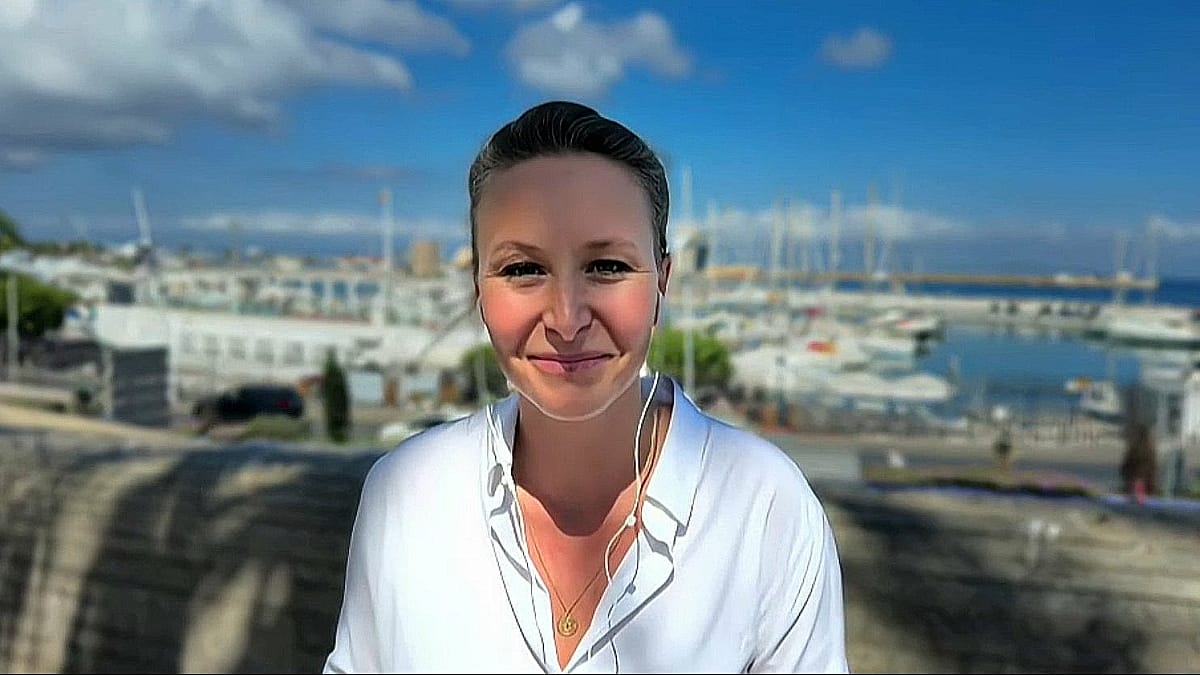
The mass arrival of migrants in the Spanish enclave of Ceuta at the end of July remains an unresolved challenge for the European Union, according to Marion Maréchal, a French MEP from the European Conservatives and Reformists group. In an interview, Maréchal described the influx as a "security threat" and insisted that the situation "has not been completely solved," despite efforts by Spanish and Moroccan authorities to manage the border.
Asylum rules under fire
Maréchal, who is known for her hardline stance on immigration, argued that the EU's current asylum framework is fundamentally flawed. "The European asylum rules must be reviewed," she said, adding that they are "too broad" and allow too many claims to be processed without sufficient scrutiny. She proposed that Brussels establish a "list of safe countries" from which asylum applications would automatically be rejected, a measure she believes would deter economic migrants and reduce pressure on frontline member states.
The Ceuta episode, in which thousands of people crossed the border from Morocco into the Spanish territory over a short period, has reignited debates across the continent about border security and the distribution of asylum responsibilities. While Spain has sought to return many of the arrivals to Morocco under bilateral agreements, Maréchal contends that such ad hoc solutions are insufficient. "We need a coherent European policy, not a patchwork of national responses," she stressed.
Her comments come amid broader tensions between the EU and Morocco, which have flared over the status of Ceuta and Melilla, Spain's two North African enclaves. Earlier this year, Manfred Weber, leader of the European People's Party, threatened Morocco with "obvious consequences" over the standoff, highlighting the diplomatic fragility of the relationship. The EU has also been grappling with how to handle migration pressures from the Sahel region, where instability and climate change are driving displacement.
Maréchal's call for a safe-country list is not new; several member states, including Germany and Denmark, have already implemented similar mechanisms at the national level. However, a common EU-wide list would require unanimous agreement among the 27 member states, a difficult task given differing views on human rights and diplomatic relations with countries like Morocco, Turkey, and Libya. Critics argue that such lists can be arbitrary and may violate international law, which prohibits returning asylum seekers to places where they face persecution.
The far-right MEP's remarks also tap into a wider political trend. Across Europe, far-right parties have gained traction by linking migration to security concerns, a narrative that has been amplified by recent events, including the spread of fake AI protest videos targeting far-right sentiment and the energy squeeze that has handed populist parties a potent election weapon. Maréchal's party, Reconquête, has been part of this movement, though it has struggled to match the electoral success of its rivals in France.
In Ceuta itself, local authorities have reported a decrease in crossings since the initial surge, but the underlying pressures remain. The enclave's geographic position makes it a magnet for migrants from sub-Saharan Africa and the Maghreb, and the EU's external border here is often described as a litmus test for the bloc's migration policy. As the European Parliament prepares to debate the New Pact on Migration and Asylum, Maréchal's intervention is likely to fuel further divisions between those who want stricter controls and those who advocate for more solidarity and legal pathways.
For now, the EU's response to Ceuta has been a mix of bilateral diplomacy and emergency funding, but Maréchal argues that a long-term solution requires a fundamental rethink. "We cannot continue to improvise," she said. "Either we protect our borders and define who can enter, or we will face repeated crises." Her words echo a sentiment that is gaining ground in several capitals, even as human rights groups warn against the erosion of asylum standards.
As the bloc looks ahead to the 2024 European elections, migration is set to remain a defining issue. The Ceuta crisis may have faded from the headlines, but for Maréchal and her allies, it is far from over. The question now is whether the EU can forge a common approach that balances security with its humanitarian obligations, or whether the divisions exposed by Ceuta will deepen.