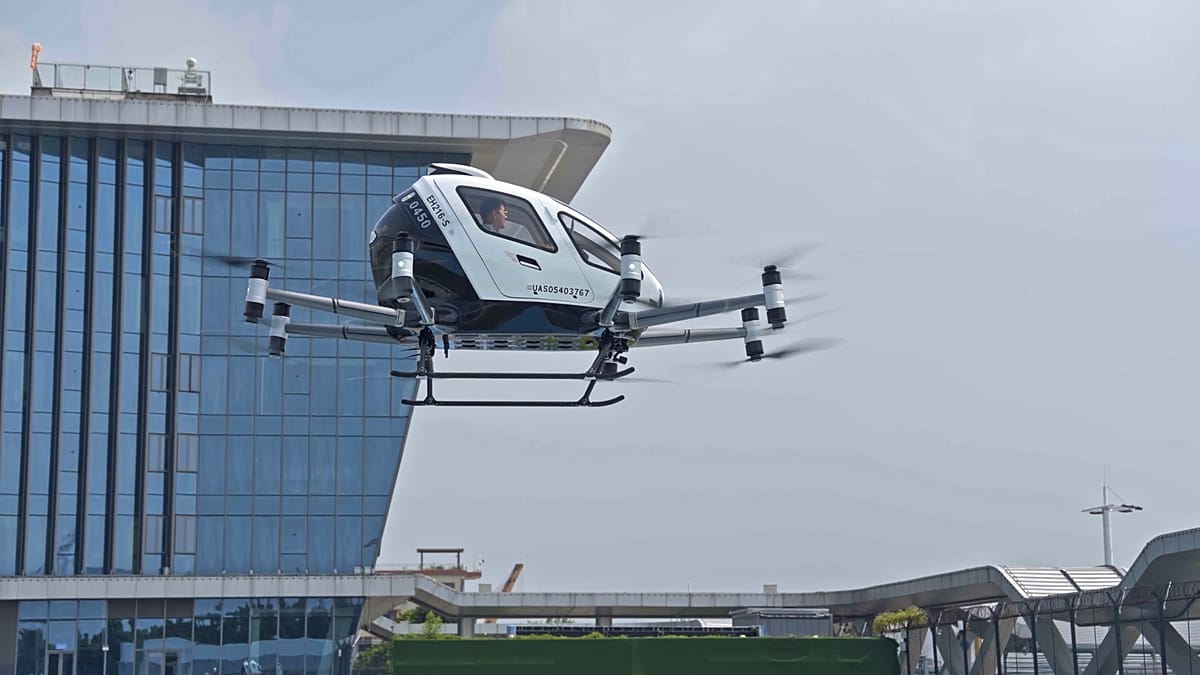
In the skies above Guangzhou, a two-seater aircraft with no control stick lifts off, follows a pre-programmed route, and lands without a pilot touching a single lever. This is the EHang 216, a passenger-carrying drone that has become the first of its kind to receive an airworthiness certificate in China. For Wang Zhao, Co-Chief Operating Officer of EHang, the milestone was a turning point: “When we became the first to obtain an airworthiness certificate, everyone could see a clear goal.”
The flight, which CGTN's Yang Zhao experienced firsthand, is part of a broader Chinese strategy to embed new technology into every stage of air travel—from takeoff to maintenance. While Europe debates the pace of urban air mobility regulation, China is already operating test routes and building the digital infrastructure to support a new generation of aviation.
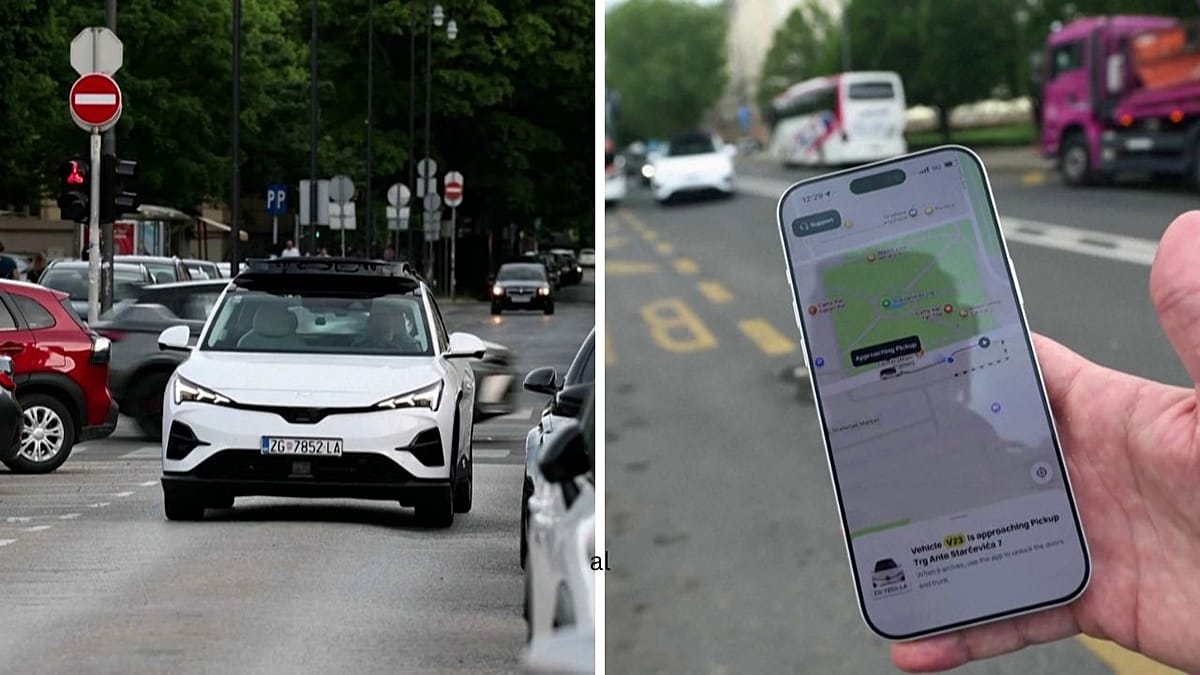
From autonomous taxis to digital hangars
EHang's aircraft is fully autonomous: passengers cannot take over, and the vehicle follows pre-set routes. That design choice eliminates the need for pilot training but raises questions about public acceptance and regulatory frameworks. In Europe, where aviation authorities have been cautious about autonomous flight, the Chinese model offers both a template and a cautionary tale.
Meanwhile, in Beijing, the focus is on the ground. Chinese engineers are digitising aircraft maintenance, using sensors and data analytics to predict failures before they happen. This shift from reactive to predictive maintenance could reduce downtime and costs, but it also requires a level of data sharing that European carriers and regulators are still negotiating.
The contrast with Europe is stark. While the European Union has launched ambitious plans in other tech sectors—such as the €50bn quantum plan—aviation innovation has been more fragmented. National regulators, from the EASA to national bodies, have yet to agree on common standards for eVTOL aircraft. China's centralised approach allows for faster certification and deployment, but it also raises concerns about safety oversight and data privacy.
For European travellers, the implications are practical. If China's flying taxis become commercially viable, they could set a global benchmark for pricing and convenience. European cities like Paris and Munich have already experimented with air taxi demonstrations, but commercial services remain years away. The gap is not just technological; it is regulatory and cultural.
Europe's strength lies in its ability to balance innovation with safety and public trust. The EU's next budget will need to decide whether to fund similar aviation projects or risk falling behind. As Beijing pushes yuan financing and expands trade ties with partners like Singapore, the economic stakes are rising.
China's aviation push is not happening in isolation. It is part of a broader technological rivalry with the West, visible in areas from space missions to digital infrastructure. For Europe, the challenge is to respond without sacrificing the principles that define its own model.
The next few years will be critical. If China's flying taxis prove safe and profitable, European regulators will face pressure to accelerate their own programmes. If they stumble, the caution of European authorities may be vindicated. Either way, the continent cannot afford to ignore the developments in Guangzhou and Beijing.