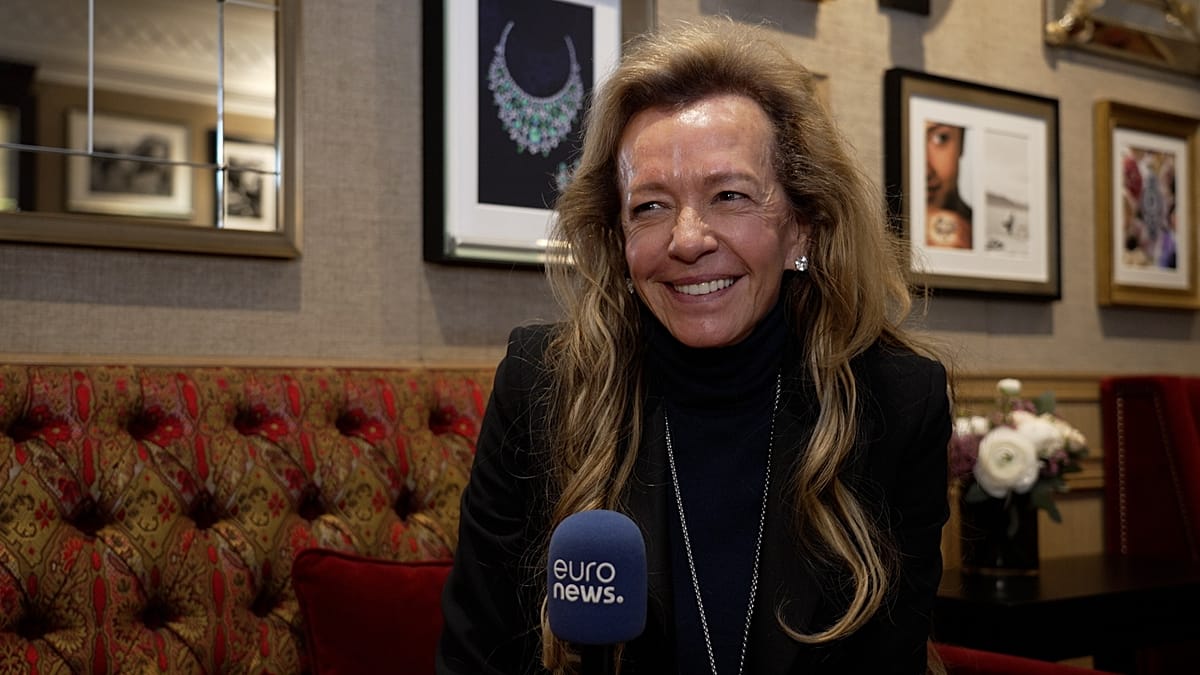
At this year's Watches and Wonders in Geneva, Caroline Scheufele, co-president and artistic director of Chopard, offered a rare, detailed look into the maison's philosophy on ethical sourcing. For a brand synonymous with high jewellery and precision watchmaking, the conversation around sustainability is not a recent marketing pivot but a decades-long evolution.
Scheufele, who helms the family-owned business alongside her brother Karl-Friedrich, traced the origins of Chopard's ethical journey back to the 1970s, when the company first began to question the provenance of its raw materials. What started as a quiet internal audit has since grown into a fully integrated supply chain strategy, one that now covers gold, gemstones, and diamonds.
“It’s about knowing exactly where every stone comes from and who touched it,” Scheufele explained, speaking in the brand's booth at the Palexpo convention centre. “We don’t just buy certificates; we build relationships with miners and cutters. That’s the only way to guarantee both quality and ethics.”
Chopard was an early adopter of Fairmined gold, a certification that ensures small-scale miners receive fair wages and work under safe conditions. The company now uses 100 percent ethical gold in its jewellery and watch collections, a milestone it reached in 2018. Scheufele emphasised that this shift required significant investment in traceability technology and long-term partnerships with suppliers in South America and Africa.
“Collectors today are more informed than ever,” she noted. “They want to know the story behind the piece. It’s not just about the carat weight or the cut; it’s about the impact.” This demand for transparency has pushed the entire luxury sector to rethink its sourcing practices, a trend also visible among competitors like Audemars Piguet, whose CEO Ilaria Resta recently championed creativity amid industry headwinds at the same Geneva event.
Balancing Heritage with Modern Demands
Scheufele acknowledged that ethical sourcing presents particular challenges for a house with a long history. Chopard, founded in 1860 in Sonvilier, Switzerland, has built its reputation on craftsmanship and exclusivity. Adapting those traditions to modern sustainability standards requires careful calibration.
“We cannot compromise on the beauty of the piece,” she said. “But we can ensure that beauty does not come at the cost of human rights or the environment.” The company has invested in in-house recycling programmes for precious metals and has partnered with laboratories to develop synthetic diamonds for certain collections, though Scheufele stressed that natural stones remain central to the brand’s identity.
The conversation also touched on the broader luxury landscape. With the industry facing headwinds from inflation and shifting consumer priorities, Scheufele argued that ethical sourcing is not a burden but a competitive advantage. “Clients who care about these values are loyal,” she said. “They return because they trust us.”
Chopard’s approach mirrors a wider movement within European luxury houses to align with the EU’s due diligence regulations, which increasingly require companies to report on their supply chain practices. The brand’s Geneva headquarters now employs a dedicated sustainability team that works closely with the design ateliers.
For Scheufele, the ultimate goal is to create pieces that are not only beautiful but also carry a clear conscience. “Luxury should be a force for good,” she concluded. “If we can make a woman feel wonderful wearing our jewels, and she knows they were made ethically, that’s the perfect combination.”