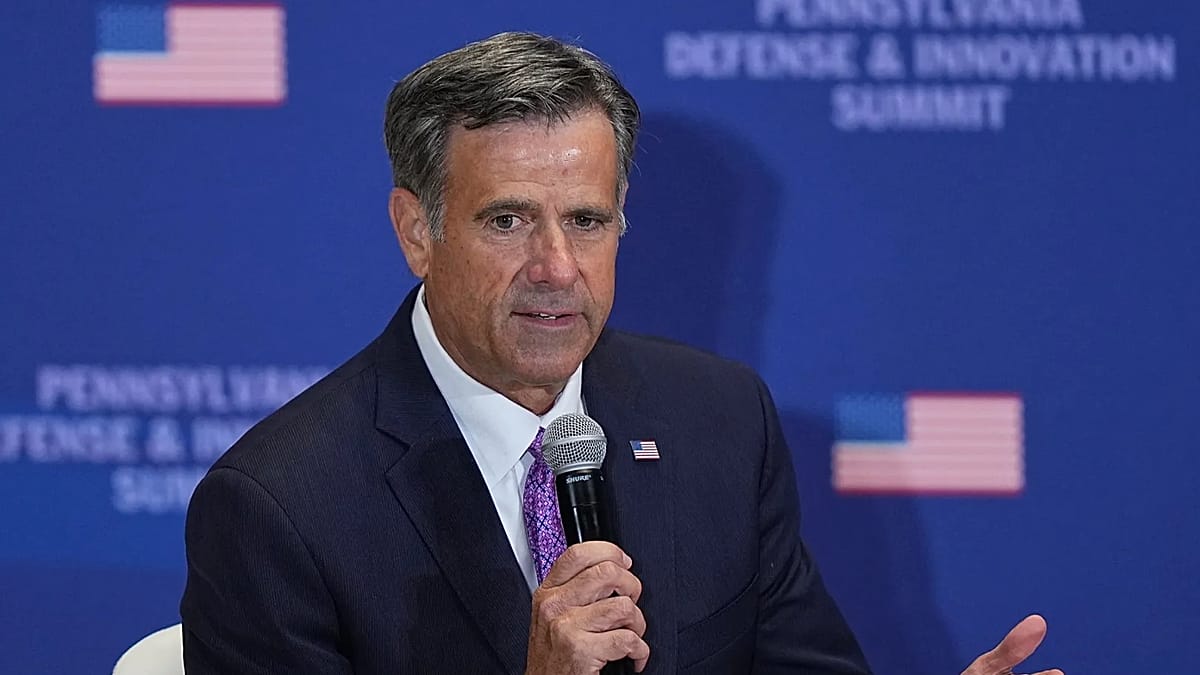
John Ratcliffe, the director of the Central Intelligence Agency, reportedly landed in Moscow on Tuesday for an unannounced visit, according to US media reports. CBS News, citing sources familiar with the matter, said Ratcliffe was in the Russian capital, but neither Washington nor Moscow has confirmed his presence or disclosed the purpose of the trip.
The reported visit comes amid heightened tensions over Ukraine, just a day after the country marked its 35th Independence Day with European leaders gathering in Kyiv to show solidarity. No serving representatives of the Trump administration attended those events, despite earlier speculation that envoys Steve Witkoff and Jared Kushner might make their first trip to Ukraine.
US military aircraft spotted in Moscow
Earlier on Tuesday, a US Air Force Boeing C-17A Globemaster III transport aircraft landed at Moscow's Vnukovo airport, according to flight-tracking data. The plane had arrived from Riga, Latvia, after departing from Camp Springs, Maryland, near Joint Base Andrews outside Washington. The unexplained flight initially fueled speculation that senior US officials, possibly including Witkoff or Kushner, were traveling to Moscow for talks with Russian officials.
A US diplomatic motorcade was also seen moving through the Russian capital after the aircraft landed, adding to the intrigue. Kremlin spokesman Dmitry Peskov said on Tuesday that he had no information about the US military aircraft and that no meetings with US administration representatives were planned at the Kremlin this week.
Ratcliffe's reported visit would be his first to Russia as CIA director. He has maintained contacts with Russian intelligence counterparts and previously participated in negotiations with Moscow. Notably, he was directly involved in talks with a senior Russian intelligence official that led to the April 2025 release of US-Russian dual national Ksenia Karelina.
The unannounced trip underscores the complex backchannel diplomacy that continues between Washington and Moscow even as the war in Ukraine grinds on. European observers will be watching closely, as any US-Russia dialogue has direct implications for the continent's security architecture.
Ratcliffe's visit also comes at a time when European leaders are increasingly concerned about the direction of US policy toward Russia. The absence of Trump administration officials at Ukraine's Independence Day celebrations was noted in Kyiv and other European capitals, where support for Ukraine remains a central pillar of foreign policy.
Meanwhile, the Vatican's top diplomat has been in Moscow to keep dialogue open amid the Ukraine war, as reported by European Pulse. This parallel diplomatic activity highlights the ongoing efforts by various actors to maintain channels of communication with Russia, even as the conflict continues.
The reported CIA visit also raises questions about the role of intelligence channels in US-Russia relations. While such contacts are not unprecedented, they often serve as a discreet means of conveying messages or negotiating sensitive issues, particularly when official diplomatic channels are strained.
For European governments, the prospect of direct US-Russia talks on issues ranging from nuclear arms control to the Ukraine conflict is both a potential opportunity and a source of unease. Many European leaders fear being sidelined in any US-Russia deal that could affect their security interests.
As of now, neither the White House nor the Kremlin has issued an official statement about Ratcliffe's reported visit. The lack of confirmation leaves many questions unanswered, including who Ratcliffe was expected to meet and what topics were on the agenda.
The visit also comes against the backdrop of broader geopolitical shifts, including Armenia's move toward an EU membership bid, which defies Moscow, as covered by European Pulse. Such developments underscore the changing dynamics in the post-Soviet space and the challenges facing Russian influence in its neighborhood.
For now, the reported CIA visit to Moscow remains shrouded in secrecy, but its implications for European security and transatlantic relations are likely to be significant. European Pulse will continue to monitor the situation and provide updates as more information becomes available.