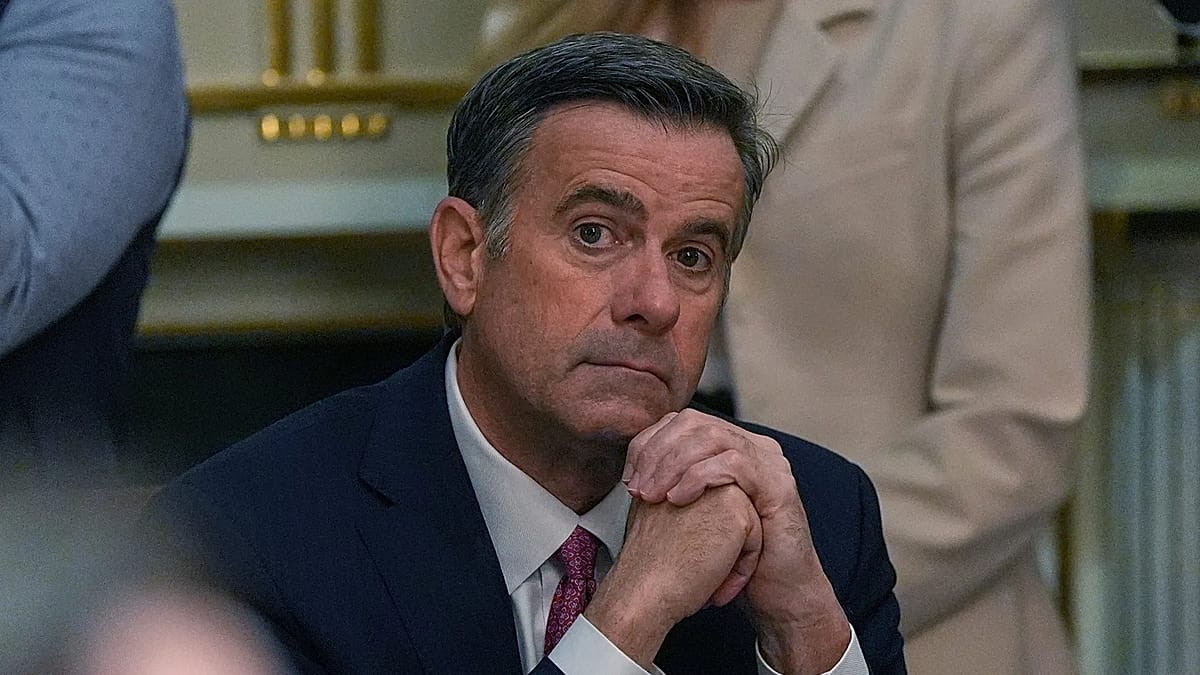
CIA Director John Ratcliffe's unannounced trip to Moscow on Tuesday has triggered intense speculation about the nature of the message Washington deemed important enough to deliver in person. The Kremlin confirmed that Ratcliffe held talks with Russian intelligence officials during his brief visit, but stated that no meeting with President Vladimir Putin was planned.
Kremlin spokesman Dmitry Peskov said that Putin was briefed on the outcome of the discussions, but neither side has disclosed the substance of the talks. The unusual secrecy surrounding the visit—the first known trip by a CIA director to Russia since Ratcliffe took office—has led to widespread conjecture about its purpose.
A warning to Moscow?
One prominent theory is that Ratcliffe carried a warning about the risks of further Russian escalation. US intelligence has reportedly raised concerns that Moscow might be preparing for additional mobilization, not only to sustain its war in Ukraine but also to test NATO's resolve through provocations against member states. This comes amid a series of suspected sabotage operations and drone incursions in NATO territory, heightening tensions across the continent.
The visit draws a striking parallel to November 2021, when then-CIA Director William Burns traveled to Moscow as Russian forces massed near Ukraine's borders. Burns warned the Kremlin against an invasion and outlined the consequences Washington believed would follow. Despite Moscow's assurances, Russia launched its full-scale invasion three months later.
Ratcliffe is considered one of the Trump administration officials most supportive of continued US assistance to Ukraine, including intelligence sharing that supports Kyiv's long-range strikes. His arrival in Moscow came at a sensitive moment for both capitals, with Ukraine expanding its campaign of deep strikes inside Russia, targeting energy and military infrastructure.
According to reports, the US asked Ukraine to refrain from striking Moscow or St Petersburg while Ratcliffe was in Russia. Kyiv reportedly learned of a senior US delegation's travel but was not initially told that Ratcliffe would be part of it. The request underscores the delicate balance Washington is trying to maintain.
Ukraine, NATO, or Iran?
Ukraine is not the only possible explanation for the visit. Tensions between Washington and Moscow over Iran, Russia's closest partner in the Middle East, have also been mounting. Russia has been accused of providing Tehran with intelligence on US military assets, while Washington has intensified economic pressure on Iran in its ongoing conflict.
Peskov described the contacts between the two intelligence services as positive but cautioned that it was too early to judge whether they could improve broader US-Russia relations. The secrecy and the high-level nature of the visit suggest the message was more sensitive than routine diplomatic communications.
The visit also comes as European allies watch nervously, given the potential implications for Russian mobilization efforts and the strain on Ukraine's finances. Meanwhile, Sweden's move to seize Russian-owned land near a naval base highlights the broader security concerns in the Baltic region.
As the world awaits further details, the visit underscores the fragile state of US-Russia relations and the high stakes involved in the ongoing conflict. Whether Ratcliffe's message was a warning, an offer, or a combination of both, its delivery in person signals the gravity of the issues at hand.