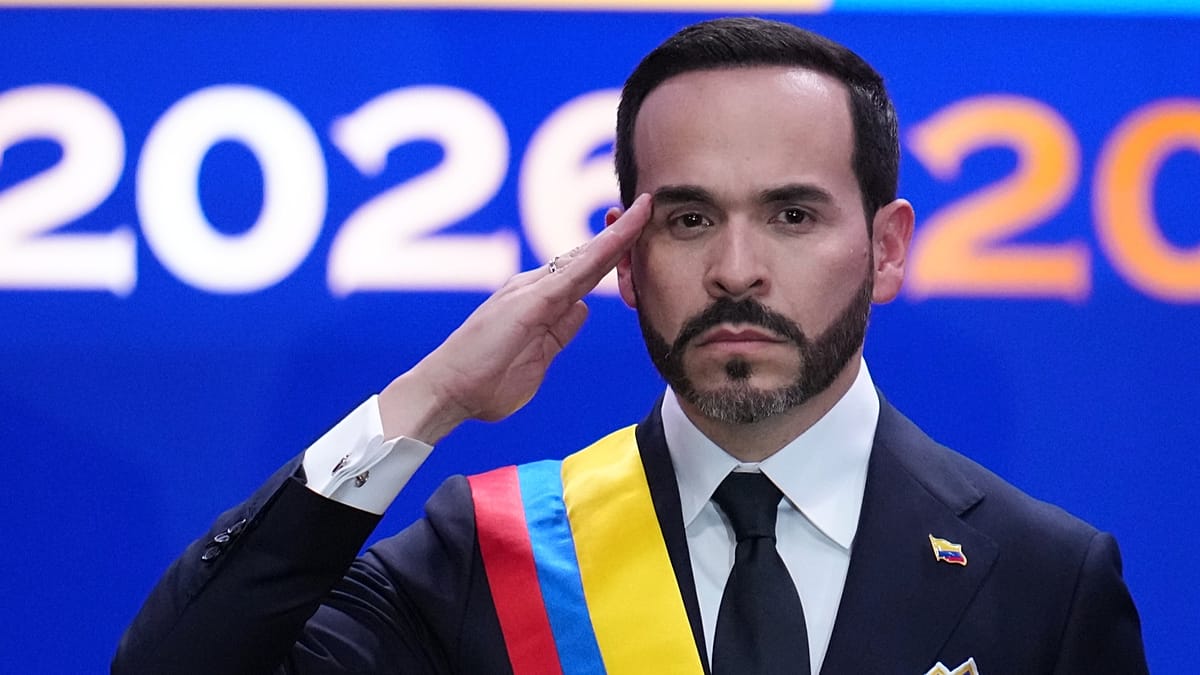
Colombia's newly inaugurated president, Abelardo de la Espriella, has announced a sweeping crackdown on undocumented migrants, ordering immigration raids and vowing to deport those without legal status. The move marks a sharp reversal of the country's long-standing policy of welcoming Venezuelan refugees and migrants.
In a video released on X on Sunday night, recorded during a security meeting in Barranquilla, de la Espriella declared: "I will not accept any illegal immigrants, no matter where they come from." He added that the order to immigration authorities is clear: "first those who are committing crimes, second those who have not regularised their status and who will have to be deported in due course."
The president, a close ally of Donald Trump, echoed the former US president's "America first" rhetoric, saying: "Colombians first, Colombians second, Colombians third, may that be clear to everyone." Deportation procedures are set to begin this week by presidential order.
A dramatic policy reversal
De la Espriella's directive represents a significant departure from Colombia's previous approach to migration. For years, Bogotá sought to protect and integrate Venezuelans fleeing the repressive regime of Nicolás Maduro and a severe economic collapse. According to the United Nations, around 2.8 million Venezuelans were living in Colombia as of August, with more than 527,000 of them undocumented.
As recently as July, Colombia's national immigration service had granted temporary residence permits to roughly 2.3 million undocumented Venezuelans. That measure, introduced in 2021 under then-President Iván Duque at the peak of Venezuela's migration crisis, was designed to help migrants access healthcare and legal employment while regularising their status.
The new policy has raised concerns among migrant advocacy groups. Ana Karina García, director of Juntos Se Puede, an organisation assisting Venezuelan migrants in Colombia, said: "We understand that the president wants to protect Colombians, but there is no need to protect them from migrants. It has been proven that foreigners do not commit crimes at greater rates."
The crackdown comes amid broader debates about migration in the Americas, with similar tragedies unfolding at Europe's borders and hybrid pressure on the EU's eastern frontier. While Colombia's situation is distinct, the shift in policy could have ripple effects across the region, as other countries watch how Bogotá handles its large Venezuelan population.
De la Espriella's government has framed the measure as a way to reduce crime and confront criminal groups, though data on migrant criminality remains scarce. The president's rhetoric, however, has already drawn comparisons to Trump's immigration policies, and his alignment with the former US president is likely to shape Colombia's foreign relations.
For now, the immediate impact will be felt by hundreds of thousands of Venezuelans who have built lives in Colombia over the past decade. Many have established businesses, enrolled children in schools, and contributed to local economies. The sudden threat of deportation has created uncertainty and fear among migrant communities, even as the government insists it is acting in the national interest.
As the deportation orders take effect, human rights organisations and international observers will be watching closely. The coming weeks will reveal how the policy is implemented and whether it will indeed reduce crime, as the president promises, or whether it will simply uproot families and destabilise communities that have long been part of Colombia's social fabric.