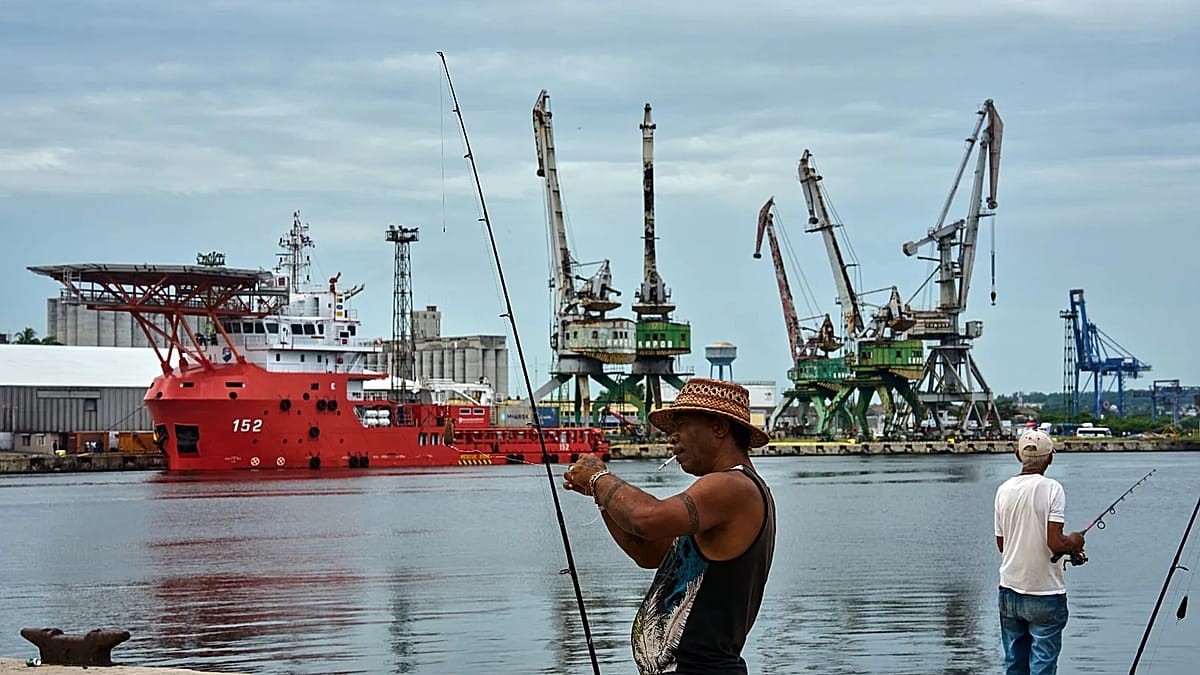
A vessel carrying nearly 100 tonnes of food and essential supplies from Colombia docked in Havana on Friday, part of a broader humanitarian effort to alleviate Cuba's deepening crisis as the United States tightens its energy embargo.
The ship, which departed Cartagena in early June, entered Havana Bay under the Colombian flag early in the morning, escorted by a small Cuban auxiliary vessel. The Colombian Presidential Agency for International Cooperation confirmed that, on the orders of President Gustavo Petro, the cargo included non-perishable food, medicines, hospital supplies, electrical materials, and solar panels. An additional seven tonnes of goods were collected by solidarity groups.
This delivery follows a similar shipment last weekend, when a vessel carrying 1,700 tonnes of essential goods from Mexico and Belize arrived in the Cuban capital.
Sanctions and Power Outages
Washington announced new sanctions against Cuba's state-owned oil and gas company on Thursday, a move expected to further strain relations between the two countries. The announcement came nearly a week after the US government sanctioned Cuban President Miguel Díaz-Canel and other officials, as well as several institutions.
Cuba has long struggled under a decades-old US embargo and a chronic shortage of petroleum. Regular power outages, already common due to the economic and energy crisis gripping the island for the past five years, have intensified since US President Donald Trump threatened tariffs in late January on any country that sells or provides oil to Cuba.
On Wednesday, Cuba's government stated that the US oil blockade is preventing the United Nations from distributing 170 containers of humanitarian aid. Foreign Minister Bruno Rodriguez wrote on X that the aid, valued at $6.3 million (€5.4 million), "is not reaching beneficiaries due to the fuel shortage." He stressed that the blockade was "not only hampering the performance of the Cuban economy" but also affecting the work of international organisations.
Both countries have acknowledged holding talks, but the scope of these discussions remains unclear. Meanwhile, Trump has threatened military action in Cuba following the US military intervention in Venezuela and the arrest of former President Nicolás Maduro. Last Thursday, Trump claimed Cuba had "sort of collapsed" and said the US would "handle that as soon as we've finished" military operations in Iran.
The situation in Cuba echoes other neglected crises worldwide, as highlighted by recent reports from aid organisations. The island's plight underscores the broader challenges of humanitarian access under sanctions regimes.