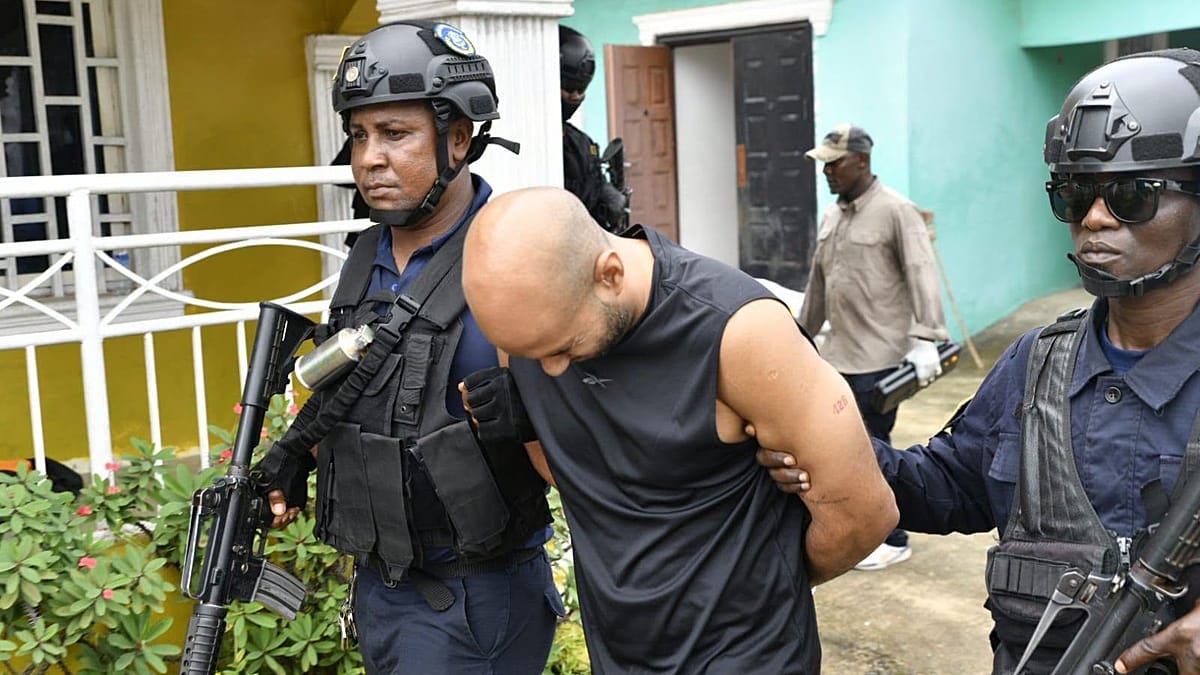
Liberian authorities have intercepted nearly four tonnes of cocaine with an estimated street value of €277 million, in what officials describe as one of the largest drug seizures in the country's history. The operation, carried out on a road leading to Roberts International Airport, about 30 kilometres from the capital Monrovia, resulted in the arrest of two foreign nationals.
The seizure "revealed an organised, sophisticated, complex and well-funded narcotics trafficking network," according to Liberia's attorney general and justice minister. Investigators recovered approximately 3,971 kilograms of processed cocaine plates, with a street value estimated at $317.7 million (€279.1 million).
West Africa as a Transit Hub for European Markets
According to the Global Initiative Against Transnational Organized Crime, West Africa has become a key transit hub for cocaine bound for Europe. The region's porous borders, weak law enforcement, and corruption make it an attractive route for South American cartels shipping drugs to European consumers. The Liberian seizure underscores how organised crime networks exploit these vulnerabilities to move large quantities of narcotics across the Atlantic.
The bust follows another major interception at the same airport in June, when authorities seized 237.6 kilograms of cocaine concealed in commercial cargo. That operation led to charges against five men and a logistics company. The repeat seizures at Roberts International Airport suggest that traffickers view Liberia as a reliable transit point, despite growing scrutiny from local authorities.
Liberian President Joseph Boakai has vowed to "expose and destroy" the networks behind the country's drug trade, announcing a coordinated investigation to ensure that "every individual found responsible is fully accountable under the law." The president's statement reflects mounting concern over the scale of drug trafficking in a nation already grappling with poverty and weak institutions.
The European Union has long supported anti-narcotics efforts in West Africa through programmes such as the West Africa Regional Programme for Maritime Security and the EU-UNODC joint initiative on drug trafficking. However, the sheer volume of cocaine seized in Liberia—nearly four tonnes—highlights the persistent challenge of disrupting transnational crime networks that operate across continents.
For European readers, the seizure is a reminder that the cocaine consumed in cities like Paris, Berlin, and Amsterdam often passes through West African transit points. The region's role as a staging ground for drug shipments to Europe has grown over the past decade, driven by demand from European markets and the logistical advantages of routing through poorly monitored ports and airports.
The Liberian government's response will be closely watched by international partners, including the EU and the United Nations Office on Drugs and Crime. Effective prosecution of the arrested individuals and dismantling of the trafficking network could serve as a deterrent, but the scale of the operation suggests that organised crime groups have deep resources and connections.
As Europe continues to grapple with drug-related violence and public health crises, the seizure in Liberia offers a stark illustration of the global supply chain that feeds the continent's illicit drug market. The challenge for European policymakers is not only to reduce demand at home but also to support fragile states like Liberia in disrupting the transit routes that enable the trade.