Condé Nast Traveller has unveiled its 2026 Hot List, spotlighting the most compelling new hotels across Europe. This year's selection ranges from a rustic eco-hideaway in Crete to a converted Benedictine convent in the Dolomites, each offering a distinct sense of place and a commitment to heritage, sustainability, or art.
Crete: Tella Thera
On the western coast of Crete, amid ancient olive groves, Tella Thera is a five-star boutique eco-hotel that embraces what its designers call “future primitivism.” The property, designed by Pieris Architects, features curved subterranean suites finished in sandy tones, with olive-tree-topped roofs and interiors that showcase local Cretan craftsmanship—handmade ceramics and furniture. The hotel runs on renewable energy and low-waste systems, and its restaurant sources ingredients from on-site gardens, offering plant-forward, farm-to-table dining with panoramic views of the Aegean Sea. The Destinesia Spa focuses on traditional relaxation methods, such as magnesium-rich baths, rather than high-tech treatments.
Corsica: A Mandria di Murtoli
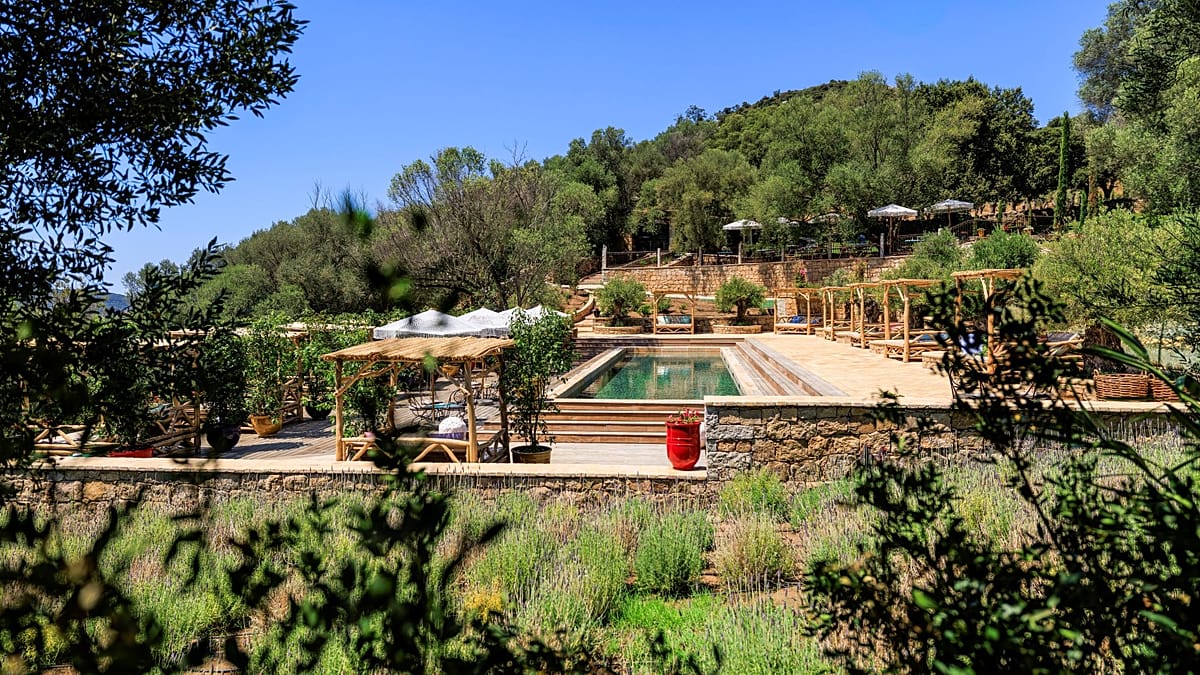
In Corsica's Ortolo Valley, the Domaine de Murtoli estate has opened A Mandria di Murtoli, a five-star “reinvented village” that repurposes traditional stone sheepfolds into just ten rooms and suites, some with private pools. The 2,500-hectare estate emphasizes slow, rustic luxury: guests can hike, ride horses, fish, stargaze, or play golf. The on-site restaurant, L’Appuntamento, serves farm-to-table Italian cuisine using estate-grown ingredients. The property also features 6,500-year-old standing stones (menhirs), adding a layer of prehistoric cultural heritage to the stay.
Florence: Collegio alla Querce
Already named best new hotel in Europe by Esquire, Collegio alla Querce in Florence occupies a 16th-century Renaissance villa that once served as a prestigious boys' boarding school. The 83-key hotel retains original architectural features—a chapel, a theatre, and Baroque gardens—while the former principal's office has been converted into a bar. Guests enjoy panoramic views of the Duomo and Tuscan vineyards, a 35-meter outdoor pool, and a nature-inspired spa. Four on-site restaurants include La Gamella and Bar Bertelli, and the hotel offers exclusive after-hours tours of Michelangelo's David at the Accademia Gallery. For more on Italy's evolving cultural landscape, see our coverage of the Mexico-Spain art dispute involving Frida Kahlo works.
Sils Maria, Switzerland: Chesa Marchetta
In the Engadine village of Sils Maria, Chesa Marchetta is a 13-room boutique hotel that doubles as a living gallery. Founded by Iwan and Manuela Wirth of Hauser & Wirth, the hotel displays works by Philip Guston, Louise Bourgeois, and Gerhard Richter. Interiors by Laplace use fragrant Arolla pine and traditional regional furniture, while the exterior features traditional sgraffito etching. The restaurant serves Swiss and Northern Italian dishes—cavolo nero ragu, gnocchi—inspired by the recipes of the former owners, the Godly family.
South Tyrol: Castel Badia
Castel Badia, in Italy's South Tyrol, is an 11th-century former Benedictine convent transformed into a 28-suite luxury hotel. The property retains a Romanesque crypt and 17 surrounding gardens, including a medicinal herb garden. The spa offers a candlelit sauna suite, heated outdoor pool, and outdoor Finnish sauna, with treatments using local herbs. Dining focuses on South Tyrolean cuisine, with dishes cooked over an open fire. This adaptive reuse aligns with broader trends in European heritage conservation, as highlighted in our report on the European Heritage Awards 2026.
These five properties represent a broader shift in European hospitality toward authenticity, sustainability, and cultural immersion—values that resonate with today's discerning travelers. Whether you're drawn to the minimalist eco-luxury of Tella Thera or the art-filled corridors of Chesa Marchetta, the 2026 Hot List offers a curated guide to the continent's most promising new stays.