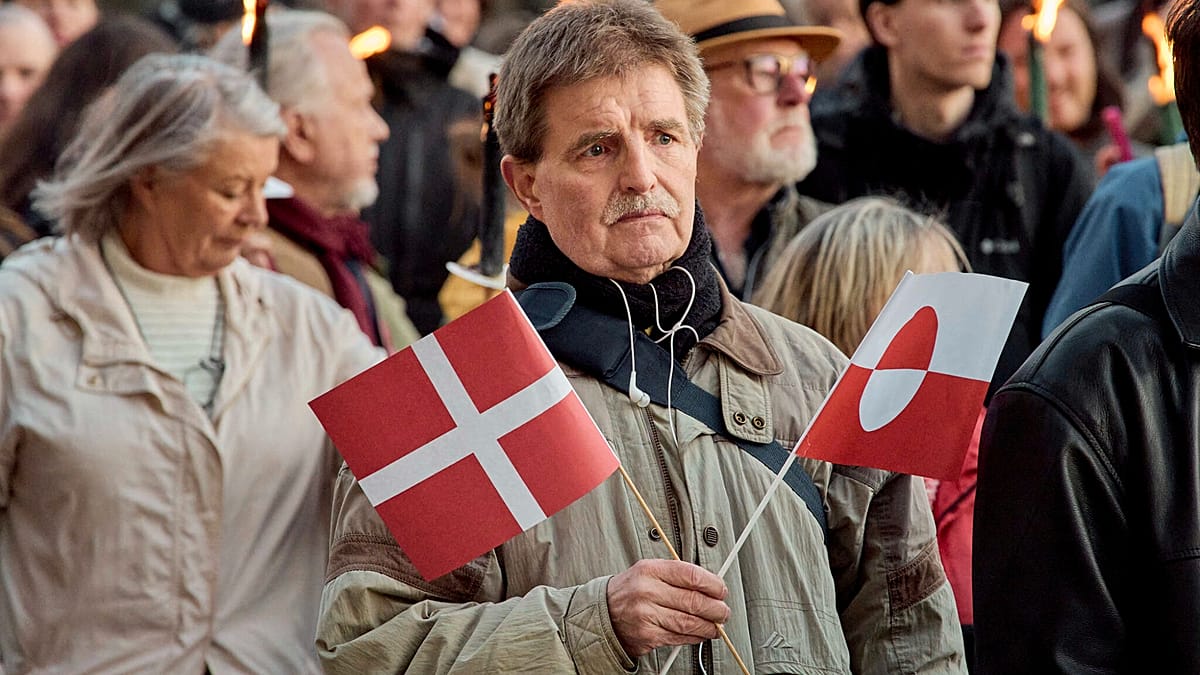
On the streets of Copenhagen, the new security agreement between the United States, Denmark, and Greenland has sparked a lively and often contradictory debate. The pact, signed on the sidelines of the UN General Assembly by President Donald Trump and the leaders of Denmark and Greenland, aims to strengthen Arctic defence and deepen cooperation in a region that has become a focal point of great-power rivalry.
For some Danes, the deal is a pragmatic step forward. They argue that closer ties with Washington could help stabilise the High North and reduce tensions in an area where Russian activity has been growing. “We need to work with the Americans on Arctic security,” said one Copenhagen resident, echoing a sentiment heard among those who view the alliance as a cornerstone of Danish foreign policy. “It’s about being realistic about the threats we face.”
Others, however, are far less convinced. Psychotherapist Maj Mortensen expressed a deep unease that many in the capital seem to share. “I don’t feel safe,” she said, reflecting a worry that the agreement might entangle Denmark in broader US strategic interests without sufficient guarantees for Danish or Greenlandic autonomy. Software engineer Mads Johnson took a more measured line, acknowledging that cooperation with the US is essential because “the two countries remain allies,” but he also questioned the long-term implications of such a deal.
A pact with many layers
The agreement, which ended a standoff between Washington and Copenhagen, grants the US expanded access to military facilities in Greenland, including the Thule Air Base, and lays the groundwork for joint exercises and intelligence sharing. For the Trump administration, it represents a tangible win in its push to counter Chinese and Russian influence in the Arctic. For Denmark, it is a delicate balancing act: maintaining its sovereignty over Greenland while accommodating US security demands.
Greenland’s prime minister, Múte Bourup Egede, has been careful to frame the deal as a step that respects the island’s autonomy. But in Nuuk, the capital, reactions are also mixed. Some Greenlanders welcome the economic and security benefits, while others fear that the agreement could accelerate a process of US influence that undermines their path to eventual independence from Denmark.
The deal has also reignited a broader European debate about Arctic governance. As the EU’s security blueprint takes shape, Brussels has been pushing for a more unified European approach to the region, but member states remain divided over how to balance cooperation with the US and the need to protect their own interests. The Nordic countries, in particular, are watching closely, as they share the Arctic neighbourhood and have their own security concerns.
For Copenhagen, the immediate challenge is to reassure a sceptical public. The Danish government has stressed that the agreement is purely defensive and that it strengthens the NATO alliance. Yet the mixed reactions on the streets suggest that many Danes are not fully convinced. “We are a small country,” said one passerby, “and we have to be careful about what we sign away.”
The deal also comes at a time when questions are being asked about what Washington actually gained. Analysts point out that the US already had significant access to Greenland’s facilities, and the new pact may be more symbolic than substantive. Still, for the Trump administration, it is a useful talking point ahead of the 2020 election.
In the longer term, the agreement could have implications for the entire Arctic region. As ice melts and new shipping routes open, the strategic value of Greenland is only set to grow. European leaders, from Berlin to Paris, will be watching to see how the US-Denmark-Greenland relationship evolves, and whether it sets a precedent for other Arctic nations.
For now, the debate in Copenhagen reflects a wider European unease about the direction of transatlantic relations. The security deal may have been signed, but the questions it raises about sovereignty, trust, and the future of the Arctic are far from settled.