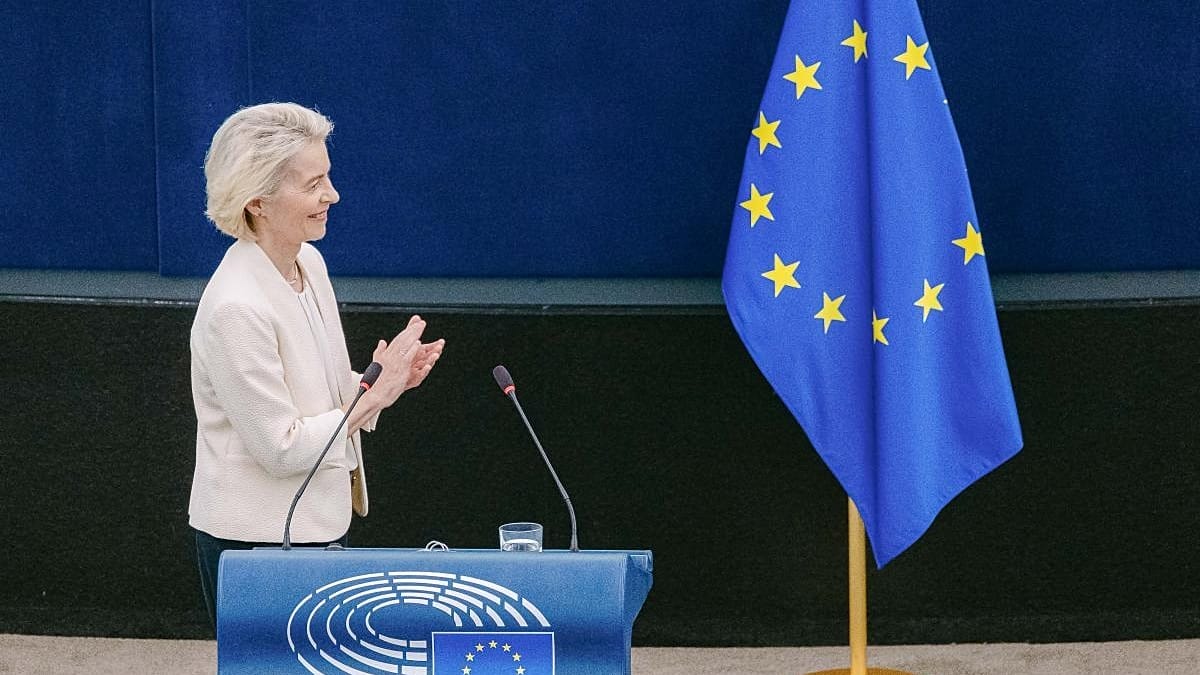
In her annual State of the Union address on Wednesday, European Commission President Ursula von der Leyen sketched out an ambitious new security architecture for the European Union, promising a European Security Council, an emergency security protocol, and a new fund for strategic military enablers. But the speech, delivered in Strasbourg, left many practical details vague, prompting questions about how these proposals will move from rhetoric to reality.
With Russia's war in Ukraine increasingly spilling onto the EU's eastern flank, and Moscow intensifying sabotage campaigns and drone incursions across the bloc, security and defence dominated the address. “We already have many tools. And we are strengthening our work with NATO. But our doctrine, our institutions and our decision-making have not kept pace with the new reality,” von der Leyen said.
The proposals are expected to form the backbone of the EU's new security strategy, due next month, which aims to redefine the continent's defence posture. Among the most striking ideas is the creation of a European Security Council, a dedicated format for EU leaders to discuss security matters alongside key partners such as Ukraine, the United Kingdom, Norway, and Canada.
While Ukrainian President Volodymyr Zelenskyy and other leaders are already frequent guests at European Council summits, the new body would institutionalise these consultations. “For a long time, we have discussed a leaders' format focused on the security of our continent,” von der Leyen said. “This is even more urgent now, given the nature and scale of the risks at play. This is why we will set out our ideas to make a European Security Council a reality.”
The concept is not new. French President Emmanuel Macron first floated it during his 2017 presidential campaign, and it received formal backing in the 2018 Franco-German Meseberg Declaration. European Commissioner for Defence Andrius Kubilius argued that the status quo is no longer viable: “Doctrines and institutions, which were created during peacetime, are not fit any more for the purpose.”
Yet the proposal raises as many questions as it answers. Von der Leyen set no start date and offered no concrete deliverables. How the council would interact with NATO and the so-called Coalition of the Willing remains unclear. Nathalie Tocci, director of Rome's Istituto Affari Internazionali, cautioned in a policy brief that a European Security Council is “no panacea,” noting that while consensus would still be required, a shared threat perception could foster greater trust and a sense of shared destiny among members.
An emergency protocol for hybrid threats
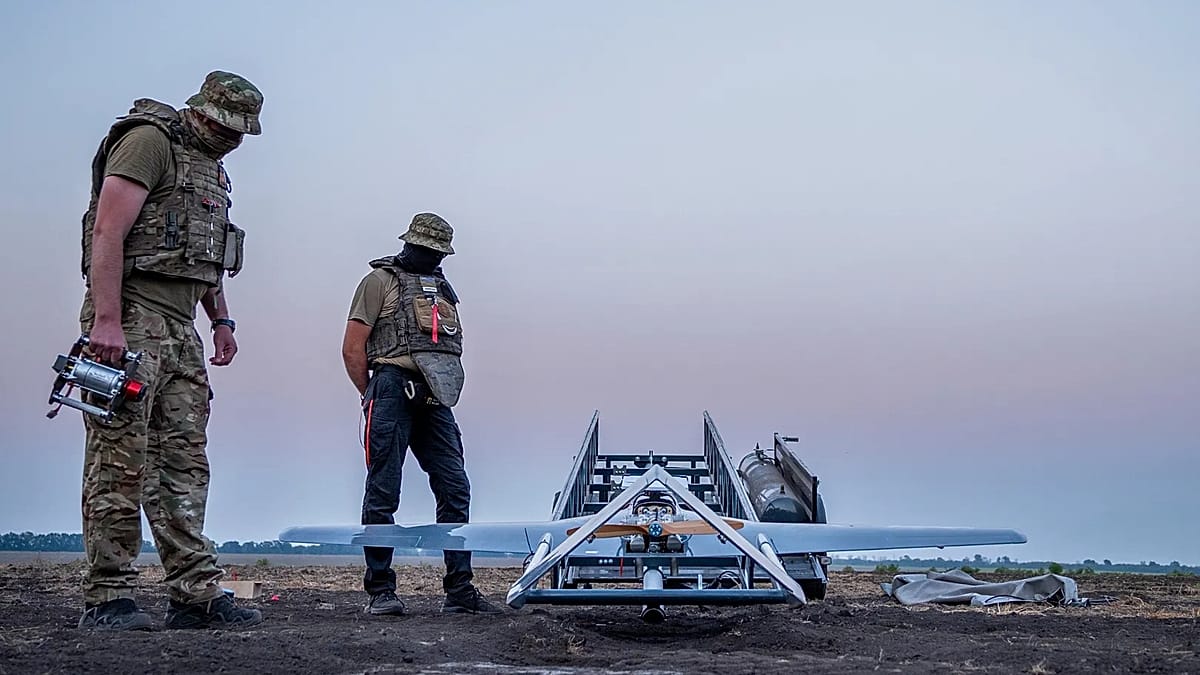
Hybrid warfare was another central theme, following weeks of suspected Russian sabotage, attempted attacks, and drone incursions aimed at destabilising EU member states. Von der Leyen called for a “counter-hybrid playbook” and proposed an Emergency Security Protocol, modelled on NATO's Article 4, which allows allies to request consultations when their security is threatened.
“Europe needs its own counter-hybrid playbook,” she said. “We urgently need a consensus on how to respond to certain incidents: those which fall below armed aggression but clearly threaten our national security. In other words, a mechanism to flank NATO's Article 4.”
The protocol would be built on the EU treaty's mutual defence clause, which obliges member states to assist any member that is the target of armed aggression. That clause was invoked earlier this year when a suspected Iranian-made drone, allegedly launched by Hezbollah, targeted a British airbase in Cyprus, an EU member but not a NATO ally. EU ambassadors subsequently conducted a “war gaming” exercise to explore what triggering the clause would entail.
Von der Leyen explained that when one member state triggers the protocol, all member states would convene to coordinate a European response, deter further escalation, and mitigate the impact. However, EU officials have previously warned that invoking the mutual defence clause could accelerate US disengagement from NATO, even though “assistance” does not automatically mean military intervention and could take the form of financial support or civilian protection.
Oana Lungescu, NATO's former spokesperson, welcomed the emphasis on closer EU-NATO cooperation but expressed scepticism about its deterrent effect. “Protocols and playbooks already exist in both organisations,” she said.
Strategic enablers and capability gaps
With the US signalling a potential reduction of its military presence in Europe, the EU is scrambling to fill critical capability gaps known as strategic enablers—the logistical backbone of modern warfare, including satellites, airlift, refuelling, and intelligence systems. “The war in Ukraine has shown us the importance of strategic enablers,” von der Leyen said. “These systems are essential, and we need more of them. Only together does Europe have the scale to deliver them.”
To that end, she announced a new European Instrument for Strategic Enablers, designed to channel long-term investment into these capabilities. The initiative is part of a broader push to bolster European defence autonomy, a theme that has gained urgency amid the ongoing conflict.
Critics, however, argue that the proposals lack the detail needed to translate ambition into action. The European Security Council, in particular, has been criticised for being a repackaging of existing formats rather than a genuine innovation. As critics have noted, von der Leyen's leadership style has often been characterised by grand announcements followed by slow implementation.
With the new security strategy due next month, the coming weeks will reveal whether these proposals can be turned into concrete policies. For now, the vision is clear, but the path forward remains uncertain.