President Nicos Christodoulides of Cyprus and President Emmanuel Macron of France, accompanied by their spouses, officially opened two major exhibitions in Paris this week that delve into the deep historical and cultural connections between the two nations. The events, held at the Musée du Louvre and the Bibliothèque nationale de France (BnF), are part of the cultural program accompanying Cyprus's presidency of the Council of the European Union.
Ancient Treasures at the Louvre
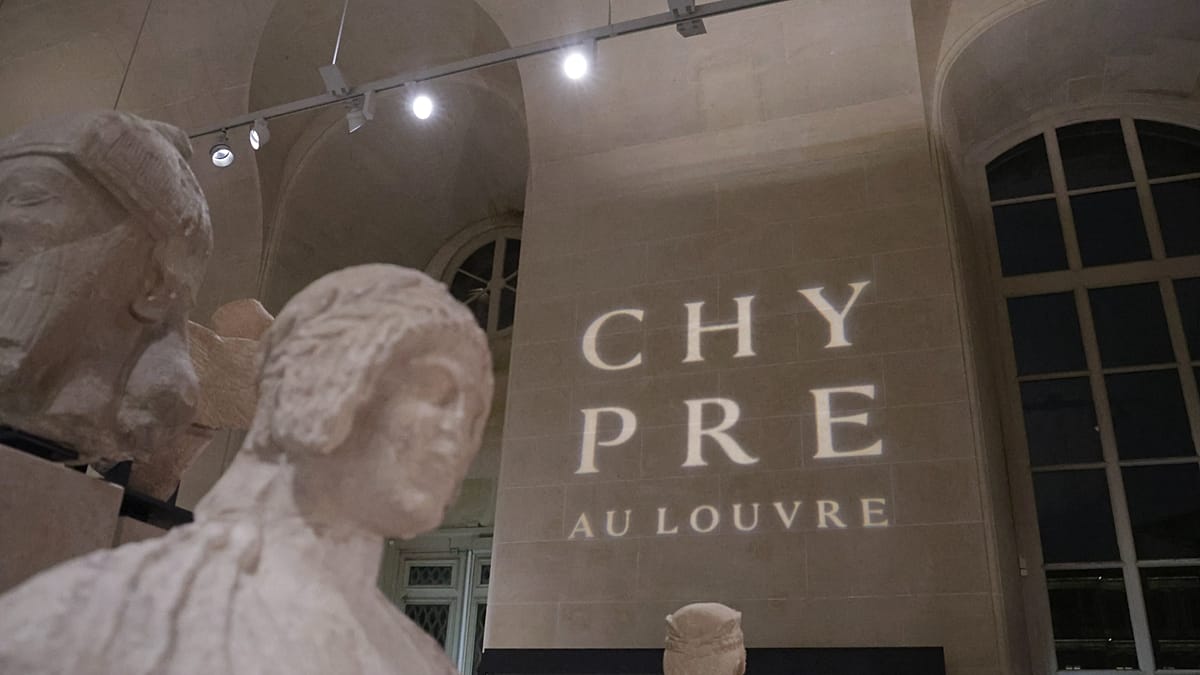
For the first time, the Louvre is hosting sixteen Cypriot antiquities donated by the Department of Antiquities of Cyprus's State Ministry of Culture. The objects, spanning the Chalcolithic and Bronze Ages, illustrate the island's role as a crossroads of commerce and culture in the eastern Mediterranean. Curators have arranged the artifacts to highlight the exchange networks that flourished in Cyprus during these periods, offering visitors a glimpse into the island's early economic and artistic life.
The exhibition, open until 22 June 2026, is a rare opportunity for the Parisian public to see Cypriot heritage in a world-renowned institution. It underscores the enduring ties between Cyprus and France, which have been reinforced through decades of diplomatic and cultural cooperation. The Louvre, already home to extensive collections from the ancient world, now adds a focused lens on Cyprus's contributions to Mediterranean civilization.
Cyprus Through French Eyes at the BnF
At the Bibliothèque nationale de France, a second exhibition runs until 14 June 2026, exploring how French travelers, artists, and scholars have perceived Cyprus over the centuries. Organized in collaboration with the Bank of Cyprus Cultural Foundation, the display features engravings by Louis-François Cassas, who visited the island in 1785, as well as seventeenth- and eighteenth-century icons on loan from the Bank of Cyprus Cultural Foundation and the Church of Panagia Faneromeni in Nicosia.
These icons highlight the importance of the Orthodox Byzantine tradition in shaping Cypriot identity, a theme that resonates with the island's complex history under various foreign influences. The exhibition also includes manuscripts, maps, and printed works that trace the evolution of French knowledge about Cyprus, from medieval crusader accounts to Enlightenment-era travelogues.
Both exhibitions are part of a broader effort by Cyprus to project its cultural heritage onto the European stage during its EU Council presidency. The choice of Paris—a city with strong historical links to Cyprus through the Lusignan dynasty and later French diplomatic missions—is symbolic. The Lusignan kings ruled Cyprus from the late twelfth to the late fifteenth century, leaving a lasting architectural and cultural imprint on the island.
President Christodoulides remarked during the opening that the exhibitions "reflect the deep and lasting friendship between our two countries and our shared commitment to European values." President Macron echoed the sentiment, noting that "Cyprus is not just a Mediterranean island; it is a bridge between Europe and the Middle East, and its heritage enriches us all."
The cultural program also includes concerts, film screenings, and academic conferences across Paris, aiming to engage a wide audience with Cypriot history and contemporary creativity. For visitors to the Louvre and the BnF, the exhibitions offer a chance to explore the island's ancient past and its enduring connections to France.
As Cyprus continues its EU presidency, these cultural initiatives serve as a reminder of the soft power that heritage can wield in diplomacy. The exhibitions are expected to attract significant attention from both the French public and international tourists, further cementing the cultural ties between Nicosia and Paris.