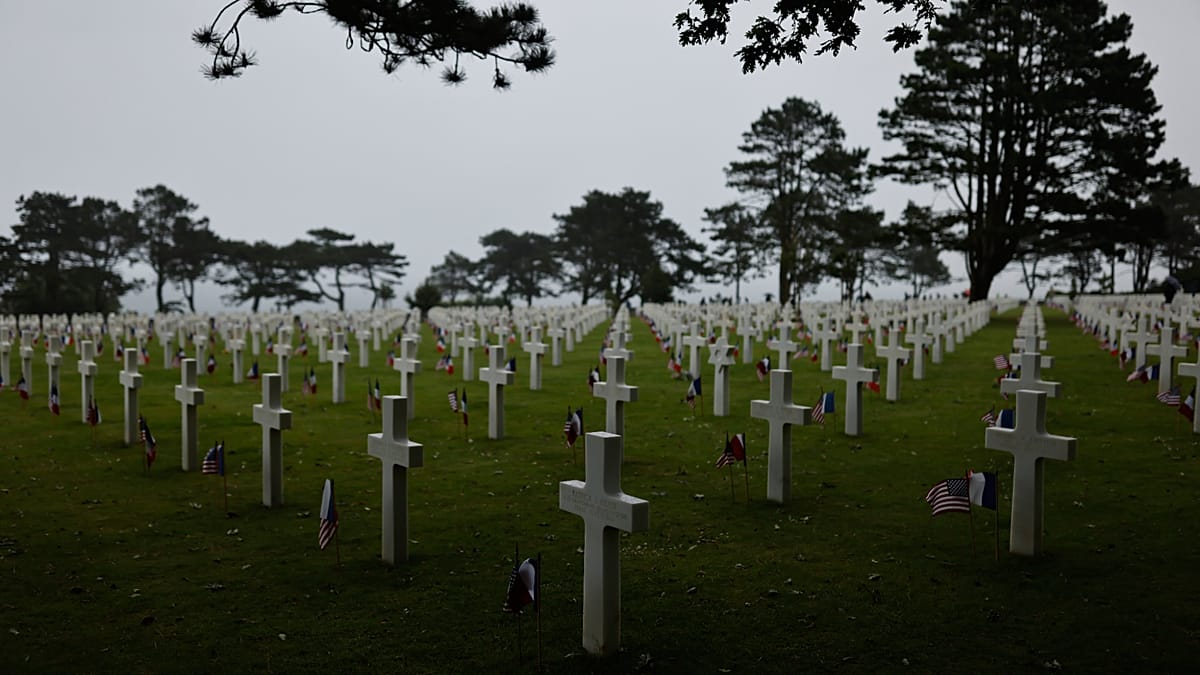
On a grey Saturday morning in Normandy, world leaders and the last surviving veterans of D-Day gathered to mark the 82nd anniversary of the largest seaborne invasion in history. The ceremonies, held at Langrune-sur-Mer and Colleville-sur-Mer, honored the nearly 160,000 Allied troops who stormed the beaches on June 6, 1944, launching Operation Overlord and the liberation of German-occupied Western Europe.
Only a handful of those who fought that day remain. Six veterans made the journey to France this year, attending a commemoration at the British Normandy Memorial, which bears the names of 22,540 British servicemen on its Roll of Honour. French Prime Minister Sébastien Lecornu and US Deputy Secretary of Defense Elbridge Colby led the international ceremony at Langrune-sur-Mer, while US Defense Secretary Pete Hegseth laid tributes at the American cemetery overlooking Omaha Beach.
A Solemn Tribute to the Fallen
Hegseth, joined by Chairman of the Joint Chiefs of Staff Dan Caine and other military personnel, spoke of the men who "carried the hopes and prayers of a free world." He recalled that these soldiers "crossed an ocean to fight for their country on a continent that they'd never seen, to save a people they did not know." Alongside forces from Great Britain, Canada, France, Norway, Poland, and other steadfast allies, the United States military "spearheaded a great crusade to shatter the Nazi war machine and liberate the continent," Hegseth said.
UK Defence Secretary John Healey also paid his respects, laying a wreath at the foot of the British Normandy Memorial. The ceremony underscored the enduring bond between European nations and their transatlantic partners, a theme that resonated amid current geopolitical tensions.
More than 4,400 Allied troops were killed on D-Day alone, over half of them American. German casualties are estimated between 4,000 and 9,000 killed, wounded, or missing. The invasion, delayed by 24 hours due to severe storms, required over a year of meticulous planning. Commanders chose June 6 for its rare combination of optimal weather, low tides, and a full moon.
The anniversary comes as Europe reflects on its security architecture, with the war in Ukraine reshaping defense priorities. The ceremonies in Normandy served as a reminder of the sacrifices made for continental freedom, a theme that also echoes in ongoing debates about European defense integration and transatlantic cooperation.
For many, the presence of the six veterans was the most poignant element of the day. Their stories, increasingly rare, are a living link to a pivotal moment in European history. As the continent faces new challenges, the memory of D-Day remains a touchstone for the values of solidarity and resilience that underpin the European project.