Artificial intelligence is reshaping Europe's labour market in unexpected ways. While many tech roles have yet to recover to pre-pandemic levels, data centre hiring is booming across the continent, according to new data from the global hiring platform Indeed.
As of August 2026, data centre job postings were above their pre-pandemic baseline in all ten European economies analysed, with the most dramatic growth in Spain, Italy and Ireland. When postings are indexed at 100 for the average between December 2019 and February 2020, the index reached 260 in Spain, 237 in Italy and 210 in Ireland — meaning postings more than doubled in each country.
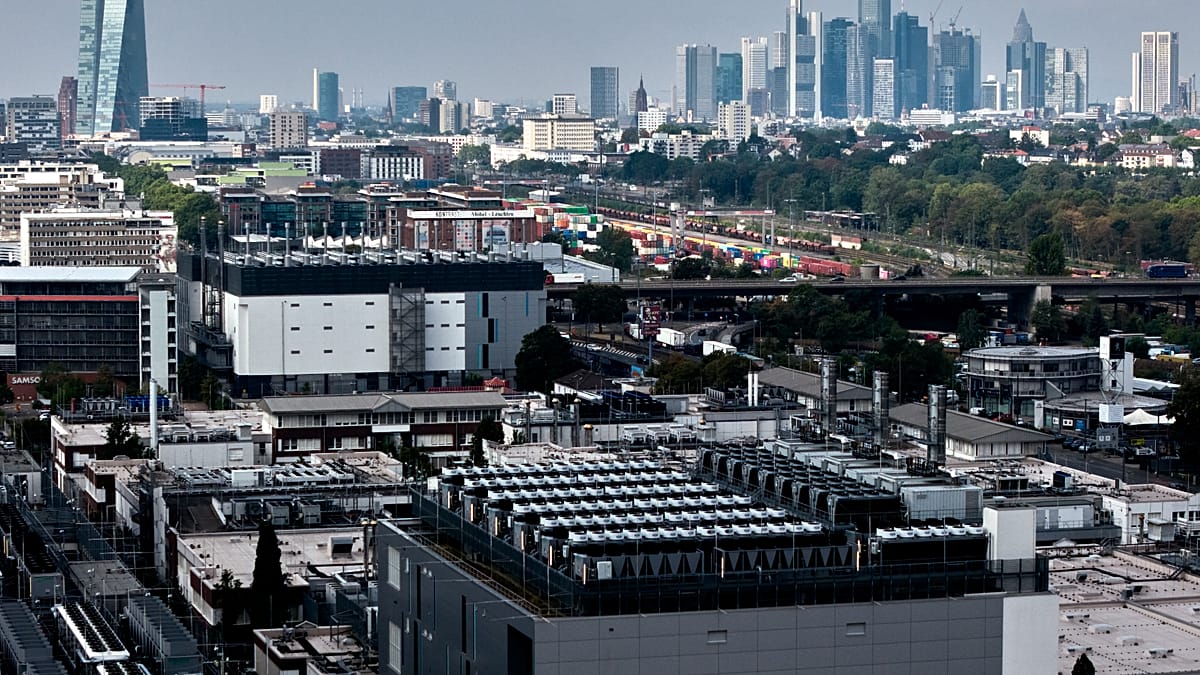
Indeed economists Aubrey Woessner and Pawel Adrjan attribute the surge to new AI-focused construction projects. “Spain and Italy are seeing major new AI-focused build-outs, such as campuses in Aragón and projects around Milan, rather than legacy sites clustered around major population hubs such as Frankfurt, London, Amsterdam, Paris, and Dublin,” they told European Pulse.
Growth was more modest elsewhere: the Netherlands (138), Poland (134) and Switzerland (133) all saw increases above 30%, while Germany (125) and the UK (124) rose by about a quarter. France (113) and Belgium (109) lagged behind, with the smallest gains.
Why data centre jobs pay more
The pay premium for data centre roles is striking. In 28 of the 29 country-occupation pairs examined, advertised salaries for data centre jobs exceeded those for similar roles in other sectors. The only exception was a negligible -1% for IT infrastructure, operations and support roles in France.
Italy shows the largest gaps: management roles in data centres pay 65% more than comparable positions elsewhere, while installation and maintenance roles offer 50% higher pay. In the UK, management roles command a 49% premium, and in Germany, installation and maintenance roles pay 36% more.
Woessner and Adrjan explain that data centres are competing for the same technicians and infrastructure specialists needed by other industries undergoing digital and green transitions. “Postings related to data centre roles ask for more skills, on average, than other postings in the same field,” they said. “Concrete technical and digital skills – including knowledge of IT systems, software, and cybersecurity – as well as English language requirements are also over-represented in data centre-related roles.”
Higher pay also serves a practical purpose: attracting workers quickly to keep construction and operations on schedule.
Who is hiring and what roles dominate
Unlike the United States, where ten big tech companies account for 71% of data centre postings, Europe's hiring is far more fragmented. “Across the ten European countries we analysed, it takes over 500 firms to account for 70% of data centre postings,” Woessner and Adrjan noted.
Five occupations make up between 50% and 60% of data centre job postings in Europe: IT infrastructure, operations and support; software development; management; installation and maintenance; and project management. This mix reflects two simultaneous trends: continued staffing of existing data storage and cloud facilities, and an emerging boom in AI-related construction.
Despite the rapid growth, data centre roles still represent a small fraction of overall job postings in most countries — around 1% or less. Ireland is the outlier, where nearly 5% of all postings on Indeed now mention a data centre.
The expansion is expected to continue, as the EU aims to triple its data centre capacity within five to seven years. That ambition raises concerns about skills shortages. “One concern for employers is that data centres are competing for workers with technical skills that were already in short supply even before the data centre boom,” Woessner and Adrjan said.
As of 2025, Germany (529) and the UK (523) had the most data centres in Europe, followed by France (322) and the Netherlands (298). Italy had 168, Spain and Poland each had 144, and Switzerland had 121.
The growth in data centre hiring is part of a broader European push for digital sovereignty, with the European Commission aiming to strengthen the continent's AI and cloud ecosystem. However, the environmental and social costs are also drawing scrutiny — from local opposition in Austria to new EU sustainability labels for data centres. The sector's energy demands have even revived discussions about nuclear power as a potential solution.