Europe's race to build data centres for artificial intelligence is strengthening the case for nuclear power, according to a new report from JP Morgan. The investment bank argues that the bloc's push to expand digital infrastructure, while cutting emissions and securing energy supplies, is making atomic energy an increasingly attractive option.
Data centres currently consume about 1.5% of global electricity – roughly 415 terawatt-hours (TWh) annually. That figure is expected to more than double to 945 TWh by 2030, driven largely by the computing demands of AI. In Europe alone, data centre electricity use stands at around 70 TWh and could climb to 115 TWh by the end of the decade, according to European Commission forecasts cited in the report.
JP Morgan projects an additional 89 TWh of annual European data centre demand by 2030 compared with 2023, with Iberia and the Nordics accounting for about 45% of that growth. The continent's announced data centre pipeline reached 66.1 gigawatts (GW) at the end of 2025, against just 10.8 GW of live capacity, according to research firm Aegir Insights.
Nuclear's comeback gains momentum
The EU aims to triple data centre capacity by 2035, a goal tied to technological independence and digital sovereignty. Brussels has also proposed a common rating scheme for data centres to make energy and water consumption reporting more transparent. These moves are coinciding with a broader revival of nuclear power across the continent, driven by energy security concerns and climate targets.
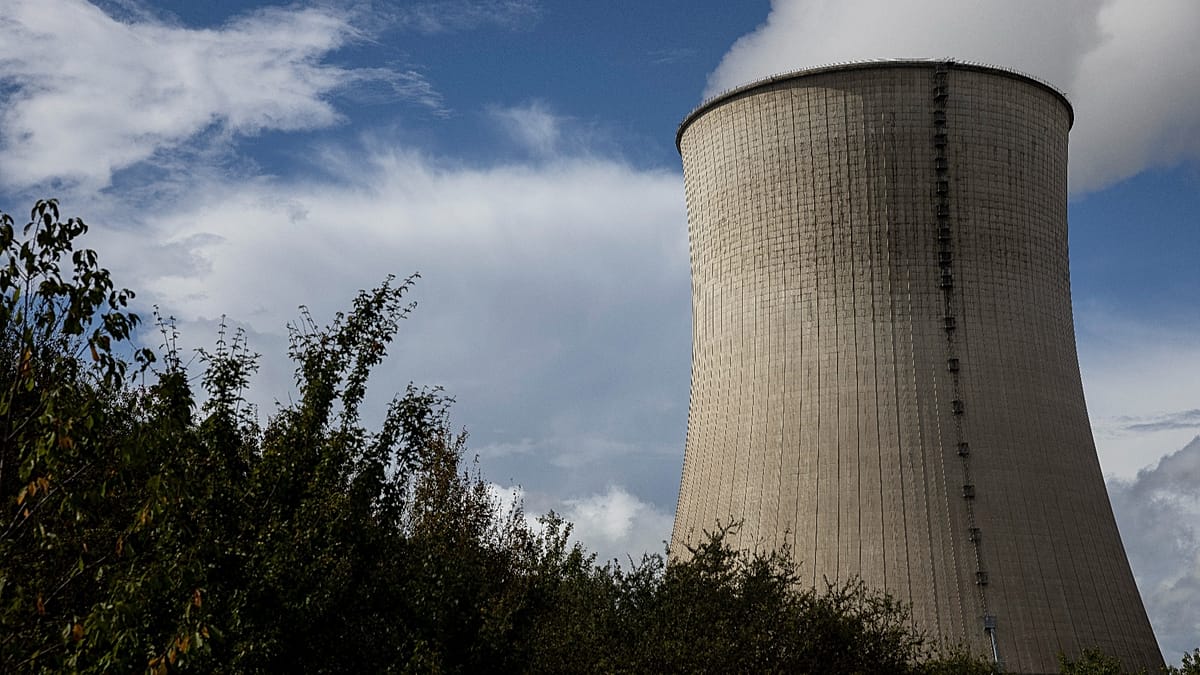
Nuclear generated about 23.35% of the EU's electricity in 2024, up 4.8% from the previous year – the second consecutive annual increase after a period of decline. Twelve of the 27 member states operate nuclear plants, including Bulgaria, France, Czechia, Spain, Hungary, the Netherlands, Romania, Slovenia, Slovakia, Finland, and Sweden. France remains the dominant producer, generating 380 TWh in 2024 – half of the EU's total.
Tech companies are now entering the nuclear arena to secure reliable power for their AI infrastructure. Google signed a 22-year deal with Finnish utility Fortum in September to buy up to 50% of the capacity from the Loviisa plant. Amazon is investing in X-energy, a US developer of small modular reactors, with plans to deploy sites in the UK and across Europe.
While fission raises the perennial issue of radioactive waste, investment is also flowing into fusion research. Microsoft has partnered with Helion Energy to source electricity from commercial fusion, particularly in countries like France and Finland. JP Morgan's April 2026 energy outlook already flagged fusion as a sector to watch, and the bank now projects global nuclear capacity will grow 75% by 2050, thanks to new reactors and extended lifespans for existing ones.
The trend comes as Europe grapples with energy costs and supply security. EU urges member states to cut energy use as winter gas crunch looms, and rural French businesses struggle with rising prices. Nuclear offers a low-carbon, baseload alternative that could ease pressure on the grid.
However, the path is not without obstacles. Building new reactors is costly and time-consuming, and public opposition remains in some countries. Yet with AI's insatiable appetite for electricity, the calculus is shifting. As JP Morgan notes, the continent's digital future may well be powered by the atom.