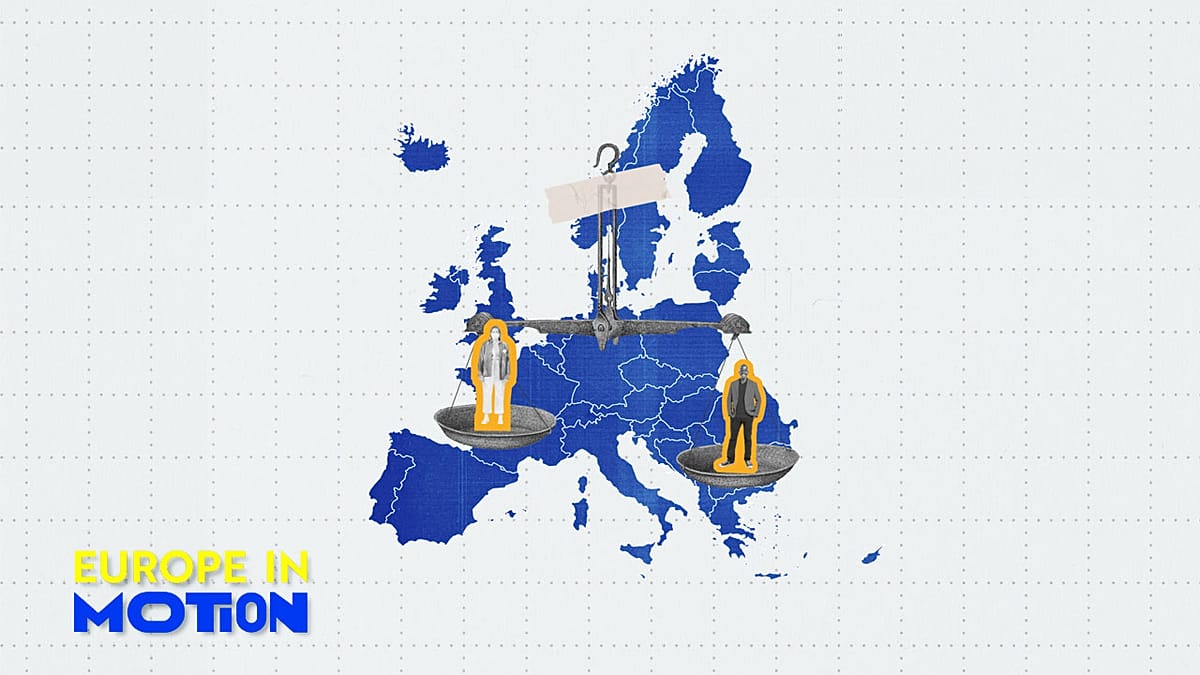
Europe has once again positioned itself as the global frontrunner in narrowing the divide between men and women, according to the latest data from the World Economic Forum (WEF). The continent has closed 75.7% of its overall gender gap this year, narrowly overtaking North America, which had held the top spot in the previous edition. Still, that leaves a 24.3% gap to full parity, and the WEF projects it will take another seven decades to reach complete equality at the current pace.
Since the index was first published in 2006, Europe's gender parity score has improved by seven percentage points. The region's strength lies in political empowerment, where it leads all regions with a score of 37%, ahead of Latin America and the Caribbean at 34.2%. In education and health, Europe maintains near-parity, scoring 99.5% and 96.9% respectively, though it ranks third and fourth globally in those categories. Its weakest performance is in economic participation and opportunity, where it sits in fifth place with 69.5%, almost eight points behind North America's 77.1%.
Nordic dominance, eastern lag
Europe accounts for seven of the top ten countries in the global ranking, a dominance that has been consistent since the index began. Iceland, Finland, Norway, and Sweden have all featured in every top ten for the past two decades, joined this year by the United Kingdom, Germany, and Ireland. Iceland remains the only country in the world to have closed more than 90% of its gender gap, scoring 93% overall.
Iceland's success is driven largely by its political empowerment score of 95.4%, a result of deliberate public policies promoting gender balance and a long history of female leadership. The country made history in 1980 when Vigdís Finnbogadóttir became the world's first democratically elected female president. The WEF report notes that Iceland has held the top position since 2009, reflecting a consistently positive trajectory.
Yet the European picture is far from uniform. The region's top performers are overwhelmingly in the north, while many of the lowest-ranked states are in the east. Türkiye, Romania, and Hungary sit at the bottom of the European table, each more than 20 percentage points behind Iceland. Romania's low score is largely due to its poor showing in political empowerment, where it ranks 104th globally, a consequence of the absence of mandatory quotas and closed internal party systems. Hungary's political empowerment score is even lower, at 0.132%, with no women in ministerial positions, giving it a zero in that specific subcategory.
The divide within Europe reflects broader structural and cultural differences. Nordic countries have long embraced gender equality as a core policy objective, with robust childcare systems, parental leave schemes, and transparent pay practices. In contrast, many eastern European states have been slower to adopt such measures, and political representation remains heavily male-dominated.
Despite the overall progress, the WEF's projections are sobering. At the current rate, Europe will not achieve full gender parity for another 70 years, a timeline that underscores the persistence of deep-rooted inequalities. The report's findings come as automation and artificial intelligence reshape labour markets, potentially widening or narrowing the economic gap depending on policy responses.
For European policymakers, the message is clear: while the continent leads globally, the internal disparities are a reminder that leadership is not the same as equality. Closing the remaining gap will require targeted action in the lagging countries, particularly in the realm of political representation and economic opportunity. As the WEF report notes, the top performers have shown that progress is possible with sustained commitment, but the pace must accelerate if the next generation is to see true parity.