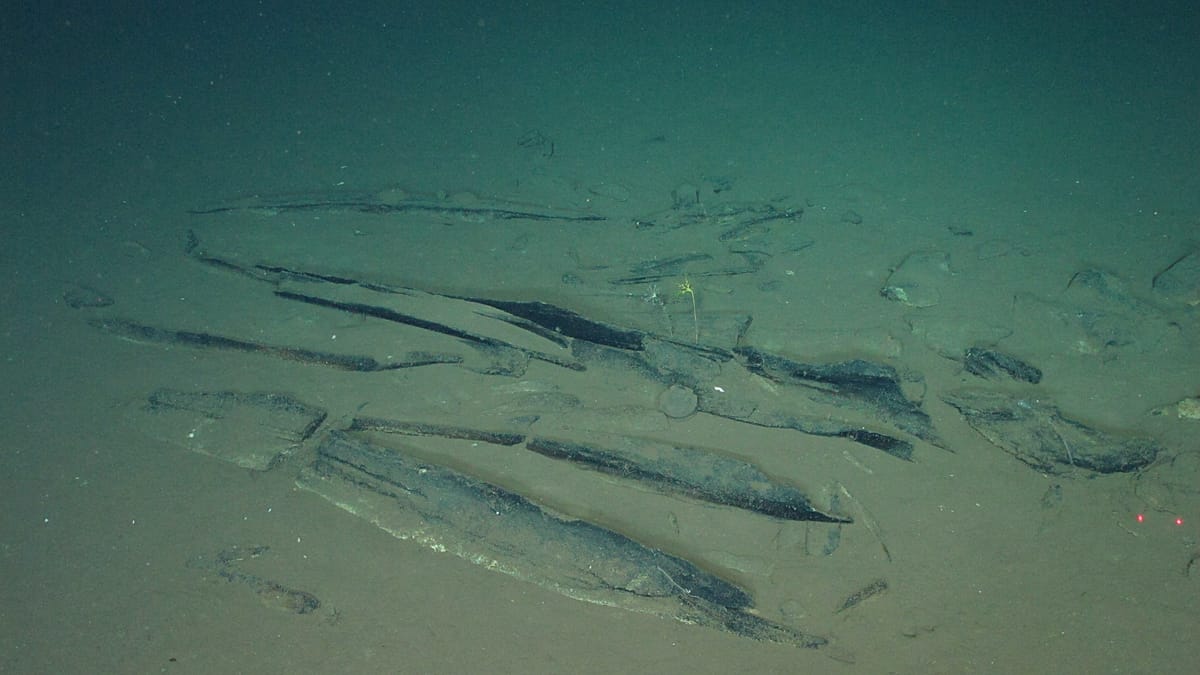
In one of the most remote stretches of the southeastern Indian Ocean, scientists have uncovered a vast underwater graveyard of whales that is reshaping understanding of deep-sea ecosystems. The site, lying seven kilometres beneath the surface, is believed to be the deepest, oldest and largest whale graveyard ever documented.
Researchers from the Chinese Academy of Sciences' Institute of Deep-sea Science and Engineering identified five whale carcass sites and numerous fossils during a series of submersible expeditions in 2023. Among the remains were skulls of beaked and baleen whales, with some bones dating back as far as 5.3 million years, according to findings published in the journal Nature.
Thriving Communities on Ancient Bones
The graveyard supports a remarkable ecosystem of marine creatures. Scientists observed jellyfish, tubeworms, brittle stars, sea cucumbers, squat lobsters and saltwater clams living on and around the whale remains. Many of these species may be previously unknown to science.
Whale falls occur when a carcass sinks to the ocean floor, providing a long-lasting food source for deep-sea organisms. Xikun Song, a biologist with the Chinese Academy of Sciences, explained that the enormous size of whales and the unique chemistry of their bones make them ideal foundations for these ecosystems. The discovery has surprised researchers not only because of the graveyard's size but also because of the extraordinary preservation of the bones over millions of years.
Several factors helped protect the remains. The bones are dense enough to withstand attacks from bone-eating worms, while their extreme depth shields them from being buried beneath sediment. A thin coating of minerals from seawater may also have slowed their deterioration. “The potential number of specimens is just astounding,” said palaeontologist Stephen Godfrey of the Calvert Marine Museum in the United States, who was not involved in the research.
Researchers are still uncertain why so many whales ended up in the same location. One possibility is that whales naturally lived and died in the area. Others may have succumbed to exhaustion or illness associated with deep diving. The V-shaped geography of the seabed could have channelled whale remains into the same resting place over millions of years.
Giovanni Bianucci, a palaeontologist at the University of Pisa in Italy and co-author of the study, emphasised the broader significance: “Studying the whale graveyards is important for understanding how life can adapt to such extreme conditions, not only due to the lack of light and oxygen but also to the incredibly high pressure.”
The findings highlight the resilience of deep-sea ecosystems and the hidden biodiversity that continues to thrive far beyond the reach of sunlight. For European researchers, the discovery adds to a growing body of knowledge about marine life in extreme environments, complementing studies of whale strandings closer to home, such as the recent case of humpback whale Timmy, whose death was tracked off the Danish coast. Meanwhile, in the Mediterranean, Cyprus has seen a surge in dolphin and whale sightings, prompting new protection rules.