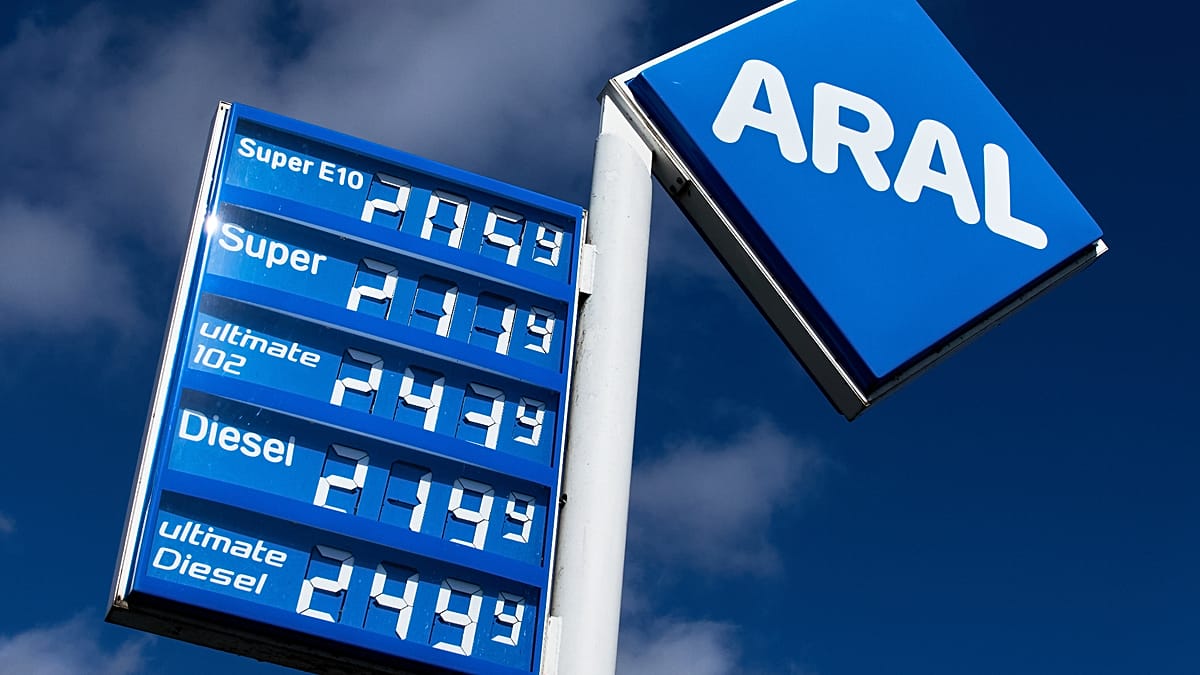
Diesel has become the most expensive fuel at European pumps, surpassing petrol for the first time since records began. According to the European Commission's Weekly Oil Bulletin, the EU weighted average price of diesel hit €2.226 per litre on 21 September 2026 — 13.4 cents more than a litre of Euro-super 95 petrol. Filling a typical 50-litre tank now costs around €111, of which roughly 40% goes to taxes.
The surge is largely a consequence of the war with Iran, which began in February and has disrupted energy flows through the Strait of Hormuz. Diesel has been hit harder than petrol, with its EU average price rising about 40% since late February. European Central Bank experts estimate that refining margins alone added €0.41 per litre in the third week of September, accounting for 19% of what drivers pay. They argue that a sustained price drop would require "a cessation of the war in the Middle East, a normalisation of flows through the Strait of Hormuz and a restoration of global refining activity."
Why diesel is taxed less than petrol
The lighter tax treatment of diesel is a long-standing feature of European fuel policy. EU rules set a minimum excise duty of €0.33 per litre on diesel, against €0.359 on petrol. Most member states maintain a gap in their national rates, often justified as support for hauliers, farmers, and other businesses that rely on diesel. In 2015, the Brussels-based campaign group Transport & Environment calculated that Europeans paid on average 14 cents more tax per litre of petrol than diesel. A decade later, the gap remains.
A 2021 European Commission proposal to tax fuels by energy content rather than volume would have ended diesel's advantage. However, the plan required unanimous support from all 27 member states, and a compromise text failed to win approval in November 2025.
How the tax bill adds up
Diesel is taxed in two stages. First comes excise duty, a fixed amount per litre, which some countries supplement with carbon charges. Then value-added tax (VAT) is applied on top of everything, including the excise — effectively a tax on a tax. VAT rates range from 17% in Luxembourg to 27% in Hungary.
Here are the ten EU countries with the highest total tax per litre of diesel, comparing the amount of tax paid rather than the percentage of the pump price.
10. Greece – €0.855 per litre
Greece charges €0.41 per litre in excise, unchanged since July 2017, plus 24% VAT. Including other taxes of about €0.014 per litre, taxes make up 38.4% of the €2.224 pump price. With petrol excise at €0.70, Greek diesel is taxed 28.6 cents less than petrol — the widest gap in the EU.
9. Austria – €0.897 per litre
Austria combines a mineral oil tax of €0.378 per litre with a carbon levy of about €0.145, before applying 20% VAT. Taxes account for 40.1% of the €2.238 pump price.
8. Lithuania – €0.945 per litre
Lithuania charges a fixed diesel excise duty of €0.50 per litre, higher than the fixed duty on petrol, plus a CO₂ component of €0.0536. It then applies 21% VAT. A temporary cut in the fixed component to €0.45 per litre, approved in April in response to the Middle East conflict, ended on 15 June. Together, taxes account for 41.9% of the €2.258 pump price.
7. France – €1.005 per litre
France levies €0.6075 per litre in excise on diesel, plus 20% VAT. Taxes represent 42.2% of the €2.383 pump price. This comes as France's public debt hits a record 119% of GDP, adding pressure on the government to raise revenue.
6. The Netherlands – €1.006 per litre
The Netherlands has the EU's most expensive diesel, at €2.579 per litre, yet ranks only sixth for tax. Its diesel excise is €0.55 per litre, against €0.84 on petrol, leaving Dutch diesel taxed 26.7 cents less than petrol.
5. Belgium – €1.014 per litre
Belgium charges exactly the same excise, €0.600 per litre, on diesel and petrol. Because diesel's pre-tax price is higher, 21% VAT pushes its tax bill 6.9 cents above petrol's. Taxes are 42.5% of the €2.387 price.
4. Germany – €1.024 per litre
Germany applies an energy tax of €0.4704 per litre, a carbon price of €0.162, and 19% VAT. Taxes account for 41.7% of the €2.457 pump price. That is about to change: on 25 September, the Bundestag approved a 14.04-cent cut in energy tax from 1 October to 31 December, worth around 17 cents per litre including VAT.
3. Finland – €1.030 per litre
Finland charges €0.511 per litre in excise and 25.5% VAT, the second-highest rate in the EU. Taxes make up 40.3% of Finland's €2.555 pump price.
2. Italy – €1.034 per litre
Italian drivers paid €2.281 per litre according to the Commission's bulletin for 21 September. At the excise rate then in force, €0.5729 per litre, plus 22% VAT, taxes totalled about €0.984 per litre, or 43.1% of the pump price. However, on 26 September, excise rose to €0.6229 as the government scaled back its temporary tax discount. That rate applies until 5 October. Using the same €2.281 pump price for illustration, the higher excise combined with the standard 22% VAT would bring total tax to about €1.034 per litre, or 45.3%.
1. Denmark – €1.081 per litre
Denmark's excise of 4.261 Danish kroner per litre is worth about €0.571, and 25% VAT adds another €0.511. Taxes account for 42.3% of the €2.555 pump price.
Governments respond with temporary relief
With diesel and petrol prices at record levels, European governments are scrambling to cushion drivers. From 1 October, Germany will cut petrol and diesel taxes by around 17 cents per litre, including VAT, while Czechia's diesel tax reduction is expected to save drivers about 10 cents per litre. Spain has also extended its fuel tax relief. These measures are part of a broader patchwork response to record fuel prices across the continent.
The situation remains fluid. As the ECB experts noted, the key to lower prices lies in ending the Middle East conflict and restoring normal energy flows. Until then, diesel taxes — and the political debates around them — are likely to stay in the spotlight.