Brussels — Protecting children from online harms is a collective obligation that neither governments nor technology companies can shoulder alone, according to the head of a major European digital industry group.
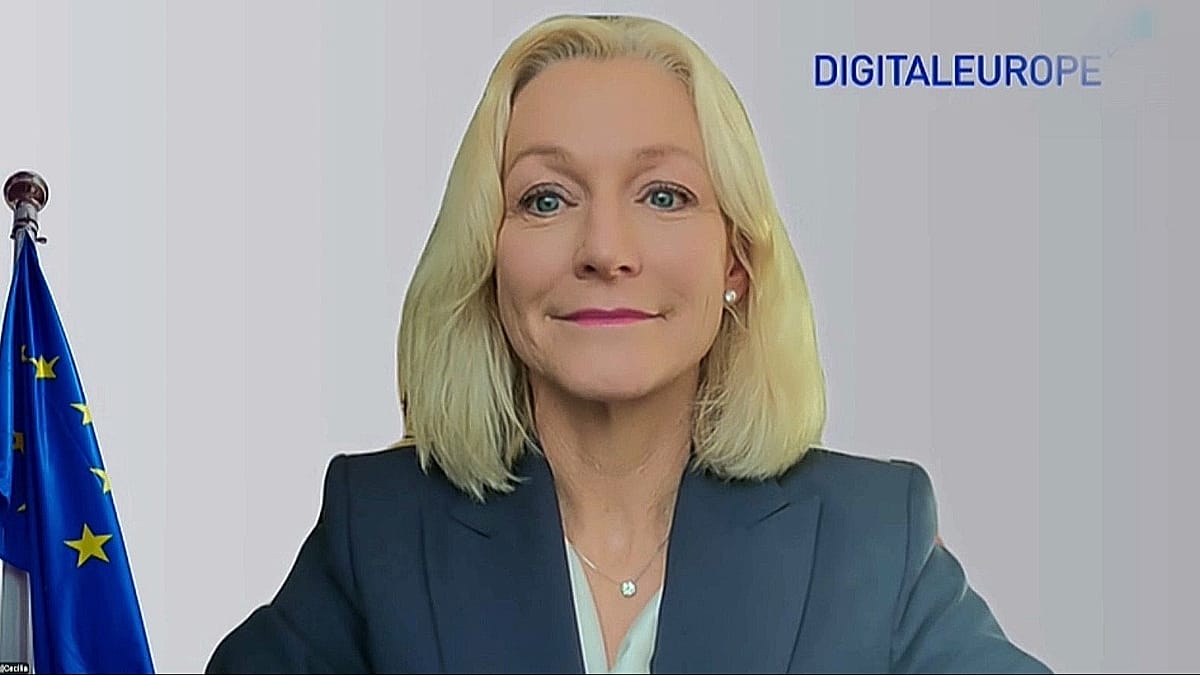
Cecilia Bonefeld-Dahl, Director General of DigitalEurope, told European Pulse that safeguarding minors from risks on social media is a “joint responsibility of the public and private sectors.” The association, whose members include OpenAI and Meta, insists that the burden cannot be placed on any single actor.
“It cannot be one party's responsibility,” Bonefeld-Dahl said, urging policymakers and industry to cooperate more closely. Her comments come as EU institutions debate new rules on digital services and child safety, following a Hungarian court ruling that forced Budapest to amend its own child protection legislation.
AI: A tool, not a threat
Bonefeld-Dahl also addressed growing anxieties about artificial intelligence, which has drawn scrutiny from regulators and child welfare advocates across Europe. She described AI as “a tool,” adding: “As any other tool, we need to find the right balance of how we use that tool.”
Her remarks follow a series of warnings from scientists, educators, and even some tech executives about the potential dangers of generative AI, from misinformation to manipulation of young users. Yet Bonefeld-Dahl cautioned against treating AI as inherently harmful, arguing that its benefits — in education, healthcare, and beyond — should not be overlooked.
DigitalEurope represents a broad swath of the continent's digital economy, from startups to global platforms. Its stance reflects a wider industry push to share responsibility for online safety with governments, rather than bearing the full regulatory weight.
The debate is particularly acute in Brussels, where the European Commission is refining the Digital Services Act and other measures aimed at making online spaces safer for minors. Some member states, such as France and Germany, have introduced their own national rules, creating a patchwork that industry groups say complicates compliance.
Bonefeld-Dahl's comments also echo a broader conversation about the limits of self-regulation. While tech companies have rolled out parental controls and age verification tools, critics argue these measures are insufficient without stronger legal backing.
In a related development, 50 business leaders recently warned Brussels against diluting the EU's corporate due diligence law, underscoring the tension between competitiveness and accountability.
For now, DigitalEurope is calling for a “balanced” approach that avoids overburdening companies while ensuring children are protected. “We need to work together — industry, regulators, educators, and families — to create a safer digital environment,” Bonefeld-Dahl said.
The association's position is likely to influence ongoing negotiations in the European Parliament, where lawmakers are split over how far to go in regulating AI and social media. Some MEPs want binding obligations on platforms to verify users' ages and remove harmful content, while others prefer voluntary codes of conduct.
As the EU moves toward finalizing its AI Act and revising child safety rules, the question of who bears ultimate responsibility remains unresolved. Bonefeld-Dahl's message is clear: it is a shared task, and no one should be left to handle it alone.