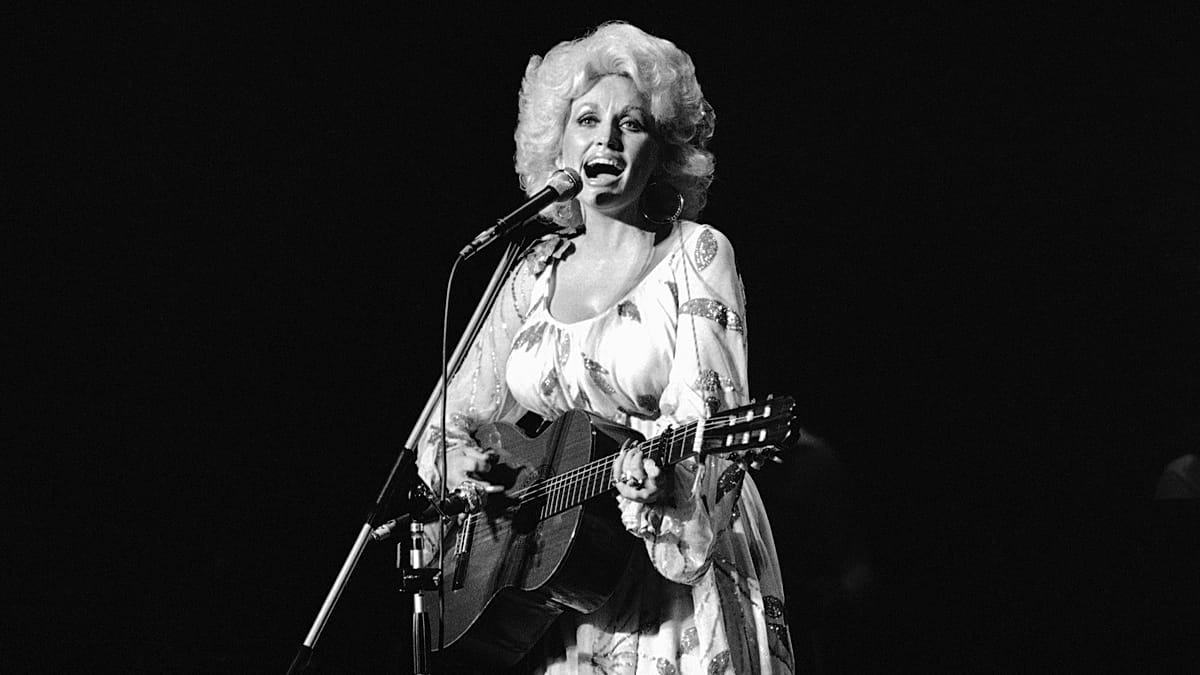
In the days since Dolly Parton's death, her younger sister Stella has shared a deeply personal tribute that sheds new light on the singer's final months. Stella revealed that even as Dolly faced the end of her life, she was still thinking of ways to help others—offering to take part in experimental cancer treatments if they could benefit future patients.
“My sister was one of the most generous, thoughtful and kind people I’ve ever known,” Stella wrote in a Facebook post. “What the world saw is exactly who she was.”
Stella, one of Dolly’s 11 siblings, said that in a recent conversation, Dolly told her that if there was no hope for her own recovery, she would still allow her medical team to try experimental drugs in the hope of helping others in the future. “My sister was always thinking of others,” Stella added.
Dolly Parton died on Tuesday at the age of 80, after what her family described as a “brief battle” with cancer. She had been receiving treatment at the Vanderbilt-Ingram Cancer Center in Nashville, following kidney and autoimmune issues. She was surrounded by family when she passed.
A sister's bond and a lasting legacy
Stella also reflected on the close relationship the two sisters shared, revealing that they had a weekly coffee date over the phone every Tuesday morning “before the sun came up.”
“My Tuesday morning coffee time will never be the same but her love, respect and goodness will remain,” she wrote. “She left the world a better place by being in it so let’s follow her example.”
The news of Dolly Parton’s death has prompted an outpouring of tributes from across the music world, Hollywood, and politics. Former US president Donald Trump ordered flags to be lowered to half-mast in her honour, writing on Truth Social: “This is a true loss for millions of people. There has never been anyone like her, and never will.” The tribute, however, drew some criticism given the singer’s own charitable work and the political divide.
Joe Biden, who was president until earlier this year, called Parton “an American original” and praised her advocacy for women and equality, as well as her Imagination Library programme, which has distributed millions of books to children around the world. That programme has recently faced funding challenges, a development that has sparked debate about the intersection of politics and philanthropy.
Musicians including Paul McCartney, Céline Dion, Elton John, Eminem, Taylor Swift, and Beyoncé have all paid their respects. McCartney described her as “such a wonderful woman,” while Dion called her “pure light, with a kind heart and a generous spirit.” Elton John said she was “a giant of an artist – unique and irreplaceable, with the kindest heart.” Beyoncé, who collaborated with Parton on her 2024 country-inspired album Cowboy Carter, called her the “barometer” and the “north star” for the music industry.
Dolly Parton’s influence extended far beyond country music. Her songs, such as “Jolene” and “I Will Always Love You,” have become global anthems, and her business acumen made her a billionaire. But it was her philanthropy—from literacy programmes to vaccine research funding—that defined her public persona as much as her music.
Her willingness to consider experimental treatments, even at the end of her life, is a testament to that spirit. As Stella Parton wrote, “She left the world a better place by being in it.”