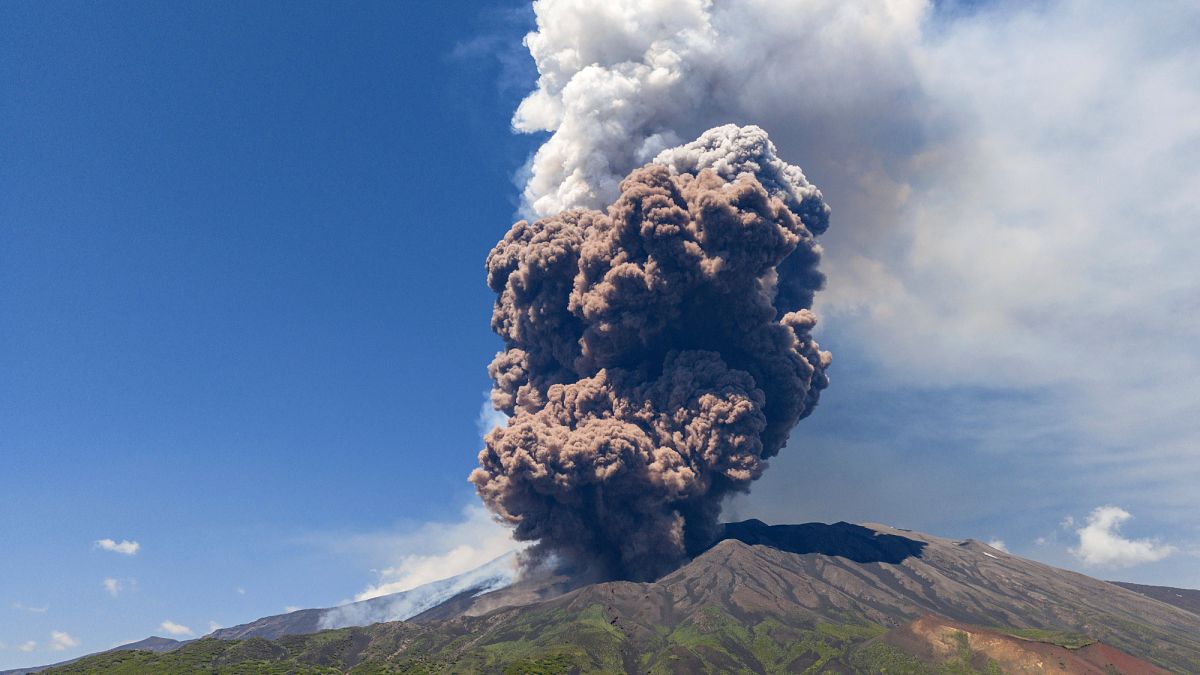
New drone footage from Sicily offers a striking aerial view of the Mount Etna cable car, which transports visitors up the slopes of Europe's most active volcano. The video, released this week, captures the contrast between the rugged, blackened terrain and the steady movement of cabins suspended above it.
Engineering on an active volcano
The cable car system, known as the Funivia dell'Etna, runs from the Rifugio Sapienza at around 1,900 metres to an upper station near 2,500 metres. From there, hikers and guided tours can continue to the summit craters, which shift in activity from month to month. The infrastructure must withstand not only eruptions but also corrosive volcanic gases, sudden temperature swings, and heavy snowfall in winter.
Engineers monitor seismic data, gas emissions, and ground deformation in real time. When Etna enters a paroxysmal phase — sending lava fountains hundreds of metres into the air — the cable car is shut down immediately. The system has been damaged by eruptions before, most notably in 2002, when lava flows destroyed part of the lower station. Since then, protective measures have been reinforced.
Etna's frequent but usually non-lethal eruptions make it a unique laboratory for studying volcanic hazards. The Italian National Institute of Geophysics and Volcanology (INGV) maintains a permanent monitoring network on the mountain, and its data helps inform decisions about when to close the cable car or restrict access to higher elevations.
Tourism and risk management
For the Sicilian economy, the cable car is a vital link to one of the island's top tourist attractions. Catania, the nearest major city, benefits from the steady flow of visitors who come to see the volcano. But the balance between accessibility and safety is delicate. In 2021, a sudden ash emission forced the evacuation of dozens of tourists from the upper station, and similar incidents have occurred in other years.
The drone footage, shot by a local operator, shows the cable car silhouetted against a clear sky, with the summit craters steaming in the background. It is a reminder that Etna remains active even when not in full eruption. The volcano has been in a state of near-continuous activity for decades, with Strombolian explosions, ash plumes, and lava flows occurring at irregular intervals.
Across Europe, other volcanic regions face similar challenges. In Iceland, the Reykjanes peninsula has seen a series of eruptions since 2021, forcing authorities to close roads and evacuate the Blue Lagoon spa. The Canary Islands' Cumbre Vieja eruption in 2021 destroyed hundreds of homes on La Palma. Each case requires tailored monitoring and response systems, but the core problem is the same: how to let people experience these landscapes without exposing them to unacceptable risk.
For now, the Etna cable car continues to operate, carrying thousands of passengers each year. The drone footage offers a rare perspective on a machine that works in one of the most hostile environments on the continent.