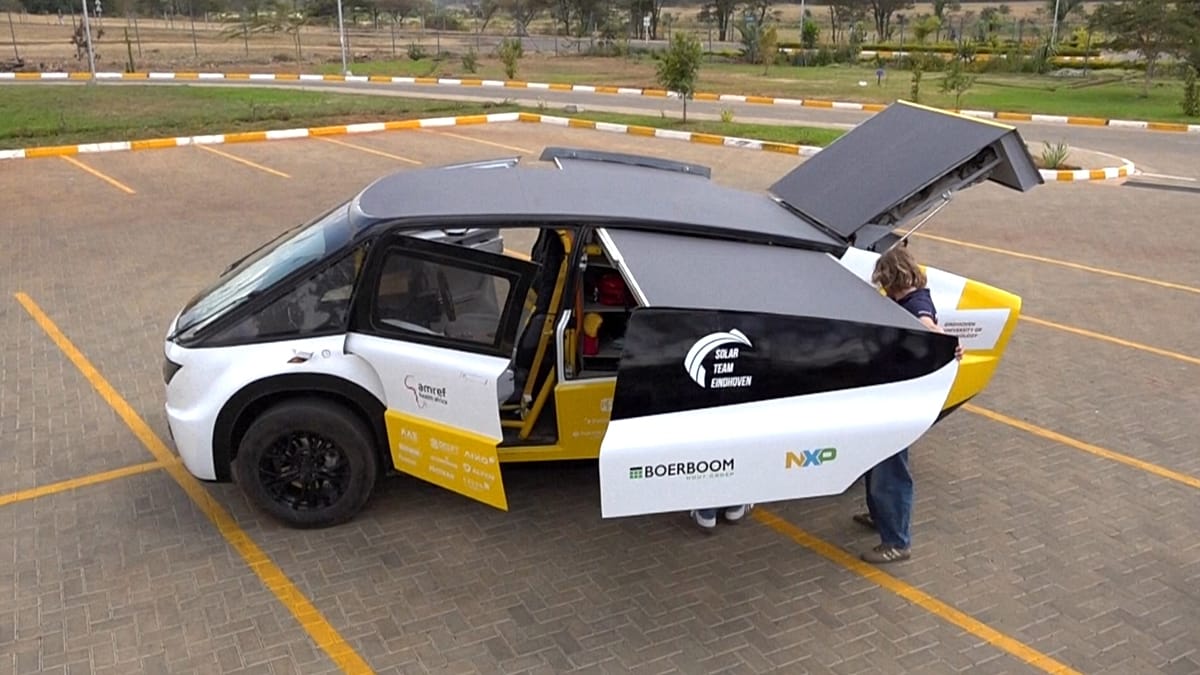
A solar-powered ambulance designed to serve communities far from reliable electricity is now undergoing real-world testing in Kenya. The vehicle, named Stella Juva, was developed by a student team at Eindhoven University of Technology in the Netherlands, and its creators hope it can offer a cleaner, more dependable alternative to conventional fuel-dependent medical transport.
The project grew out of conversations with NGOs working across Africa, who told the Dutch team that unreliable fuel supplies and patchy grid access often hamper their ability to deliver healthcare. Yarno Basten, one of the innovators behind Stella Juva, explained that the design brief was shaped by those field realities. "We heard from organisations that they sometimes couldn't reach patients because they ran out of diesel or couldn't charge their equipment," he said.
A mobile clinic on wheels
Stella Juva is more than a transport vehicle; it functions as a mobile clinic. It can carry an ultrasound scanner, portable X-ray equipment, a defibrillator, and refrigeration for vaccines and other medical supplies. Solar panels on the vehicle generate power both for driving and for the onboard equipment, but that energy budget is limited, so the team had to make careful choices about what to include.
"It is very important to take the right equipment for the right use case because you can only use so much energy," Basten noted. The vehicle can travel up to 715 kilometres on a single charge under favourable conditions and reach a top speed of 120 km/h, making it suitable for long distances on rough terrain.
The prototype is currently being tested on Kenyan roads, including the dusty and uneven routes of Narok County, to see how it performs in the conditions it was designed for. The team is working with local healthcare professionals to refine the concept, ensuring it meets the needs of the communities it aims to serve.
Geoffery Sadera, a project officer at Amref Health Africa, said the vehicle could transform how health workers conduct diagnostic screening in areas with limited electricity. "It will enable us to go and screen mothers and babies, catch complications early and refer them in real time," he said. The ambulance could also support referrals between community health facilities and larger medical centres, reducing delays that can be critical in emergencies.
The World Health Organization estimates that hundreds of millions of people worldwide are served by health facilities with either no electricity or an unreliable supply. Stella Juva's developers see the project as a test of whether mobile renewable energy can help address both access to healthcare and access to reliable power in off-grid regions.
The project remains at the testing stage, with the team assessing how the vehicle handles real-world conditions before any broader rollout. If successful, it could offer a blueprint for other regions facing similar challenges, and it aligns with broader European efforts to develop innovative energy storage solutions for a more sustainable future.
For now, Stella Juva is a promising example of how European engineering can be adapted to address global health inequities, bringing the benefits of renewable energy to those who need it most.