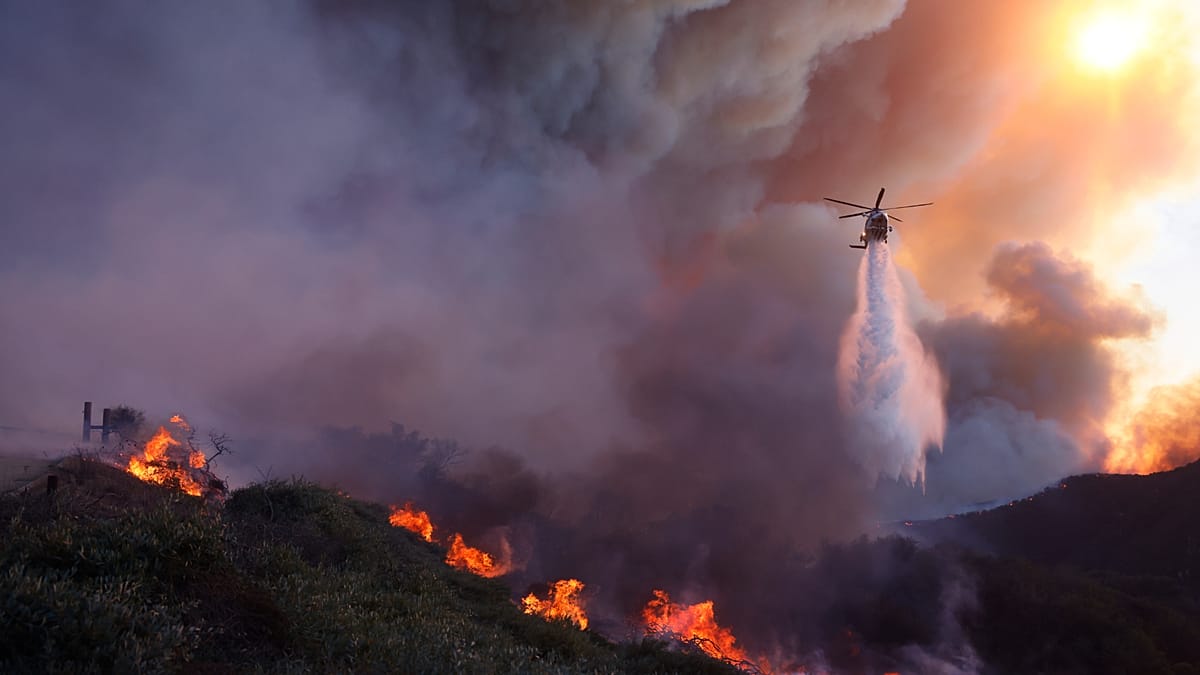
Pregnant women exposed to fine particulate matter from wildfire smoke face a significantly higher chance of their child receiving an autism diagnosis, according to a large observational study published this week. The research, which tracked nearly 900,000 mother-child pairs in the United States for an average of 6.3 years, found that each 0.75-microgram-per-cubic-metre increase in average wildfire-related fine particle concentration during pregnancy was linked to a 30% rise in autism risk.
The strongest associations were observed when exposure occurred during the second and third trimesters, a period when fetal brain development is particularly rapid. “Pregnancy is a period of rapid brain development, when environmental exposures may interfere with important developmental processes,” said Stefania Papatheodorou, an epidemiologist at the Rutgers School of Public Health and lead author of the study.
Why wildfire smoke matters
Wildfire smoke is a complex mixture of fine particles, gases, and other pollutants. Its composition varies depending on what is burning—fires that consume plastics, electronics, and paints can release toxic chemicals into the air. These fine particles can penetrate deep into the lungs and trigger systemic inflammation, a plausible biological pathway through which exposure could affect pregnancy and fetal development.
“Wildfire smoke can travel far beyond the communities where fires are burning, and exposure may occur even when smoke is not visible,” Papatheodorou noted. This means that even pregnant women living hundreds of kilometres from active fires could be at risk, a concern that resonates across Europe, where wildfires have become more frequent and intense in recent years—from the Mediterranean coasts of Greece and Spain to the forests of Portugal and the Balkans.
The study, published in the Journal of Autism and Developmental Disorders, is observational and cannot establish a causal link. However, it adds to a growing body of evidence linking air pollution to neurodevelopmental outcomes. “Understanding how prenatal environmental exposures may contribute to autism, alongside genetic and other factors, remains an important research priority,” Papatheodorou said.
Autism spectrum disorder is a complex neurodevelopmental condition that begins before birth, when the brain is rapidly forming neural connections. While genetic factors play a significant role, environmental influences are increasingly recognised as contributing to risk.
The findings have practical implications for public health. Measures to reduce smoke exposure during pregnancy—such as improved air-quality forecasting, advisories to stay indoors, and strategies to limit smoke entering homes—could help protect maternal and child health. In Europe, where wildfire seasons are lengthening and smoke events are becoming more common, these results may inform policy discussions on climate adaptation and maternal health.
For expectant mothers in fire-prone regions, the advice is straightforward: monitor air quality alerts, keep windows closed during smoky periods, and use air purifiers if possible. As Papatheodorou emphasised, the study highlights the importance of monitoring wildfire events and their potential effects on air quality during pregnancy.
While the research was conducted in the United States, its findings are relevant to European populations, particularly in southern Europe where wildfires are a recurring threat. The European Union has already invested in satellite-based fire monitoring and cross-border cooperation, but this study suggests that health systems should also consider the long-term developmental impacts of smoke exposure.
As climate change continues to intensify wildfire activity, understanding these risks becomes ever more critical. The study’s authors call for further research into how prenatal environmental exposures interact with genetic and other factors, and for proactive measures to safeguard vulnerable populations.