The European Bank for Reconstruction and Development (EBRD) has committed €255 million to support Kazakhstan's first large-scale refractory gold ore processing plant, a move that could reshape the country's mining sector and strengthen its position in global mineral supply chains.
The facility, known as the Ertis pressure oxidation hydrometallurgical complex, will be built in the Pavlodar region by Solidcore Resources. Once operational, it will process up to 278,500 tonnes of gold concentrate annually, using pressure oxidation technology to treat ores that have been difficult to refine with conventional methods.
Roughly half of Kazakhstan's gold reserves are locked in refractory ores, which require advanced processing techniques. The new plant is expected to unlock these resources, creating a new metallurgical segment in a country where mining contributes around 12% of GDP and accounts for about one-third of commodity exports.
Moving Up the Value Chain
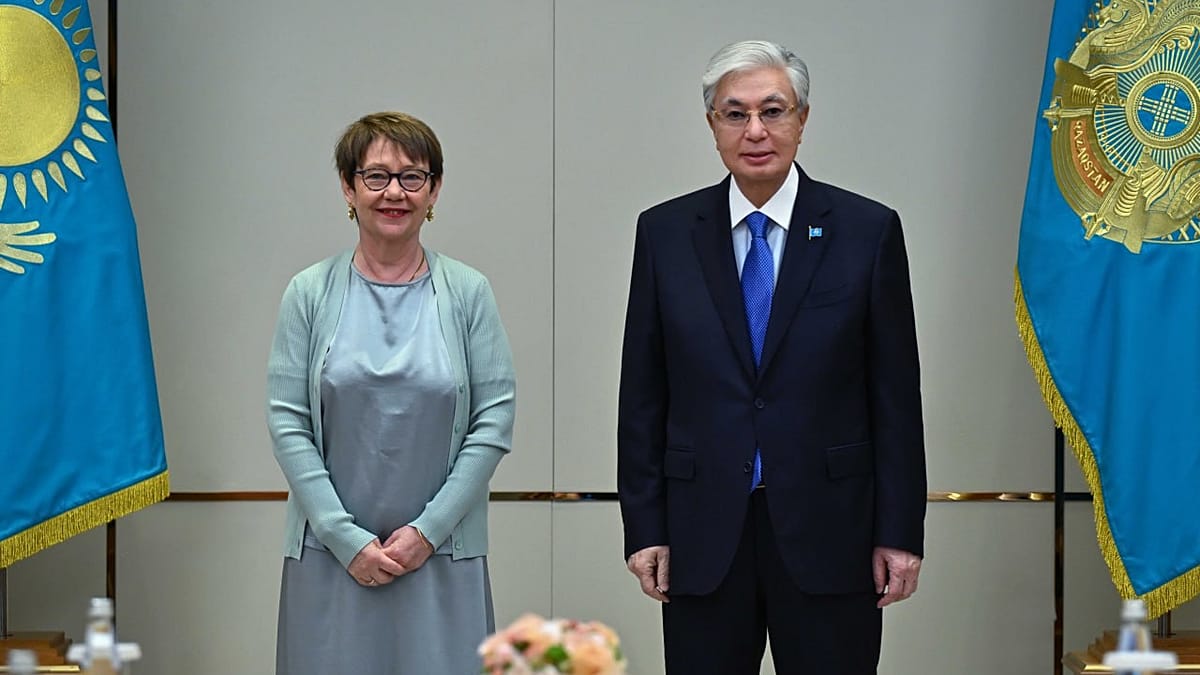
EBRD President Odile Renaud-Basso emphasised the strategic importance of the investment. "This investment is important in terms of the added value and Kazakhstan moving up the value chain," she told Euronews. The project is designed to enable domestic processing of complex ores for the first time, reducing reliance on raw material exports and increasing the country's competitiveness.
Renaud-Basso noted that the Pavlodar facility could serve as a catalyst for further investment in Kazakhstan's mineral processing sector. However, she stressed that continued reforms are necessary to attract international investors, particularly in regulatory stability and data transparency.
Demand for processed critical minerals is expected to remain robust, driven by the expansion of artificial intelligence, digital infrastructure, and clean energy technologies. "Critical minerals are essential for AI and digitalisation," Renaud-Basso said, pointing to growing global demand that supports investment opportunities across the sector.
The EBRD hopes the Pavlodar project will be the first in a broader pipeline of industrial processing initiatives. "We hope to find the right partners and the right projects in order to continue investing," she added.
Investment Pipeline and Broader Context
While the EBRD's annual investment in Kazakhstan has dropped from €913 million in 2024 to €378 million so far this year, Renaud-Basso attributed the decline to the timing of large projects rather than waning investor interest. "It really shows that the pipeline can be volatile. We have some big projects that shifted from last year to this year," she explained.
The bank expects total investment in Kazakhstan to reach around €1.3 billion by the end of the year, supported by projects in renewable energy, transport infrastructure, water, and private sector development. Cumulative EBRD investment in the country has now surpassed €11 billion across more than 340 projects, making it one of Kazakhstan's largest institutional investors.
Beyond mining, Renaud-Basso highlighted the potential for artificial intelligence to support Kazakhstan's economic development. The EBRD has recommended using AI to modernise customs procedures and improve border management along the Middle Corridor, a trade route connecting Europe and Asia. Kazakhstan is well positioned to benefit from AI, thanks to strong government support, expanding digital infrastructure, and a growing innovation ecosystem.
Kazakhstan has been deepening ties with the European Union, as seen in recent high-level visits and agreements. The country's efforts to boost oil exports via the Baku-Tbilisi-Ceyhan pipeline and its collaboration with the UAE on a €1.2 billion wind farm underscore its strategic pivot toward diversification and sustainability.