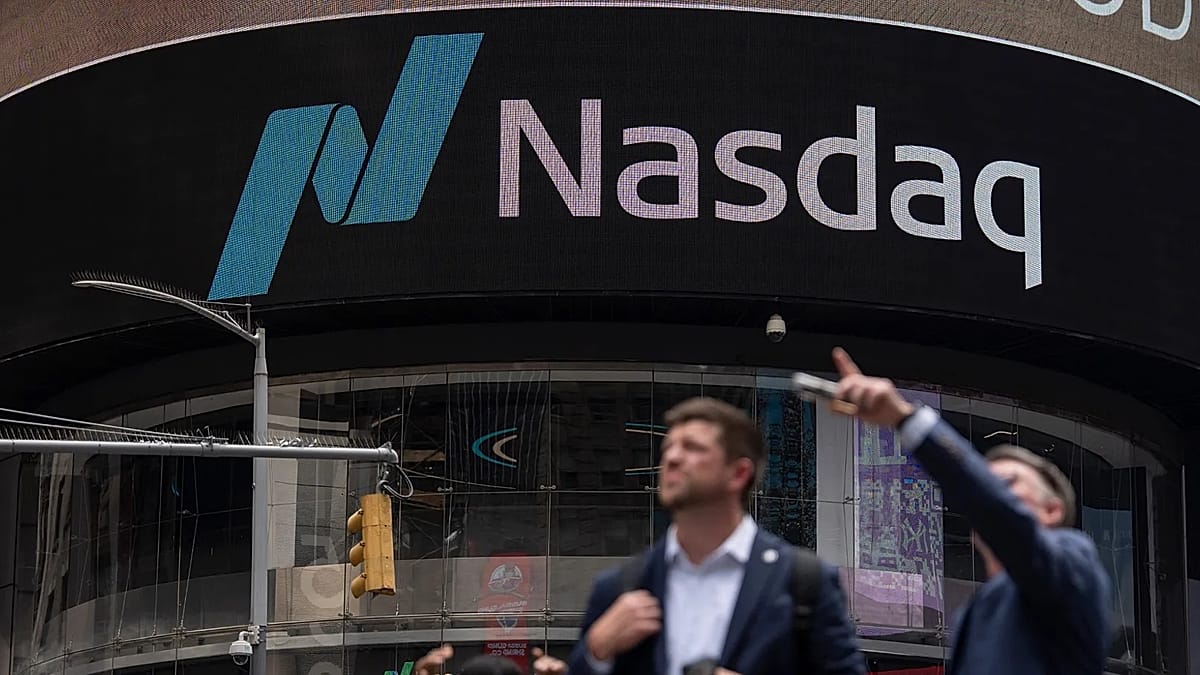
Nasdaq has confirmed plans to extend trading in US stocks to nearly 23 hours a day, starting 6 December, pending approval from the US Securities and Exchange Commission. The exchange will add an overnight session from 9pm to 4am Eastern Time, complementing its existing pre-market and after-hours sessions. The move is part of a broader push to compete with round-the-clock crypto and tokenised markets, and to capture demand from international investors, particularly in Europe.
For European investors, the new window translates to 3am to 10am Central European Time. That means traders in Frankfurt, Paris, Amsterdam, and Milan could execute orders on Nasdaq-listed stocks for nearly a full session before the London Stock Exchange opens at 8am GMT. The extended hours are designed to give retail and institutional investors alike greater flexibility, though access to the current early and late sessions has largely been the preserve of institutions with direct market connections.
Nasdaq president Tal Cohen framed the expansion as a way to “broaden investor access and expand wealth-building opportunities” for a wider range of participants. The exchange is betting that a longer trading day will attract the growing number of foreign investors holding US equities. By mid-2024, foreign holdings of US stocks had reached $17 trillion (€14.6 trillion), a 97% increase since 2019, according to data cited by Nasdaq. That surge represents a pool of capital that Nasdaq wants to serve directly, rather than lose to platforms that already operate around the clock.
A market that increasingly never sleeps
Traditional exchanges have been under mounting pressure to extend their hours. Geopolitical shocks have repeatedly occurred when Wall Street was closed, forcing investors to seek real-time pricing elsewhere. For instance, when US and Israeli strikes on Iranian nuclear sites were announced on a Saturday morning in February, traders turned to crypto exchanges and decentralised platforms to price oil, gold, and silver. Those venues, along with newer instruments like tokenised real-world assets and perpetual futures contracts, have demonstrated that demand for 24/7 trading does not wait for exchange bells.
Nasdaq is not acting alone. The New York Stock Exchange has already received SEC approval for a 22-hour trading day, running from 1:30am to 11:30pm ET. Cboe, the largest US options exchange, has also outlined similar ambitions. Nasdaq first signalled its intention to go nearly continuous back in March, and this week’s announcement fills in the details.
The new overnight session is the first concrete building block. It will open the market for nearly 23 hours on weekdays, from Sunday evening to Friday evening, with only a brief pause. Nasdaq ultimately aims to offer 24/7 trading, though that will require further regulatory approvals and operational adjustments.
For European investors, the extended hours could be a double-edged sword. On one hand, it offers greater access to US markets during European daytime hours, which could be particularly useful for those who want to react to overnight news or manage risk more actively. On the other hand, it may increase pressure on European exchanges to consider similar extensions, as investors grow accustomed to near-continuous trading.
Some analysts caution that longer hours do not necessarily mean better liquidity. Thin trading in overnight sessions can lead to wider spreads and higher volatility, which may offset the benefits for retail investors. However, Nasdaq’s move reflects a broader trend toward a more globalised, always-on financial system, one that European regulators and market participants will need to watch closely.
As the trading landscape evolves, European investors will be watching how these changes affect their own markets. The recent strength in European tech stocks suggests that cross-Atlantic investment flows are already significant, and the new Nasdaq hours could further integrate the two regions’ trading calendars.
In the meantime, the seasonal patterns in European equities may also shift if US markets become more accessible during European hours. The coming months will reveal whether the extended session delivers on its promise of broader access and wealth-building, or whether it simply adds noise to an already complex global market.