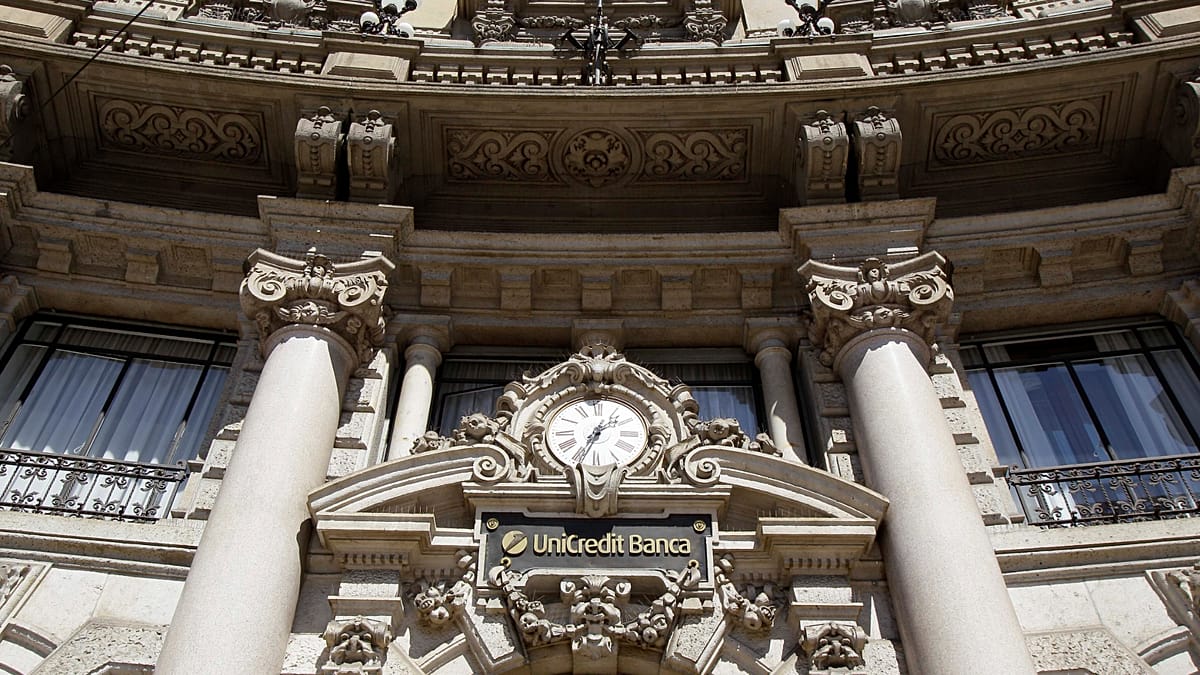
After nearly two years of friction, the standoff between UniCredit and Commerzbank appears to be entering its final chapter. According to Bloomberg, senior figures in Berlin are now willing to discuss selling the German state's 12.7% stake in Commerzbank to the Italian banking group, provided that agreement can be reached on the future strategy and governance of the Frankfurt-based lender. While this is not yet an official government decision, the shift in tone is unmistakable.
If the sale proceeds, UniCredit's stake would climb from roughly 47.6% to over 60% of Commerzbank. For CEO Andrea Orcel, that would transform his position from that of a major shareholder facing fierce resistance to the clear dominant force in one of Germany's most important financial institutions.
Why the 12.7% stake is pivotal
At first glance, the stake might seem like a mere accounting detail. But it carries significant strategic weight. UniCredit already controls nearly half of Commerzbank—47.59% of shares, equivalent to 49.65% of voting rights once treasury shares are excluded. Crossing the 50% threshold, and especially moving beyond 60%, would give UniCredit a robust cushion in shareholder meetings and a far stronger hand in negotiations with the supervisory board, management, and employee representatives.
Even with its current stake, UniCredit has been pushing to reshape Commerzbank's governance. The state's holding is the last major piece that could turn a shareholding victory into full, stable control.
What UniCredit stands to gain
The immediate advantage is scale. European banks face ever-increasing costs in technology, cybersecurity, artificial intelligence, and digital payments. A larger institution can spread those expenses across a broader customer and revenue base. For UniCredit, Commerzbank also deepens its presence in Germany, where it already operates through HVB (HypoVereinsbank).
Synergies are another key driver. UniCredit argues it can cut costs and improve efficiency at Commerzbank. According to Reuters, Orcel's plan aims to reduce the German bank's cost base by around €1.3 billion, while initially keeping Commerzbank separate from UniCredit's German subsidiary. This mirrors the approach that has transformed UniCredit in recent years: fewer management layers, elimination of duplicate structures, and a sharper focus on revenue-generating activities.
The broader strategic vision is to build a truly European banking group, with strong operations in Italy, Germany, and other core markets simultaneously. This aligns with the European Central Bank's long-standing advocacy for larger, more diversified cross-border banks.
The price of integration
Yet the challenges are substantial. Commerzbank is not an Italian bank with a Frankfurt address. It has a deep history, a network of corporate relationships, and a crucial role in financing German small and medium-sized enterprises (SMEs). Its model is more relationship-driven, whereas UniCredit has developed a more standardised, efficiency-focused organisation.
This is where a potential cultural clash looms. Orcel's model has delivered strong profitability improvements at UniCredit, but transplanting it to Commerzbank could prove far more complex. Even the ECB, while generally not opposing the transaction, has warned that integration will be complex and potentially lengthy, with cultural differences and tensions arising from the hostile nature of the takeover. A final decision on authorisation is expected between September and October.
For UniCredit, the challenge is not just buying Commerzbank—it is proving it can run it successfully.
Why Germany resisted for so long
The central question remains: if the deal can strengthen a European bank, why has Berlin opposed it? The answer is largely political and economic. Commerzbank is not seen in Germany as just another bank. It is a cornerstone institution, headquartered in Frankfurt, with a large retail network and a pivotal role in corporate lending.
The German government has repeatedly stressed the need to protect jobs, support the Mittelstand—the vast network of SMEs that underpins the German economy—and preserve Frankfurt as a financial centre. When UniCredit closed its exchange offer in July, Berlin branded the Italian group's aggressive approach as "unacceptable." There is also the fear that a bank controlled from Italy could make strategic decisions in Milan rather than Frankfurt.
This reflects the old problem of national champions: in theory, the European market is single, but in practice, states still treat large banks as part of their own economic infrastructure. Berlin's demand for guarantees on future strategy is therefore understandable.
However, Germany's stance is shifting. In June, Berlin made clear it did not want to sell its 12.7% stake to UniCredit. Now, the willingness to discuss a sale signals a pragmatic turn, possibly driven by the recognition that a stronger, pan-European bank could benefit the continent's financial stability. The coming months will reveal whether this opening leads to a historic deal or yet another standoff.