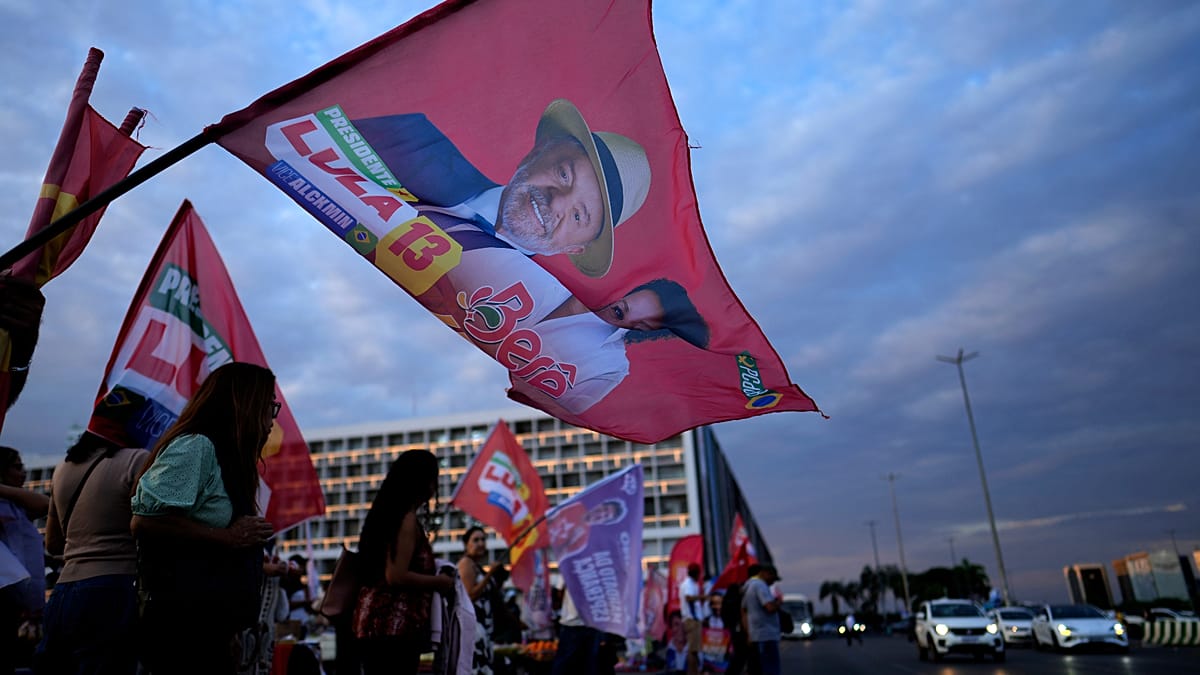
Washington and Canberra have suspended consular operations in Brazil, citing security concerns they declined to detail, just days before a presidential election that has exposed how deeply the country remains divided. The US embassy in Brasília and Australian diplomatic posts closed their doors to routine services on Friday, an unusual step that landed in the middle of an already febrile campaign.
The contest pits Luiz Inácio Lula da Silva, the 80-year-old veteran of the Workers' Party (PT), against Flávio Bolsonaro, the 45-year-old senator and son of former president Jair Bolsonaro. Opinion surveys put the two in a statistical tie, and most pollsters expect the decision to be pushed to a second round on 25 October.
A campaign shaped by outside pressure
US President Donald Trump has taken a keen interest in the race, backing the region's rightward shift in recent elections. His administration's decision to shutter consular services drew an immediate rebuke from Lula's camp. Edinho Silva, who leads the PT, told reporters the move "makes absolutely no sense" and described it as one of the ways Trump is trying to influence Brazilian public opinion.
The closure follows mounting scrutiny in Brazil of alleged foreign funding for far-right groups, an inquiry that has added another layer of tension to the vote. Lula has made national sovereignty a centrepiece of his pitch, warning Washington not to interfere. Trump, for his part, is said to be following the race very closely.
"The race is tied but not at a standstill," said Felipe Nunes, director of the polling institute Quaest, suggesting that late shifts remain possible among the roughly 160 million registered voters.
Disenchantment on the doorstep
For many Brazilians, the choice is less about enthusiasm than about damage limitation. Marcelo Vilanova, a 32-year-old fish market manager in Juiz de Fora, in the southeastern state of Minas Gerais, said he would vote for Lula as the "lesser of two evils." Lucas Sales, 38, who runs a mobile phone shop in the same city, said he would back Flávio Bolsonaro despite reservations, pointing to the senator's promise to get tough on crime — a priority for many voters.
Gisele Sousa, 45, who works in a clothing shop, was blunter. "It's really turned into a circus," she said. "My vote won't go to any of them."
The campaign has veered between the sacred and the profane. Rumours that Flávio Bolsonaro intended to strip Our Lady of Aparecida, Brazil's patron saint, of her status triggered a furious denial from the candidate, while Lula appeared on the trail clutching a statue of the saint and calling any interference with her "unacceptable." The electoral court ordered the removal of posts repeating the false claim.
Lula then handed his opponents an opening by saying that men were "cowards" about prostate examinations while women learn from a young age to accept being touched, a reference to gynaecological exams. Clips of the remark spread rapidly online, framed by critics as an allusion to abuse. In a podcast appearance, Lula also said he was certain of a first-round win over a rival he claimed was not qualified "to serve as a building manager."
Records, promises and investigations
Lula is seeking a fourth non-consecutive term and insists he is fitter than ever. He points to falling inflation and unemployment and to a sharp reduction in deforestation in the Amazon. Yet voters continue to complain about the cost of living and to rank violence and crime among their top concerns. In response, his campaign has rolled out a series of measures, including higher social welfare payments and a ban on sports betting, which has drawn many Brazilians into gambling addiction.
Flávio Bolsonaro, a senator since 2019 and once a little-known figure, has proved a resilient opponent. He has vowed that Lula would be "ousted from the presidency" on Sunday, telling him: "Brazil can't stand you anymore." But his campaign has been dogged by a corruption investigation into the financing of Dark Horse, a biopic about his father. He was forced to acknowledge that he had asked Daniel Vorcaro, a jailed banker at the centre of one of Brazil's largest financial fraud cases, to help bankroll the film.
The result will resonate well beyond South America. Brazil is a pivotal player in climate diplomacy, trade and the wider contest between democratic and authoritarian models, and its partners in Europe — from Lisbon to Berlin — will be watching how a new administration positions itself on the Amazon, on Mercosur and on relations with Washington and Beijing.