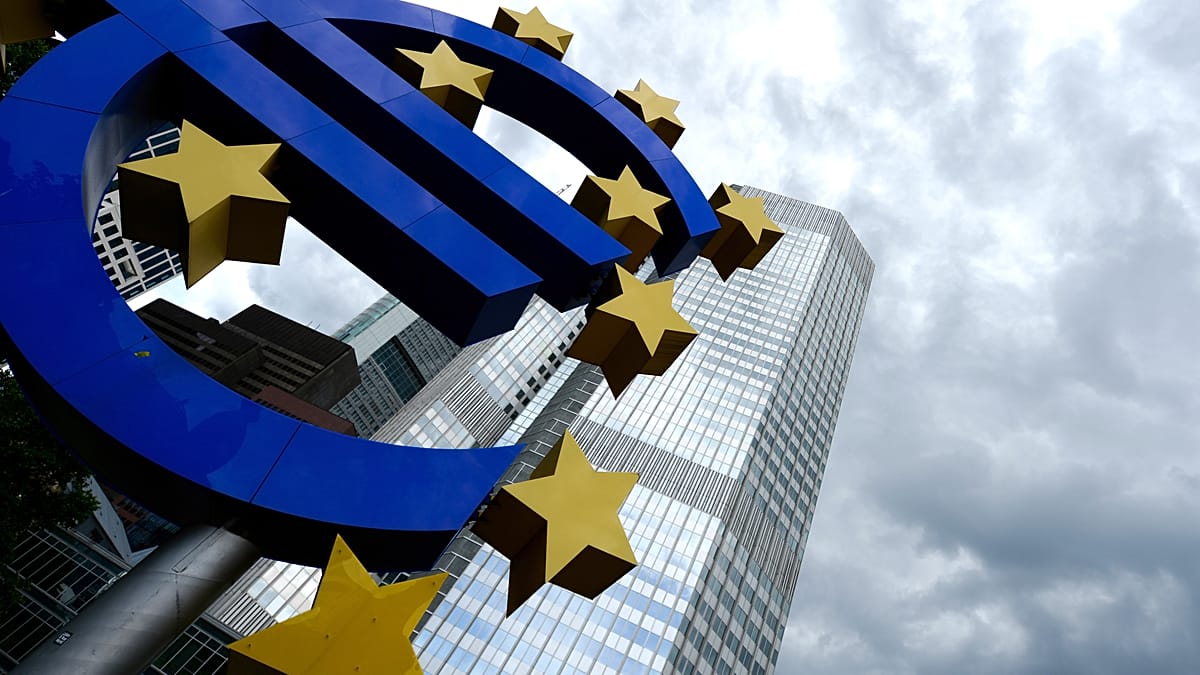
The European Central Bank tightened monetary policy again on Thursday, lifting its deposit facility rate by a quarter point to 2.5%. The move, decided by the Governing Council in Frankfurt, follows a similar increase in June and marks the first back-to-back hikes in three years.
The main refinancing rate now stands at 2.65%, while the marginal lending facility was raised to 2.9%. In its statement, the ECB said that “the conflict in the Middle East continues to generate inflation pressures, and inflation is set to remain well above target for an extended period.” It added that the council remains “well positioned to navigate the uncertainty caused by the conflict.”
Energy shock, not demand boom
The decision comes after eurozone inflation accelerated to 3.3% in August, up from 2.9% in July and the highest reading since September 2023. The surge is almost entirely energy-related: energy inflation jumped to 14.3% from 10.3%, as fighting around the Strait of Hormuz kept crude supplies tight. Brent crude crossed $100 a barrel again on Wednesday following renewed US-Iran exchanges.
Underlying price pressures tell a different story. Core inflation, which excludes energy, food, alcohol and tobacco, fell to 2.4% from 2.5%, while services inflation—the component most sensitive to wage growth—dropped to 3% from 3.3%. There is little evidence that expensive energy is feeding into the broader economy.
That distinction is central to the ECB’s own analysis. In a paper published earlier this month, its economists estimated that adverse energy supply factors accounted for roughly 90% of the rise in energy inflation between January and May. “This time the energy supply shock dominates, while demand and public policy stimulus have minor roles,” they wrote, contrasting the current episode with the 2021-22 surge that prompted a more aggressive response.
One rate, many economies
The eurozone average masks significant divergence. August inflation ran at 4.5% in Spain, 2.9% in Germany and 2.7% in France—three economies facing the same energy shock with markedly different outcomes. Growth has held up better than expected, but resilience is not overheating. Even at 2.5%, the deposit rate remains within the range the ECB considers neutral; going further would mean actively restraining the economy.
President Christine Lagarde had signalled this move in July, when the council held rates but instructed staff to model oil and gas scenarios ahead of September. “The burden of proof is on data,” she said then, adding that “the full inflationary impact of the energy shock has yet to play out.”
Thursday’s decision accompanies fresh staff projections, though their cut-off date falls roughly two weeks before the meeting. Neither the latest leg higher in oil nor the surge in European government bond yields to 15-year highs will be reflected in those numbers.
Attention now turns to the ECB’s global peers. The Federal Reserve will announce on 16 September and the Bank of Japan on the 18, with both expected to consider hikes of their own. The Bank of England, which decides on 17 September, is expected to hold rates as it maintains a much higher benchmark at 3.75%.
The ECB’s path remains data-dependent, and the energy shock continues to dominate. As the rationale for further hikes is far from clear, the council will be watching oil markets and wage developments closely. Meanwhile, the broader European energy landscape is also under scrutiny, with the EU's energy independence plan facing hurdles on grids and funding, according to auditors.