Frankfurt is poised to act again. Market pricing puts a quarter-point increase at near certainty, which would take the European Central Bank's deposit rate from 2.25% to 2.5%. The real question is not whether the ECB moves, but why—and whether that reasoning holds up once the data are examined closely.
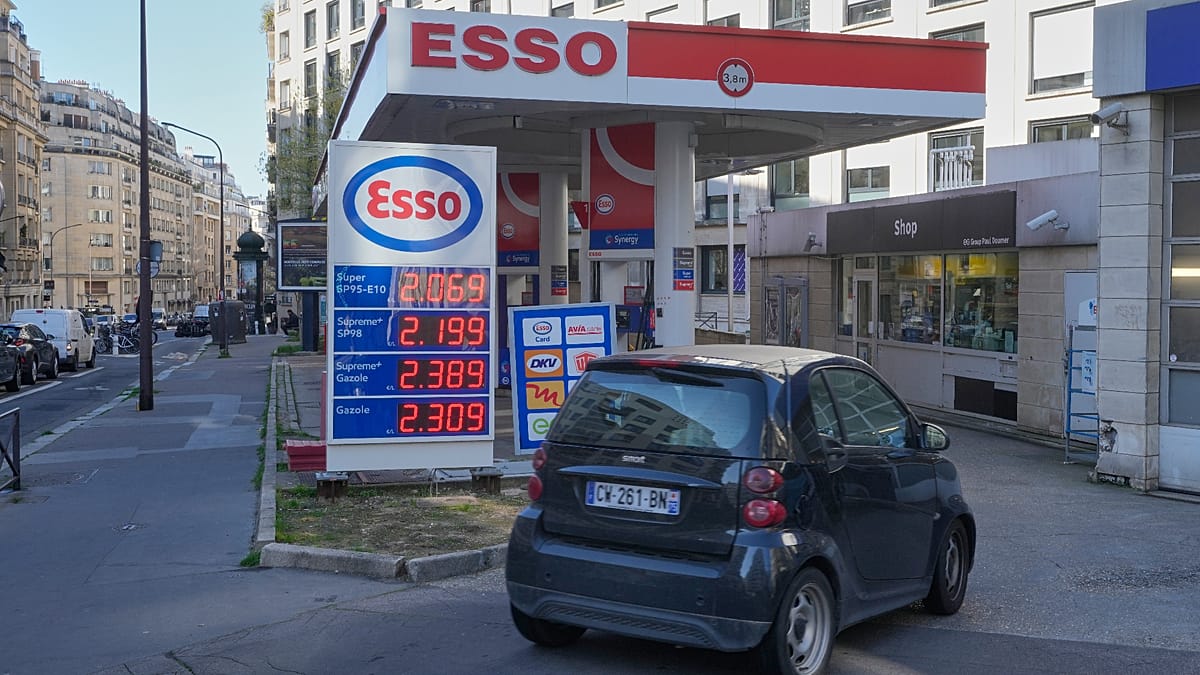
The path to this point has been compressed. The ECB raised rates on 11 June for the first time in three years, lifting the deposit rate from 2% to 2.25% in response to the energy shock triggered by the Iran war. It then held in July, while President Christine Lagarde pointed hawkishly toward September. August's inflation figures removed any lingering doubt: eurozone inflation hit 3.3%, up from 2.9% in July and the highest since September 2023, as energy inflation surged to 14.3% from 10.3%.
Beneath the surface, the picture inverts
Look past the headline number and the narrative becomes less clear. Core inflation, which strips out energy, food, alcohol and tobacco, actually fell to 2.4% from 2.5%. Services inflation, the component most closely tied to wages and domestic demand, dropped to 3% from 3.3%. In other words, there is still little evidence that expensive energy is feeding through into everything else—what economists call "second-round effects." Their absence is the strongest argument against tightening.
The ECB's own research supports this distinction. In a paper published on Tuesday, ECB economists found that adverse energy supply factors, driven by geopolitical tensions, accounted for around 90% of the rise in energy inflation between January and May. "This time the energy supply shock dominates, while demand and public policy stimulus have minor roles," the economists wrote, adding that "these differences are key to explaining why monetary policy responses differ." The 2021-22 surge, by contrast, came from "a combination of large and unprecedented supply and demand-side factors," which is why the ECB then "raised interest rates forcefully and persistently" rather than gradually.
The national spread across the EU further underlines how uneven this is. August inflation ran at 4.5% in Spain, 2.9% in Germany and 2.7% in France—three economies facing the same energy shock with very different results, all governed by one interest rate. This divergence makes a single policy response particularly awkward.
Economic growth is the other complication. The eurozone has proved more resilient than expected, which ING attributes partly to luck, partly to Asian competitors suffering more from the closure of the Strait of Hormuz, and partly to fiscal stimulus. However, resilience does not mean growth could not, or should not, accelerate. ING characterises Thursday's expected move as "another insurance rate hike" or "a dovish rate hike," noting that even at 2.5% the deposit rate sits within the range the ECB itself considers neutral. Going further would mean deciding restrictive policy is required, which would be a different judgement entirely.
Central banks move in tandem
The ECB is not acting alone, and that matters for the euro. The Federal Reserve meets on 15 and 16 September, with Chair Kevin Warsh having used his first Jackson Hole address to argue that financial conditions are not restrictive and underlying inflation has not improved. Investors had put the odds of a US hike at roughly one in three before those remarks, but now price a 60% chance the Fed hikes the target range from 3.5%-3.75% to 3.75%-4%. The Bank of Japan follows on 17 and 18 September, with markets pricing an 80% to 90% chance of a move to 1.25%. On the other hand, the Bank of England is expected to hold rates at 3.75% on 17 September as it currently maintains a much higher interest rate than the rest.
If the Fed were to hike while the ECB held, the dollar would strengthen against the euro, and that would cut both ways for Frankfurt. A weaker euro makes European exports more competitive, but it also makes imports dearer. Since oil and gas are priced in dollars, it would push up precisely the energy costs driving the inflation problem in the first place. This dynamic is one reason why the ECB may feel compelled to follow the Fed's lead, even if the domestic case is less clear.
Overall, we can assume a September rate hike is a done deal for the ECB. But we can also project that it won't solve the central bank's current dilemma: raising borrowing costs against an inflation it cannot reach, while withdrawing support an economy could still use. The decision may be certain, but the reasoning behind it remains anything but.