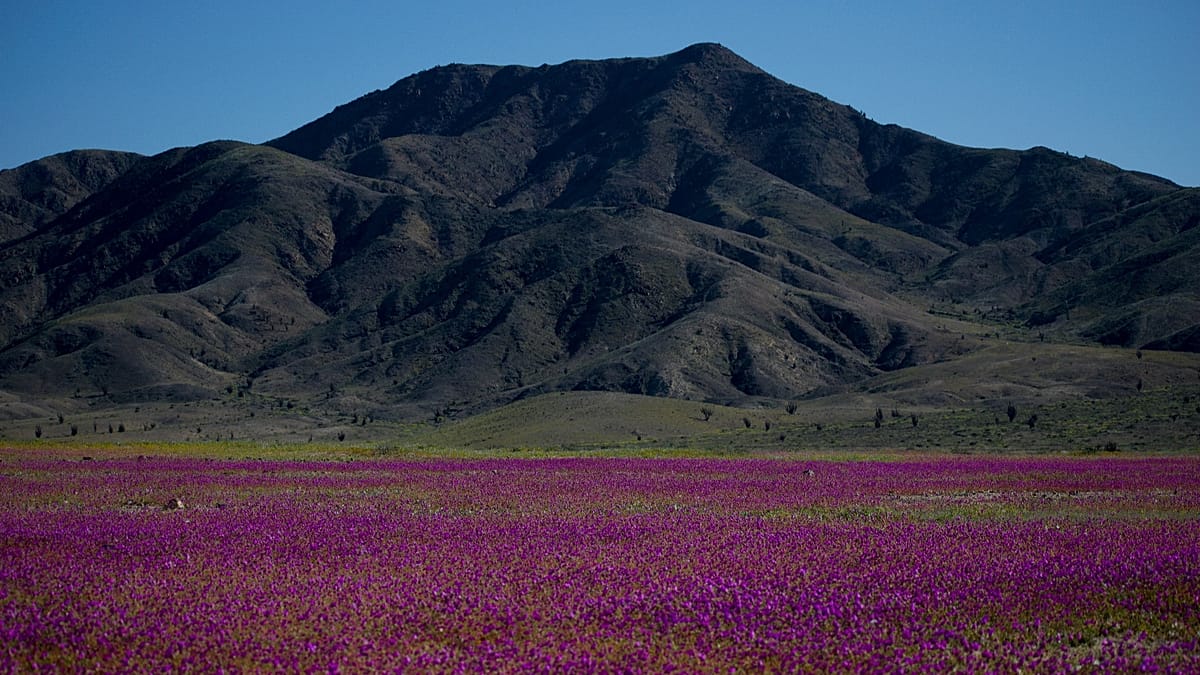
One of the most arid regions on the planet has undergone a dramatic transformation. In northern Chile, the Atacama Desert — a landscape more commonly associated with barren rock and salt flats — is now dotted with violet and white blossoms, the result of exceptionally heavy rainfall linked to the El Niño climate pattern.
Known locally as the desierto florido, or flowering desert, the phenomenon occurs when seeds and bulbs that have lain dormant in the soil for years finally receive enough moisture to germinate. Around 200 plant species are thought to be involved, each waiting for the right conditions to burst into life.
This year, those conditions have been particularly pronounced. According to César Pizarro, biodiversity manager at Chile's National Forestry Corporation (Conaf), some areas have recorded more than 180 millimetres of rain — an amount that, he told AFP, "had never been recorded before".
A rare bloom in one of the world's driest places
The rains have soaked deeper into the sand than usual, encouraging vegetation to emerge in the nature reserve roughly 800 kilometres north of Santiago. Conaf forecasts that the spectacle will reach its peak in October, with an estimated 15,000 hectares potentially covered in flowers.
For visitors, the sight is a striking contrast to the usual monotony of the desert. Tourists have been stopping along roadsides to photograph the unusual flowering, which has become a draw for both domestic and international travellers. The phenomenon is not new — it has occurred sporadically over the years — but the scale and intensity of this year's bloom have captured attention.
The driving force behind the exceptional rains is El Niño, a climate phenomenon marked by the warming of surface waters in the central and eastern equatorial Pacific. This warming can disrupt wind and rainfall patterns across the globe, often triggering extreme weather events. The current El Niño episode could be the most intense since comparable records began four decades ago, according to scientists.
While the flowering desert is a visual marvel, the same rains have had a darker side. In July, heavy downpours in Chile led to at least 13 deaths and damaged or destroyed around 4,000 homes. The dual impact — beauty and destruction — underscores the power of these climatic shifts.
For Chile, the event is a reminder of how vulnerable the region is to the whims of global weather systems. As climate change intensifies, such extremes may become more frequent, though predicting the exact timing and location of the flowering desert remains difficult.
For now, the Atacama's transformation offers a rare moment of wonder in a landscape defined by harshness. As the flowers reach their peak, scientists and visitors alike are watching closely, aware that this natural spectacle is both fleeting and fragile.