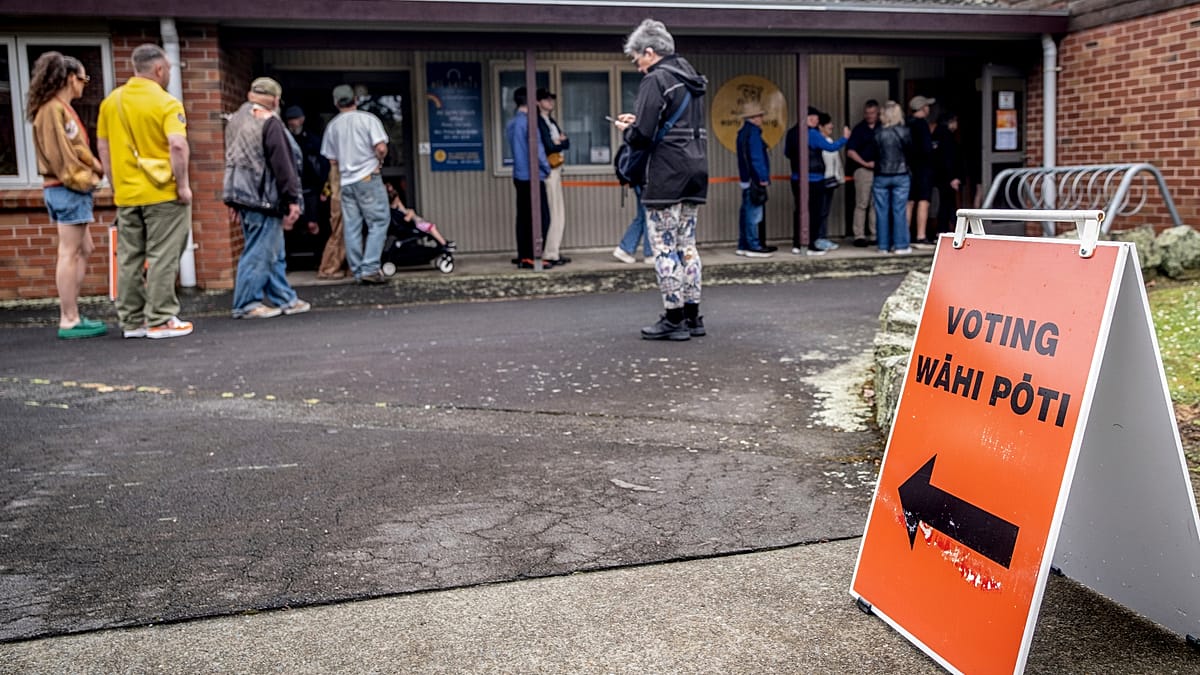
New Zealand's general election is proving to be a nail-biter, with early results showing the two main parties running almost level. The campaign, dominated by cost-of-living concerns and economic management, has left voters split nearly down the middle.
Prime Minister Christopher Luxon's National Party-led coalition is seeking a second term, but faces a strong challenge from Labour's Chris Hipkins. With just over 42% of votes counted, Labour holds a razor-thin lead at 29.71%, while National trails at 29.41%. The Green Party follows with 13.96%, with ACT New Zealand and New Zealand First each securing around 10% and 9% respectively.
No single party is projected to win a parliamentary majority, meaning coalition negotiations are likely to be complex. The final outcome could hinge on the performance of smaller parties, including the populist New Zealand First, which has held the balance of power in past governments.
How New Zealand's voting system works
New Zealand uses a mixed-member proportional (MMP) system, where voters cast two ballots: one for a local candidate (the electorate vote) and one for a political party (the party vote). The party vote determines the overall share of seats in parliament, while the electorate vote decides which candidate represents each constituency.
For Māori voters, there is an additional choice: they can enrol on either the general roll or the Māori roll. Those on the Māori roll vote in one of the dedicated Māori electorates, such as Waiariki, which covers the Rotorua area. Those on the general roll vote in the general electorate, like Rotorua itself. This system ensures dedicated Māori representation in parliament.
The tight race mirrors broader global trends, where economic pressures are reshaping electoral landscapes. In Europe, similar frustrations have sparked protests and political shifts, from French workers and students marching over living costs to Italy bracing for nationwide strikes on the same issue.
While New Zealand's election is a domestic affair, its outcome will be watched closely in Europe, particularly for signals on trade and climate policy. The country has been a vocal advocate for free trade agreements with the EU, and its stance on agricultural emissions could influence future negotiations.
As vote counting continues, both major parties are expressing confidence. Labour's Hipkins has emphasised the need for stable leadership during uncertain economic times, while Luxon has promised tax relief and a focus on economic growth. The final result may not be known for several days, especially if special votes—which include overseas ballots—tip the balance.
For now, New Zealanders are left waiting, with the prospect of a coalition government almost certain. The next government will face the immediate challenge of addressing the cost-of-living crisis, a concern that resonates far beyond the Pacific, as seen in Italian general strikes over living costs and Paris clashes over living costs.